
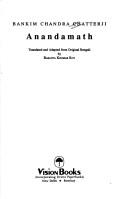
Anandamath
Bankim Chandra Chattopadhyay · 1838–1894 · India (Bengal)
Originally Anandamath (Bengali)
Why it matters
Ascetic rebels rise against famine and colonial exploitation in Bengal's founding nationalist novel. Its hymn 'Vande Mataram' became independence India's unofficial second national anthem.
At a glance
Ornate, formal nineteenth-century Bengali prose and dense nationalist rhetoric.
Deep dive
The 1882 novel that gave India 'Vande Mataram' — and the far more complicated, contested politics of the book the hymn came from.
Written for readers who have finished the book. No plot recap, and nothing here is safe to read first.
Themes & symbolism
The novel's central image is Bengal personified as Mother, shown to the rebel Mahendra in a temple as three faces: a serene past as she was, an emaciated, blood-drinking Kali as she now is — starved and degraded — and a radiant future Durga as she will be, once restored. "Vande Mataram," "I bow to thee, Mother," is sung inside the novel as a devotional hymn to this triple goddess-nation, decades before it became an anthem of the independence movement; the fusion of Hindu religious imagery with territorial nationalism it performs is exactly what made it so potent, and later so contested.
The ascetic rebels, or Santans ("Children"), take monastic vows — renouncing family, property, and women — before waging guerrilla war, and the novel sets their uprising against a catastrophic famine and the economic extraction of Company rule: Bankim draws on the 1770s Bengal famine and the historical Sannyasi Rebellion, though writing over a century later, in 1882, under British rule himself. Depicting armed monks as legitimate anti-colonial actors was a provocation dressed in historical costume, published under a colonial press regime that made direct anti-British argument dangerous to state outright. Mahendra's own arc — a landowner who loses his family to famine before joining the Santans — gives the novel's abstract nationalist argument a concrete engine: dispossession first, ideology second.
A Contested Legacy
Alongside its status as a founding text of Indian nationalism, Anandamath has drawn sustained scholarly criticism for passages framing the Muslim-ruled order that preceded British rule in hostile terms, and the novel's politics remain a live subject of debate. "Vande Mataram" was ultimately adopted only as India's "national song," a status distinct from the national anthem, partly owing to objections — including historically from the Muslim League — to a hymn addressed to a Hindu-coded mother goddess. Historians continue to debate how much of the communal framing reflects Bankim's own views versus 1770s political mythmaking laid over a 19th-century present.
A Hymn Outgrowing Its Novel
"Vande Mataram" left the book almost immediately and became independent property: Rabindranath Tagore set it to music and sang it at Congress sessions, Aurobindo Ghosh translated it into an English manifesto for revolutionary nationalism, and by the early 20th century it was circulating as a rallying cry among people who had never read the novel it came from. That afterlife is the paradox the book's modern reputation sits inside — a single extracted hymn doing more political work across a century than the dense, theologically specific narrative that produced it.
The last seal: what actually happens, and why it lands the way it does.
The ending, explained
After the Santans win their climactic battle, a mysterious healer — a guru-like figure treated within the text as quasi-divine — tells the rebel leader Satyananda that their fight is providentially finished: further bloodshed is unnecessary, and the Santans should lay down arms and accept British rule as preferable to the Muslim-ruled order it replaced, since the text frames the British, despite being foreign rulers, as a stage of order to be endured until an unspecified future restoration. Satyananda submits to this vision. The novel ends not in the anti-colonial victory its plot has built toward, but in a deferral written directly into the text — a resolution historians and critics have long treated as central to the book's complicated legacy.
Where to go next
 Bankim Chandra Chattopadhyay · 1865Durgesh NandiniLvl 4Medium pace
 Rabindranath Tagore · 1916The Home and the WorldLvl 6Medium pace
 Sarat Chandra Chattopadhyay · 1917DevdasLvl 2Fast paced
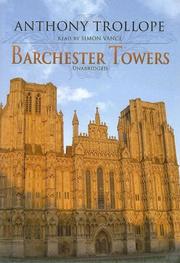 Anthony Trollope · 1857Barchester TowersLvl 4Medium pace
 William Makepeace Thackeray · 1848Vanity FairLvl 5Medium pace
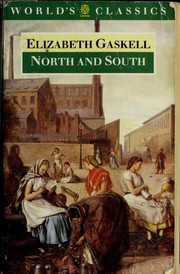 Elizabeth Gaskell · 1855North and SouthLvl 4Medium pace