
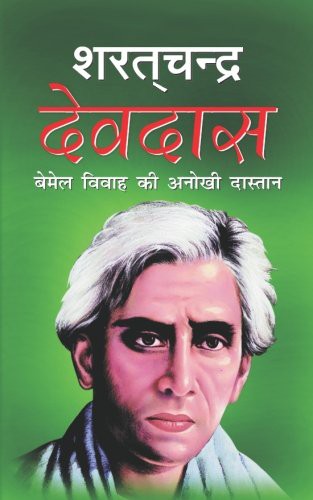
Devdas
Sarat Chandra Chattopadhyay · 1876–1938 · India (Bengal)
Originally Devdas (Bengali)
Why it matters
A wealthy young man spirals into self-destruction after losing his childhood love to social convention. Bengal's most beloved tragic romance, adapted into film more times than perhaps any other South Asian story.
At a glance
Short, melodramatic, and linear; an easy, emotionally direct read.
Deep dive
A doomed childhood romance in rural Bengal, and how thoroughly a hundred years of Indian cinema has kept returning to the wreck it becomes.
Written for readers who have finished the book. No plot recap, and nothing here is safe to read first.
Themes & symbolism
Devdas and Parvati, called Paro, grow up as neighbors and childhood companions, and their families' class mismatch, hers a step down from his zamindar household despite both being landowners, is enough for Devdas's father to refuse the match outright. What makes the novel more than a star-crossed romance is Devdas's own passivity: offered a real chance to defy his family and claim Paro, he hesitates, writes her a letter more concerned with saving face than with declaring himself, and by the time he changes his mind she has already been settled elsewhere. Chattopadhyay builds the entire tragedy out of that one failure of nerve, not out of any external villain.
Chandramukhi, the courtesan Devdas drifts toward in Calcutta, loves him with a clarity and generosity Paro never gets the chance to fully offer, and Devdas's inability to receive it, he keeps her at arm's length even while accepting her care, extends his original failure with Paro into a permanent pattern. His drinking isn't really about heartbreak so much as a slow, deliberate refusal to keep living an ordinary life, and the novel treats his decline less as romantic devotion than as a case study in a man who mistook self-destruction for depth.
Paro's Choice Was Never the Weak Move
Read against the melodrama that grew up around the novel, Paro's decision to accept marriage to a much older, wealthy widower rather than wait indefinitely for Devdas reads as the book's clearest act of agency: she secures her family's standing, becomes mistress of a large household, and continues caring for Devdas without letting that feeling cost her a stable life, a pragmatism the story's countless film versions have often softened into pure heartbreak rather than the choice Chattopadhyay actually wrote.
A Name That Became a Diagnosis
Devdas entered everyday Bengali and Hindi as shorthand for a self-pitying, alcoholic romantic long before most speakers using it had read the novel, largely on the strength of the story's many film adaptations, and that afterlife has ironically obscured Chattopadhyay's own, more skeptical treatment of his hero: the novel diagnoses his self-destruction as a failure of will dressed up as fate, not a template worth admiring.
The last seal: what actually happens, and why it lands the way it does.
The ending, explained
Dying of drink and travel-worn illness he has spent years accumulating, Devdas makes a final journey to see Paro one last time, arriving at her estate's gates at night and collapsing there rather than going in to face her directly. Paro learns only afterward that he died within reach of her house, and the news reaches her as she's being physically restrained from running out to him, her husband's household holding her back from even the arrival his death might have completed. Chattopadhyay denies the lovers a reunion of any kind, closing instead on Paro's grief at a threshold she isn't permitted to cross, the same social boundary that kept them apart in life sealing them apart in his death too.
Where to go next
 Sarat Chandra Chattopadhyay · 1917SrikantaLvl 5Medium pace
 Rabindranath Tagore · 1916The Home and the WorldLvl 6Medium pace
 Bankim Chandra Chattopadhyay · 1882AnandamathLvl 5Medium pace
 Thomas Hardy · 1891Tess of the d'UrbervillesLvl 4Medium pace
 Elizabeth Gaskell · 1855North and SouthLvl 4Medium pace
 Emily Brontë · 1847Wuthering HeightsLvl 6Medium pace