

Rabindranath Tagore
India (Bengal)
Lyrical and searching, shifting fluidly between voices and ideas; prose that carries a poet's ear even while arguing hard political questions.
Tagore was born into a wealthy, cultured Calcutta family and largely educated at home, restless enough at school that formal instruction never held him. He began publishing poetry as a teenager and eventually managed his family's rural estates in East Bengal, an experience that steeped him in village life and folk song and reshaped both his poetry and his fiction.
He translated his own poetry collection Gitanjali into English, and its 1913 Nobel Prize made him literature's first non-European laureate, a fame he used to found Visva-Bharati, an experimental university built around open-air teaching and internationalism. The Home and the World, written as the 1905 partition of Bengal inflamed nationalist passion, staged his own ambivalence about the movement through a wife caught between her sheltered husband and a firebrand revolutionary.
He renounced his British knighthood after the 1919 Amritsar massacre and kept writing, composing, and painting into his final years, dying in Calcutta in 1941 having also written the national anthems later adopted by both India and Bangladesh.
Their books in the atlas
- 1903
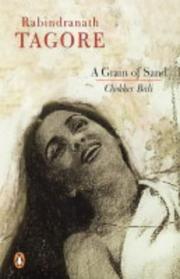 Chokher BaliLvl 5psychological novel
 - 1910
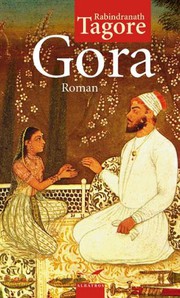 GoraLvl 5philosophical novel
 - 1912
 GitanjaliLvl 3essay
 - 1912
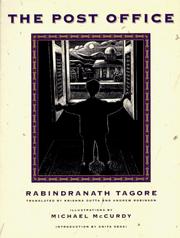 The Post OfficeLvl 3drama
 - 1916
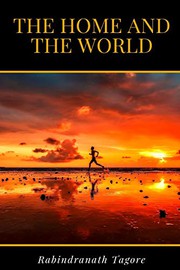 The Home and the WorldLvl 6political novel
Meanwhile, elsewhere
 1859–1952Knut HamsunNorwayWestern Europe · Norway
 1857–1943Henrik PontoppidanDenmarkWestern Europe · Denmark
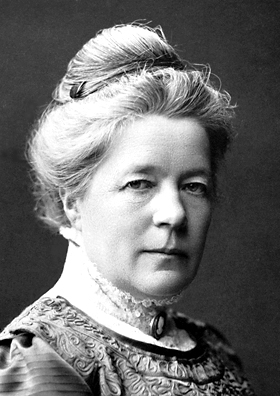 1858–1940Selma LagerlöfSwedenWestern Europe · Sweden
 1866–1944Romain RollandFranceWestern Europe · France
 1863–1938Gabriele D'AnnunzioItalyWestern Europe · Italy
 1862–1937Edith WhartonUSANorth America · USA
If you like Tagore, try
 1838–1894Bankim Chandra ChattopadhyayIndia (Bengal)shared movement: The Bengali Renaissance · kindred genres: political novel, romance · both write in Bengali
 1876–1938Sarat Chandra ChattopadhyayIndia (Bengal)shared movement: The Bengali Renaissance · both write in Bengali · same region & era
 1880–1936PremchandIndiakindred genres: family saga, political novel · neighboring movements · same region & era
 1815–1882Anthony TrollopeEnglandkindred genres: political novel, romance · neighboring movements
 1840–1928Thomas HardyEnglandkindred genres: romance, psychological novel · neighboring movements
 1810–1865Elizabeth GaskellEnglandkindred genres: political novel, romance · neighboring movements