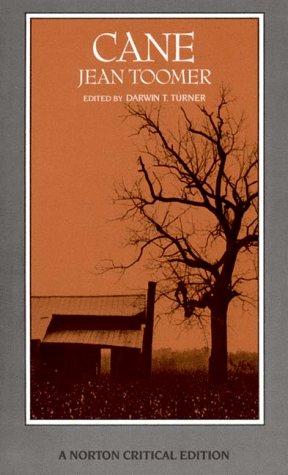
Cane
Jean Toomer · 1894–1967 · USA
Why it matters
A lyric mosaic of prose vignettes, poems, and a closing drama moving from rural Georgia to urban Washington, Cane fused documentary realism and modernist form into the Harlem Renaissance's first landmark book, one its own author later disowned as too narrowly racial.
At a glance
Fragmented mix of prose, poetry, and drama with no linear plot to hold onto.
Deep dive
What it means that Cane moves from rural Georgia to urban Washington and back to Georgia again, in prose, verse, and a closing drama, and which women's names the book keeps returning to along the way.
Written for readers who have finished the book. No plot recap, and nothing here is safe to read first.
Themes & symbolism
Toomer builds Cane in three unequal parts rather than one continuous story: a Georgia section of prose sketches and poems, a Washington and Chicago section of urban vignettes, and a closing drama, 'Kabnis,' set back in Georgia. No character from the first two parts appears in the third, so the book's coherence comes from repetition and echo rather than plot, cane fields, dusk, smoke, and song recur across all three sections like a single held chord.
Part one's women give the book its most quoted pages: Karintha, praised and pursued by men from childhood until her beauty becomes something they chase without understanding why, and Fern, Fernie May Rosen, whose pale, unreadable eyes seem to demand something none of her lovers can name, let alone provide. Part two moves the same hunger north and finds it curdled into something colder: Muriel, pressured by her landlady into performing respectability in 'Box Seat,' and Paul, in 'Bona and Paul,' unable to complete a kiss with a white woman on a Chicago rooftop once he catches sight of his own reflection.
Karintha and Fern Turned Into Landscape
Toomer's narrator compares Karintha to dusk and Fern to a river's slow current, a lyricism that indicts the men who use these women even as it repeats their habit of turning a person into scenery. The prose never lets the reader stand fully outside that habit, which is part of Toomer's point: admiration and consumption share a vocabulary in this book, and the poems are not exempt from the men's gaze they describe.
Father John's Cellar
'Kabnis' closes the book with Ralph Kabnis, a northern-educated schoolteacher who cannot bear living among the rural South he has come to teach in, descending into a cellar workshop kept by Father John, a blind, nearly mute former slave. Kabnis wants Father John silent, embarrassed by what the old man's presence seems to demand of him, and Toomer stages their standoff as the Great Migration's generational argument in miniature, an educated new arrival unable to hear the very history he claims to be honoring.