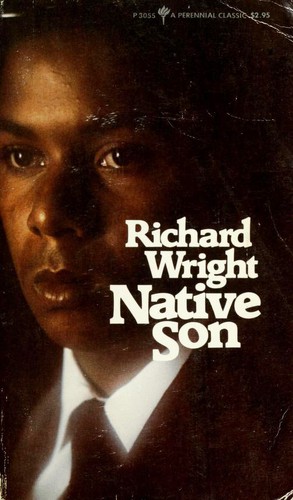
Native Son
Richard Wright · 1908–1960 · United States
Why it matters
A young Black man's accidental killing of a white woman becomes the only act of self-definition available to him in a society built to deny him any other. Protest fiction as unsparing psychological case study.
At a glance
Blunt, propulsive prose but psychologically demanding subject matter.
Deep dive
Wright builds a consciousness entirely out of fear and rage and forces you to live inside it, then dares you to decide whether the man it produces is a monster, a victim, or an indictment of the society that made him both.
Written for readers who have finished the book. No plot recap, and nothing here is safe to read first.
Themes & symbolism
The novel opens with Bigger clubbing a rat to death in his family's cramped, roach-infested apartment, an image that sets the terms for everything after: he is himself the cornered animal, and the white world he moves through is a maze with no exit that isn't also a trap. Blindness recurs pointedly — Mrs. Dalton is literally blind, unable to see Bigger smothering her daughter three feet away, a detail Wright uses as the bluntest possible metaphor for white liberal philanthropy that funds Black uplift while remaining structurally unable to perceive Black interiority at all. Whiteness itself is rendered less as a race than as an atmospheric force, 'a great natural, unavoidable white force,' looming and formless, something Bigger reacts to the way you'd react to weather rather than to individuals — which is exactly why an accidental death and a deliberate murder can feel, to him, like the same inevitable event.
Wright's naturalism, indebted openly to Dreiser and Zola, insists on environment as near-total determinism: the tripartite structure — Fear, Flight, Fate — maps Bigger's psychology onto plot mechanics rather than free choice, so that his crimes read less as decisions than as the environment finally metabolizing itself through him. The newspapers that cover the manhunt dehumanize Bigger into an ape-like monster even as the Communist lawyer Max tries to humanize him into a case study of social forces; both framings, Wright suggests, still fail to let Bigger simply be a person, which is the exact deprivation the novel is angriest about.
Baldwin's Rebuttal and the Protest-Novel Debate
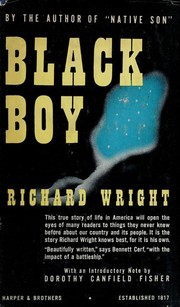
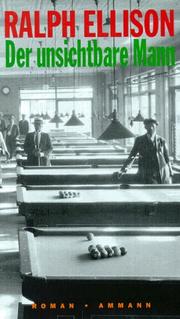
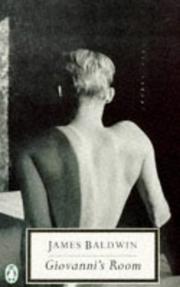
Wright explained his own method in the essay 'How Bigger Was Born,' describing Bigger as a composite of real men he'd known who were broken by the same forces, built deliberately to be neither sympathetic nor safely redeemable — Wright wanted a character white readers couldn't pity their way out of confronting. Nine years later, James Baldwin's essay 'Everybody's Protest Novel' turned that same ambition into an indictment: Baldwin argued that Native Son, for all its power, remained trapped inside the reductive categories of the 'protest novel' it meant to transcend, reducing Bigger to a sociological symptom and thereby denying him the full, contradictory humanity that fiction — as opposed to case study — is supposed to grant. The argument became one of the defining literary quarrels of mid-century Black American letters, with Baldwin's own Go Tell It on the Mountain partly written as an answer to what he saw as Wright's limitations, and Ralph Ellison's Invisible Man taking up the challenge from a different angle, replacing naturalistic determinism with irony, myth, and a narrator who insists on his own interior complexity.
Whatever side of that debate you land on, the novel's historical weight is undeniable: it was the first novel by a Black American author to become a Book-of-the-Month Club selection and a national bestseller, in 1940, exposing white readers who had never had to on a mass scale to a Black protagonist's rage rendered without apology or ingratiation. Its influence runs forward through the angrier registers of the Black Arts Movement and into writers like Ta-Nehisi Coates, who has cited the novel's refusal to console as a model for writing about racial violence without softening it for a white audience's comfort.
The last seal: what actually happens, and why it lands the way it does.
The ending, explained
After Bigger accidentally smothers Mary Dalton to keep her blind mother from discovering him in her room, then burns the body to hide it, he kills his girlfriend Bessie deliberately to keep her from talking — the novel's clearest act of premeditated violence, and the one the state ultimately prosecutes least, more interested in avenging a white victim. Captured, tried, and defended by Max, who delivers a lengthy courtroom argument for social determinism — that decades of segregation, poverty, and psychological warfare made Bigger's crimes close to inevitable — Bigger is convicted anyway and sentenced to death. In the novel's final scene, awaiting execution, Bigger arrives at a terrible, lucid self-recognition and tells Max that killing Mary was the first time in his life he ever felt like he had a self, that he was really alive and really doing something — a confession that horrifies even the lawyer who has just spent the trial arguing Bigger is a product of forces beyond his control. Wright refuses the reader any comfortable landing: no redemption, no clean verdict on whether Bigger is monster or casualty, only the unbearable clarity of a man discovering his own reality for the first time in the act that will kill him.