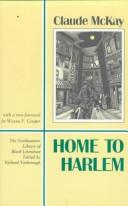
Home to Harlem
Claude McKay · 1889–1948 · Jamaica / USA
Why it matters
A demobilized Black soldier drifts through Harlem's cabarets, rent parties, and railway work in search of nothing more than his own appetite for life. McKay's 1928 novel became the first bestseller by a Black American writer, and the era's most fiercely debated one.
At a glance
Episodic, loosely plotted narrative with accessible, vernacular-inflected prose.
Deep dive
Jake drifts through Harlem's cabarets, rent parties, and railway yards chasing nothing more complicated than his own appetite for being alive — and the argument the novel provoked on publication says as much about the Harlem Renaissance's internal politics as it does about Jake.
Written for readers who have finished the book. No plot recap, and nothing here is safe to read first.
Themes & symbolism
Jake Brown is an unapologetic embodiment of Black working-class pleasure, a demobilized soldier who wants work, food, music, and women, in roughly that order of urgency, and who refuses every version of respectable Black uplift the era's literary establishment wanted its heroes to perform. McKay writes Harlem itself as a sensory paradise — cabarets, rent parties, the rhythms of dice games and blues singers — with a prose that's genuinely intoxicated by the place rather than merely reporting on it, a travelogue of Black urban life written from inside its pleasures instead of as sociology aimed at outsiders.
Ray, the educated Haitian intellectual Jake befriends while working the railways, functions as his opposite and foil: paralyzed by self-consciousness, painfully aware of his own race and education in ways that keep him from Jake's frictionless ease in the world. The novel stages a real argument between two responses to Black modern life — Ray's exhausting double consciousness against Jake's unreflective vitality — and while McKay never explicitly declares a winner, it's obvious on the page which of the two men he loves writing more.
The Bath: Respectability Politics and the Harlem Renaissance's Civil War
W. E. B. Du Bois's review of Home to Harlem is now nearly as famous as the novel itself: he wrote that after its 'dirtier' passages he felt 'distinctly like taking a bath,' a line that crystallized the Talented Tenth wing of the Renaissance's discomfort with a bestseller that depicted Black life through cabarets and casual sex rather than uplift and dignity. McKay, who had already announced himself as a radical with the defiant sonnet 'If We Must Die,' had no interest in managing white perceptions of Black respectability; he believed unvarnished depictions of working-class Black pleasure were themselves an act of freedom, not a betrayal of the race.
The controversy didn't hurt the book — it helped make it the first bestseller by a Black American writer, outselling the more consciously 'respectable' fiction the Renaissance's establishment preferred to promote. The fight anticipated decades of similar arguments over who gets to depict Black life and how — echoes of it resurface in the later reception of Their Eyes Were Watching God and in the Wright–Baldwin generational clash — and Home to Harlem remains the opening skirmish, a novel that became a bestseller precisely by refusing to behave.
The last seal: what actually happens, and why it lands the way it does.
The ending, explained
After a novel's worth of drifting between jobs, cabarets, and women, Jake reunites near the end with Felice, the woman from one unforgettable early night he's been quietly searching for ever since. Rather than settling into Harlem, the two decide to leave together for Chicago, chasing a fresh start on Jake's own terms. It's a warm, open ending rather than a punished or cautionary one — the novel closes by affirming exactly the appetite for life, self-determination, and pleasure that its critics found scandalous, sending Jake off not chastened but rewarded for having wanted, simply and honestly, to be happy.