Arrowsmith
Sinclair Lewis · 1885–1951 · United States
Why it matters
An idealistic doctor chases pure scientific truth through small-town quackery, public health politics, and a Caribbean plague outbreak. Lewis's Pulitzer winner, which he pointedly refused, remains American fiction's sharpest portrait of science under institutional pressure.
At a glance
Dense period-specific medical and satirical detail, in keeping with Lewis's other social novels.
Deep dive
An idealistic doctor keeps discovering that every institution meant to serve pure science actually wants something else from him, right up to the Pulitzer committee.
Written for readers who have finished the book. No plot recap, and nothing here is safe to read first.
Themes & symbolism
Martin Arrowsmith's long march through American medicine — small-town general practice, public health bureaucracy in Iowa, then the prestigious McGurk Institute in New York — is structured as an escalating series of institutions that each promise to serve scientific truth and each, on inspection, actually serve reputation, funding, or expedience instead, and Lewis's satire lands hardest not on any single villain but on how consistently well-meaning people (Martin's public-health boss Almus Pickerbaugh, the ambitious institute director Rippleton Holabird) rationalize compromising research integrity for careerist or political reasons without ever registering themselves as having compromised anything.
The Caribbean plague outbreak that occupies the novel's climax puts Martin's scientific idealism under maximum pressure: sent to test an experimental bacteriophage serum, he's supposed to run a rigorous controlled trial withholding treatment from a control group to prove the serum works, but as the epidemic kills people around him, including his own wife Leora, he abandons the protocol to treat everyone he can — a decision the novel frames as genuinely admirable and genuinely a betrayal of the scientific rigor he claims to worship, refusing to let either reading cancel the other out.
Gustaf Sondelius, the charismatic Swedish epidemiologist who dies of the plague he came to fight, and the fanatically pure researcher Max Gottlieb, Martin's mentor whose refusal to compromise research standards for any reason costs him status and funding throughout his career, represent the novel's two competing models of scientific virtue — heroic humanitarian action versus austere methodological purity — and Martin's whole arc is a failure to fully become either, a man who admires both ideals more than he can consistently live up to them.
The Prize Lewis Refused
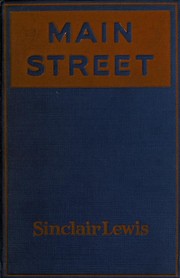
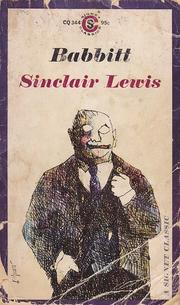
Arrowsmith won the 1926 Pulitzer Prize for the Novel, and Sinclair Lewis, in a move nearly as famous as the book itself, publicly refused it, denouncing the prize's committee-driven mandate to honor works that presented 'the wholesome atmosphere of American Life' as exactly the kind of institutional pressure toward comfortable consensus his own novel spends four hundred pages indicting in medicine and science. Lewis had researched the book closely with the microbiologist Paul de Kruif, who supplied the technical science and co-plotted much of the story though he received no formal co-author credit — giving the novel's institutional satire an insider's precision that helped make it, alongside Main Street and Babbitt, part of the run of social novels that won Lewis the Nobel Prize in Literature five years later, the first American to receive it.
The last seal: what actually happens, and why it lands the way it does.
The ending, explained
Having watched Leora die in the plague outbreak, remarried into a comfortable, socially connected life with Joyce Lanyon back at the McGurk Institute, and grown steadily more disillusioned with how thoroughly even a supposedly pure research institution runs on politics, prestige, and fundraising rather than science for its own sake, Martin finally abandons both his marriage and his institutional position altogether. He retreats to a rough cabin laboratory in the Vermont woods alongside his uncompromising, cantankerous colleague Terry Wickett, choosing isolated, unglamorous, and financially precarious independent research over any further institutional entanglement. Lewis pointedly refuses to resolve whether this is heroic integrity finally achieved or a comfortable man's abdication of responsibility to his infant son and the people who love him; the novel simply leaves Martin exactly where its title always promised he'd end up — alone with the work, having sacrificed everything else to get there, and not entirely sure it was worth it.