
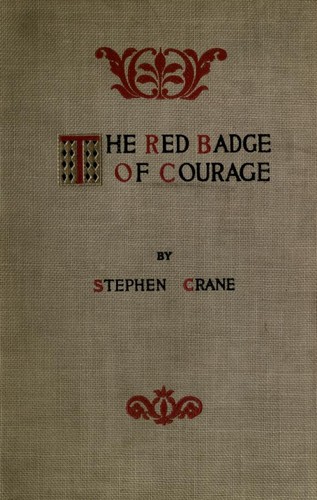
The Red Badge of Courage
Stephen Crane · 1871–1900 · United States
Why it matters
A young Union soldier flees his first battle in terror, then must live with the shame. Crane, who had never seen combat, wrote war's psychological reality with an immediacy that changed American war fiction permanently.
At a glance
Crane's impressionistic, sensory prose can disorient in the battle scenes.
Deep dive
Crane strips war down to one recruit's minute-by-minute negotiation with his own nerve, and the novel's real subject is the gap between the story Henry tells himself about his courage and whatever actually happens in his body.
Written for readers who have finished the book. No plot recap, and nothing here is safe to read first.
Themes & symbolism
Crane's prose keeps rendering the battlefield in colors and religious imagery that make Henry's ordeal feel cosmic rather than merely military — most famously the sun that appears 'pasted in the sky like a wafer,' a simile that turns a natural fact into something like a mocking communion host, indifferent to the carnage beneath it. Nature throughout refuses to cooperate with human meaning: birds sing, a squirrel flees a thrown pinecone exactly as Henry fled the line, and the woods offer him a brief, false absolution in a chapel-like clearing before he stumbles on a decaying corpse. The novel's central irony is architectural: Henry's literal 'red badge,' the wound he's ashamed to not have, comes not from combat but from a fellow retreating Union soldier who clubs him with a rifle butt in the chaos — courage counterfeited by cowardice, and nobody around him ever learns the difference.
Crane is less interested in battle tactics than in how a young man narrates himself into and out of being a coward, and the regiment itself becomes a single organism in his prose — 'a moving box,' a serpent, a machine — that swallows individual will the moment the shooting starts. Henry's flight isn't cowardice in any simple sense; it's animal self-preservation that his self-image, built on romantic notions of Greeklike battle glory absorbed from stories and schoolbooks, has no place for. The novel tracks him relearning courage not as the absence of fear but as a kind of blind momentum that looks like valor from the outside and feels, from the inside, almost indistinguishable from panic.
A War Novel Without a War Correspondent
Crane was born in 1871, six years after Appomattox, and had never set foot on a battlefield when he wrote this — he built its sensory reality entirely from Mathew Brady photographs, veterans' magazine reminiscences, and his own extraordinary instinct for how fear actually moves through a body. The effect on readers who had fought was reportedly uncanny: Civil War veterans, including some of Crane's own reviewers, assumed he must have served, because the novel got the disorientation, the rumor-choked confusion, and the strange boredom of war exactly right in a way that official histories and heroic romances never had. Crane later did report from real wars — Greece, Cuba — partly, he said, to test whether he'd gotten it right, and found his imagined battlefield disturbingly close to the real one.
The book's style — clipped, ironic, image-driven, indifferent to the moralizing that Gilded Age war fiction usually supplied — reads now as an early landmark of American literary naturalism and a bridge to twentieth-century war writing. Hemingway, who prized the novel highly, inherited its flattened affect and its refusal to let physical courage double as moral virtue; without Crane's impressionistic, unsentimental battlefield, the terse disillusionment of In Our Time and A Farewell to Arms doesn't have the same foundation to build on.
The last seal: what actually happens, and why it lands the way it does.
The ending, explained
Henry does return to his regiment, and in the battles that follow he fights with a reckless, almost trance-like bravery — charging forward, holding the line, eventually seizing the regimental flag from a dying color-bearer and carrying it himself, at one point charging so far ahead of his own company that his lieutenant marvels at him as 'a war devil.' By the novel's final pages he has, by any external measure, become the fierce, blooded veteran he fantasized about at the start. But Crane keeps the internal ledger open underneath the external triumph: Henry still carries the unconfessed truth that he fled the first battle, lied about the source of his wound, and abandoned his friend Jim Conklin to die alone in a field rather than stay with him. The closing image of 'a golden ray of sun' breaking through clouds reads less as unambiguous redemption than as Henry's own self-serving narration doing what it's done the whole novel — reaching for a grand, consoling image just large enough to paper over what he actually did. His manhood at the end is real in the sense that he has proven he can fight, and compromised in the sense that it's still built, in part, on a version of himself he's constructed rather than earned.
Where to go next
 Stephen Crane · 1893Maggie: A Girl of the StreetsLvl 4Fast paced
 Theodore Dreiser · 1900Sister CarrieLvl 4Medium pace
 Émile Zola · 1885GerminalLvl 5Medium pace
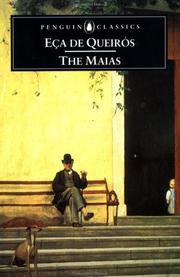 Eça de Queirós · 1888The MaiasLvl 6Medium pace
 Władysław Reymont · 1904The PeasantsLvl 5Slow burn
 Honoré de Balzac · 1835Père GoriotLvl 4Medium pace