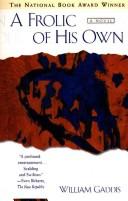
A Frolic of His Own
William Gaddis · 1922–1998 · United States
Why it matters
A failed playwright suing himself over a stolen play becomes the occasion for a scathing satire of American litigiousness, told almost entirely through unattributed dialogue and embedded court documents. Gaddis's second National Book Award winner turns the legal system into his era's defining absurdity.
At a glance
Unattributed dialogue, embedded legal documents, and dense satire demand very close reading.
Deep dive
Why a failed playwright suing over his own stolen play, told entirely through unattributed dialogue and stray legal opinions, turns into Gaddis's fullest satire of a country that's replaced justice with litigation as a form of national theater.
Written for readers who have finished the book. No plot recap, and nothing here is safe to read first.
Themes & symbolism
Oscar Crease's plagiarism suit against a Hollywood war film supposedly lifted from his unproduced play is the novel's spine, but Gaddis surrounds it with so many overlapping suits — Oscar suing over being run over by his own car while trying to steal it back from an impound lot, a neighbor's dog-bite case, a sculpture a dog gets trapped inside, family disputes over money and property — that no single grievance ever gets to matter on its own terms. The title phrase, a real legal term for an employee acting outside the scope of their duties for purely personal reasons, describes every plaintiff in the book: litigation here isn't a last resort for wronged people, it's the default American mode of self-expression, a way of turning private resentment into a public performance with the state footing the stage.
The deeper joke cuts at Oscar specifically: his play is itself an adaptation of his own Confederate ancestor's court-martial, borrowed history dressed as original creation, which means his outrage at having his 'own' work stolen rests on a claim to ownership that was shaky from the start. Gaddis's choice to narrate almost entirely through unattributed dialogue and inserted documents — depositions, court opinions, letters — isn't just a stylistic tic; it enacts the book's argument that authorship and authority are always contested, always assembled out of other people's words, with no single voice left standing to adjudicate whose story it really is.
A Late Vindication
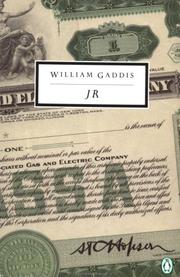
Gaddis spent much of his career as literature's most notorious hard case: The Recognitions was savaged or ignored on publication in 1955 and only slowly recognized, over subsequent decades, as one of the era's essential novels, while JR — narrated in the same unattributed-dialogue style, following a schoolboy's paper empire — won the National Book Award in 1976 despite being widely described as unreadable by reviewers who admitted they hadn't finished it. A Frolic of His Own won Gaddis a second National Book Award in 1994, two years before his death, a genuinely late-career vindication for a writer who had spent forty years being called a novelist's novelist by people who mostly meant nobody else was reading him.
The unattributed dialogue itself, refined across three novels by this point, produces a specific reading experience: no narrator ever tells you who's lying, who's right, or what to feel, which means the reader has to do the same interpretive labor as a juror sifting testimony — appropriate, in a novel about a legal system that claims to sift truth from noise and mostly just generates more noise.
The last seal: what actually happens, and why it lands the way it does.
The ending, explained
Nothing in the novel resolves the way a lawsuit is supposed to: Oscar's plagiarism claim eventually settles for a sum far short of the vindication he wanted, the other suits tangled around him dissolve into technicalities and countersuits that satisfy no one's sense of what actually happened, and his father's dry, elaborately reasoned opinion on the unrelated dog-bite case — an extended comic set piece in its own right — ends up functioning as the novel's real verdict on the whole enterprise, delivered from the one character positioned to see litigation's absurdity from the bench rather than the plaintiff's chair.
Oscar's play is finally produced, which should be his triumph, and instead lands as one more deflation: the production compromises and cuts flatten exactly the vision he spent the whole book fighting for, so that winning, when it finally arrives in any form, feels indistinguishable from losing. Gaddis closes on exhausted, comic disillusionment rather than catharsis — the machinery of American law keeps grinding forward, consuming grievances, money, and years of everyone's life, without ever producing anything that looks like justice or meaning on the other end.