

10 Minutes 38 Seconds in This Strange World
Elif Shafak · b. 1971 · Turkey / UK
Why it matters
In the minutes after her murder, an Istanbul sex worker's mind replays her life memory by memory while her friends race across the city to claim her body. Shafak's Booker-shortlisted elegy for the women a society discards.
At a glance
A fragmented memory structure and a large ensemble cast, told in accessible, propulsive prose.
Deep dive
An Istanbul sex worker's mind keeps working for exactly the length of the title after her body stops, replaying the sensory memories that built her life one at a time, while five friends who loved her race across the city to make sure she isn't buried among strangers.
Written for readers who have finished the book. No plot recap, and nothing here is safe to read first.
Themes & symbolism
Leila, nicknamed Tequila Leila by the found family who loves her, has just been killed and left in a bin outside Istanbul when the novel opens, and Shafak spends its first and strangest section inside the ten minutes and thirty-eight seconds neuroscience suggests brain activity can persist after clinical death, using that window to let one memory surface for each additional minute, each keyed to a specific taste or smell, cardamom coffee, lemon and sugar, sea salt, rather than to chronological order. The structure lets Shafak build Leila's entire biography, a childhood in the eastern city of Van inside a household with two mothers and a domineering father, abuse by an uncle, flight to Istanbul and eventual work in a brothel, out of sensation rather than plot, so that a life spent being reduced to her body by nearly everyone in it is, in its final minutes, finally narrated through that same body on its own terms.
The five friends who anchor the novel's second half, Sinan, a childhood friend who never stopped loving her; Nalan, a transgender woman and former villager who reinvented herself in Istanbul before Leila arrived; Jameelah, trafficked from Somalia into the same brothel; Zaynab, a devout, superstitious dwarf who works as the brothel's fortune-teller; and Humeyra, a singer who fled an abusive marriage, function as the deliberate opposite of Leila's biological family, who disowned her outright once she began sex work. Shafak calls this arrangement, repeatedly, a family of choice, and builds the novel's entire second half around what that family is willing to risk, physically and legally, to give Leila the burial her actual relatives refuse to claim.
The Cemetery of the Companionless
Istanbul's Kimsesizler Mezarlığı, the real cemetery where the city buries its unclaimed and unwanted dead under numbered markers rather than names, becomes Shafak's sharpest image for what the novel is actually arguing against: a society that will process someone like Leila in life, as a body to be used, and then in death, as a number to be filed, without a name attached at either end. The friends' insistence on retrieving her from that anonymity is not sentimental in Shafak's telling, it is the novel's whole argument made physical, that dignity has to be actively claimed back from a system built to withhold it by default.
The last seal: what actually happens, and why it lands the way it does.
The ending, explained
Leila's friends, denied permission to give her a proper funeral, dig her body up from the Cemetery of the Companionless themselves and try to carry her to a burial site that reflects who she actually was rather than what the state's paperwork called her. Police intercept them near the Bosphorus Bridge, and Sinan, shot in the shoulder during the chase, makes the split-second choice to release her body into the water rather than let it be seized and returned to anonymity. Shafak lets the water read as the freedom the whole novel has been withholding from Leila, her mind, in its final imagined instant, meeting a childhood memory of a fish rather than anything from the life that failed her, and closes months later with her surviving friends marking what would have been her birthday, each of them visibly changed by having loved and fought for her.
Where to go next
 Elif Shafak · 2006The Bastard of IstanbulLvl 4Medium pace
 Elif Shafak · 2009The Forty Rules of LoveLvl 4Fast paced
 Orhan Pamuk · 1998My Name Is RedLvl 7Medium pace
 Alaa Al Aswany · 2002The Yacoubian BuildingLvl 4Fast paced
 Han Kang · 2007The VegetarianLvl 6Fast paced
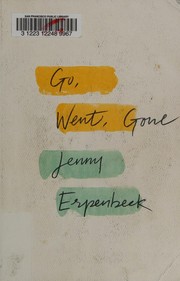 Jenny Erpenbeck · 2015Go, Went, GoneLvl 5Medium pace