
Romanticism & the Gothic
Romanticism trusted feeling over argument, and the Gothic gave that trust its furniture: ruined architecture, monstrous creators, doubles who know what you won't admit. Seven books track the mode from its deliberately silly English origin through Germany's uncanniest doubles to an American whale hunt that inherited the sublime whole.
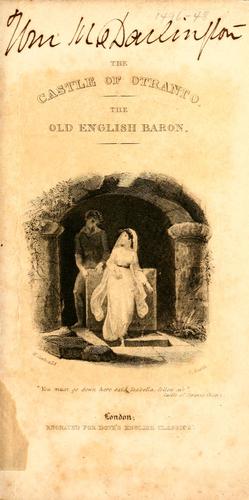 The Castle of Otranto
Horace Walpole · 1764
Lvl 3110ppWalpole's short, self-consciously absurd novel invents the genre's whole furniture on purpose: crumbling castle, prophecy, and a giant helmet that falls from nowhere.
 The Sorrows of Young Werther
Johann Wolfgang von Goethe · 1774
Lvl 3176ppGoethe's lovesick young man feels his way to suicide and all Europe wept and imitated him: the movement's founding bestseller, feeling with no argument to answer it.
 The Italian
Ann Radcliffe · 1797
Lvl 5424ppRadcliffe's Gothic heroine survives an Inquisition-shadowed Italy of secret monks and forbidden inheritance: the genre's terror-as-pleasure machinery at full, elegant speed.
 The Devil's Elixirs
E. T. A. Hoffmann · 1815
Lvl 7320ppHoffmann's monk loses himself in a labyrinth of doubles, and the narration itself stops being sure who's telling the story: the German vein at its strangest.
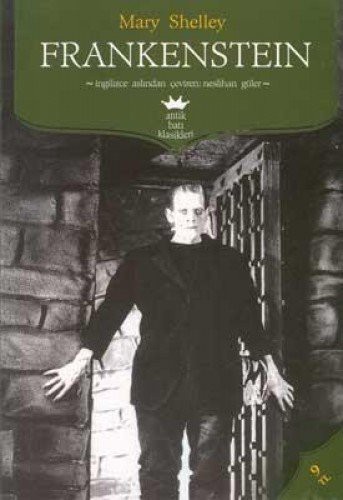 Frankenstein
Mary Shelley · 1818
Lvl 4280ppMary Shelley's creature is the sublime and the monstrous in one body: ambition unchecked by feeling, and feeling taking its revenge on the man who wouldn't give it any.
 Wuthering Heights
Emily Brontë · 1847
Lvl 6352ppEmily Brontë's Heathcliff and Catherine aren't a romance so much as weather: the era's most amoral, most annihilating vision of a bond nothing can civilize.
 Moby-Dick
Herman Melville · 1851
Lvl 8625ppThe capstone, and the mode's Atlantic crossing complete: Melville sends the Gothic double and the Romantic sublime to sea after a whale, and comes back with chapters on rope that turn out to be about God.