

E. T. A. Hoffmann
Germany
Nervy, hallucinatory precision: ordinary rooms and objects tipping without warning into dread, narrated with a bureaucrat's exacting calm.
Hoffmann added 'Amadeus' to his own name in homage to Mozart, and lived a genuinely double life: by day a Prussian judicial official rising through the ranks of the Berlin courts, by night a composer, caricaturist, and writer of fantastic fiction. His music criticism, especially his praise of Beethoven's instrumental works, helped define what Romantic listeners meant by the sublime.
The Sandman (1816) and other tales fused this same double vision (rational bureaucrat and feverish dreamer) into fiction where automatons, doubles, and the uncanny destabilize ordinary Berlin life; Freud later used the story as his central example in the essay that coined 'the uncanny' itself. Alcoholism and a degenerative paralyzing illness closed in on him in his last years; he kept dictating fiction even as his body failed.
He died in Berlin in 1822.
Lines of influence
No ancestors recorded: a headwater.
Their books in the atlas
- 1815
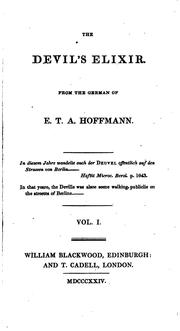 The Devil's ElixirsLvl 7gothic
 - 1816
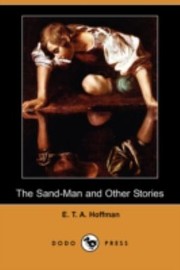 The SandmanLvl 6gothic
Meanwhile, elsewhere
 1765–1820Nguyễn DuVietnamSoutheast Asia · Vietnam
 1799–1837Alexander PushkinRussiaRussia & Eastern Europe · Russia
 1804–1864Nathaniel HawthorneUnited StatesNorth America · United States
 1783–1842StendhalFranceWestern Europe · France
 1785–1873Alessandro ManzoniItalyWestern Europe · Italy
 1741–1803Pierre Choderlos de LaclosFranceWestern Europe · France
If you like Hoffmann, try
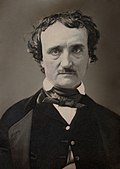 1809–1849Edgar Allan PoeUnited Statesshaped by Hoffmann · kindred genres: gothic · neighboring movements
 1777–1811Heinrich von KleistGermanyshared movement: Romanticism & the Gothic · both write in German · same region & era
 1764–1823Ann RadcliffeEnglandshared movement: Romanticism & the Gothic · kindred genres: gothic · same region & era
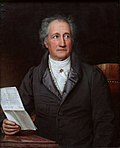 1749–1832Johann Wolfgang von GoetheGermanyshared movement: Romanticism & the Gothic · both write in German · same region & era
 1717–1797Horace WalpoleEnglandshared movement: Romanticism & the Gothic · kindred genres: gothic · same region & era1804–1864Nathaniel HawthorneUnited Stateskindred genres: gothic, psychological novel · neighboring movements