

José María Arguedas
Peru
Lyrical and incantatory, Quechua rhythms and vocabulary pressed directly into Spanish prose: nature and myth given the same weight as ordinary event.
Arguedas's mother died when he was two, and a hostile stepmother banished him to the servants' quarters, where Quechua-speaking women raised him on a language and worldview that white Peruvian society disdained; the double consciousness that resulted became his lifelong subject as both novelist and pioneering ethnologist of Andean culture.
Deep Rivers (1958) drew directly on his own boarding-school years, following a boy shuttled between his father's itinerant life and a religious school in Abancay, torn between the animist, communal world of Quechua Indigenous life and the racial hierarchies Spanish-speaking Peru enforced around it.
He worked for decades as a folklorist and university professor of ethnology, translating Quechua oral literature into Spanish, before severe depression led him to take his own life at the University of San Marcos in Lima in 1969.
Their books in the atlas
- 1941
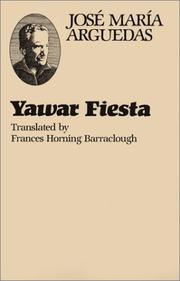 Yawar FiestaLvl 6colonial & postcolonial
 - 1958
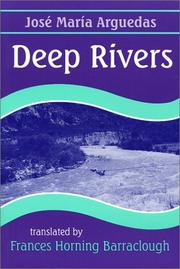 Deep RiversLvl 6bildungsroman
Meanwhile, elsewhere
 1906–1989Samuel BeckettIreland / FranceWestern Europe · Ireland / France
 1905–1980Jean-Paul SartreFranceWestern Europe · France
 1908–1986Simone de BeauvoirFranceWestern Europe · France
 1907–1990Alberto MoraviaItalyWestern Europe · Italy
 1879–1970E. M. ForsterEnglandWestern Europe · England
 1904–1991Graham GreeneEnglandWestern Europe · England
If you like Arguedas, try
 1932–1990Manuel PuigArgentinakindred genres: bildungsroman, political novel · both write in Spanish · same region & era
 1936–2025Mario Vargas LlosaPerukindred genres: political novel, colonial & postcolonial · both write in Spanish · same region & era
 1861–1896José RizalPhilippineskindred genres: colonial & postcolonial, political novel · both write in Spanish
 1916–2002Camilo José CelaSpainkindred genres: political novel, tragedy · both write in Spanish
 1905–2004Mulk Raj AnandIndiakindred genres: colonial & postcolonial, political novel
 1911–2011Ernesto SabatoArgentinaboth write in Spanish · same region & era