

Jean-Paul Sartre
France
Argumentative and dense with abstraction, fiction functioning as philosophy in disguise: long sentences building toward a stated idea rather than an image.
Sartre's father died before he was two; he grew up in his grandfather's house steeped in books, and met Simone de Beauvoir as a fellow student at the École Normale Supérieure in 1929, beginning a lifelong intellectual and romantic partnership the two deliberately never formalized into marriage. Captured as a soldier in 1940, he spent nine months as a prisoner of war before returning to occupied Paris.
Nausea (1938) had already staged his philosophy before he fully theorized it in Being and Nothingness (1943). Postwar, he ran the journal Les Temps Modernes and became the era's most visible public intellectual, weighing in on colonialism, Marxism, and the 1968 student uprisings. He turned down the 1964 Nobel Prize, arguing a writer shouldn't let himself be institutionalized, and died in 1980 to a funeral procession that stopped Paris traffic for hours.
Lines of influence
Their books in the atlas
- 1938
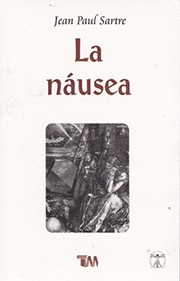 NauseaLvl 6existentialist
 - 1945
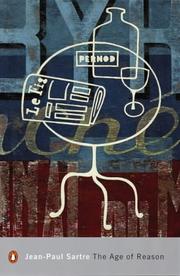 The Age of ReasonLvl 6existentialist
Meanwhile, elsewhere
 1905–1984Mikhail SholokhovRussiaRussia & Eastern Europe · Russia
 1900–1989Sándor MáraiHungaryRussia & Eastern Europe · Hungary
 1892–1982Djuna BarnesUnited StatesNorth America · United States
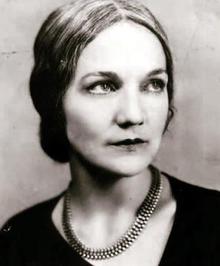 1890–1980Katherine Anne PorterUnited StatesNorth America · United States
 1891–1980Henry MillerUnited StatesNorth America · United States
 1905–1989Robert Penn WarrenUnited StatesNorth America · United States
If you like Sartre, try
 1908–1986Simone de BeauvoirFranceshaped by Sartre · shared movement: Existentialism & the Absurd · kindred genres: existentialist
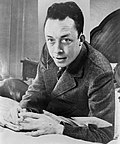 1913–1960Albert CamusAlgeria / Franceshared movement: Existentialism & the Absurd · both shaped by Dostoevsky · kindred genres: existentialist, philosophical novel
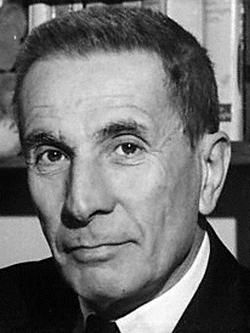 1906–1972Dino BuzzatiItalyshared movement: Existentialism & the Absurd · kindred genres: existentialist, philosophical novel · same region & era
 1919–1999Iris MurdochIreland / Englandshaped by Sartre · kindred genres: philosophical novel · same region & era
 1906–1989Samuel BeckettIreland / Franceshared movement: Existentialism & the Absurd · kindred genres: existentialist · both write in French
 1935–2023Kenzaburō ŌeJapanshaped by Sartre · neighboring movements