
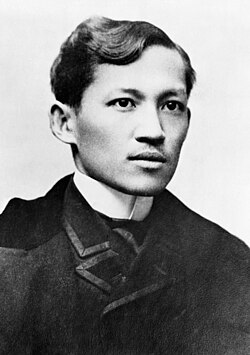
José Rizal
Philippines
Ironic and richly allusive, satire aimed at friars and functionaries alike: melodrama and social anatomy fused into one anticolonial indictment.
Rizal trained as an ophthalmologist across Madrid, Paris, and Heidelberg, absorbing European liberalism and fiction (Alexandre Dumas's revenge tales above all) during a decade of study far from Spanish colonial rule. Fluent in over twenty languages, he wrote Noli Me Tangere in Spanish while still a student abroad, smuggling copies home to a colony where owning one became a criminal offense.
The novel follows Crisóstomo Ibarra, a reform-minded young man returning from Europe, as he confronts Spanish friars and colonial officials corrupting his country from within: thinly disguised portraits of real clergy that made Rizal an instant target. Its 1891 sequel, El Filibusterismo, hardened his reformism into open revolutionary anger.
Rizal returned to the Philippines despite the danger, was arrested on fabricated charges of fomenting the 1896 revolution his novels had helped inspire, and was executed by firing squad in Manila at thirty-five: a martyrdom that made him the Philippines' national hero.
Lines of influence
No descendants recorded, yet.
Their books in the atlas
- 1887
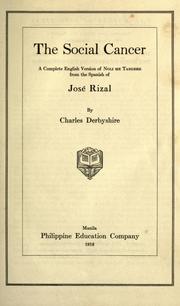 Noli Me TangereLvl 5colonial & postcolonial
Meanwhile, elsewhere
 1840–1902Émile ZolaFranceWestern Europe · France
 1848–1907Joris-Karl HuysmansFranceWestern Europe · France
 1840–1928Thomas HardyEnglandWestern Europe · England
 1854–1900Oscar WildeIrelandWestern Europe · Ireland
 1857–1924Joseph ConradPoland / EnglandWestern Europe · Poland / England
 1859–1952Knut HamsunNorwayWestern Europe · Norway
If you like Rizal, try
 1802–1870Alexandre DumasFranceshaped Rizal
 1911–1969José María ArguedasPerukindred genres: colonial & postcolonial, political novel · both write in Spanish
 1900–1942Roberto ArltArgentinakindred genres: political novel · both write in Spanish
 1850–1894Robert Louis StevensonScotlandboth shaped by Dumas
 1941–2017Ricardo PigliaArgentinakindred genres: political novel · both write in Spanish1857–1924Joseph ConradPoland / Englandkindred genres: colonial & postcolonial, political novel