
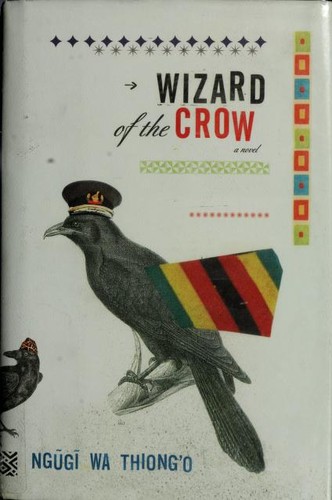
Wizard of the Crow
Ngũgĩ wa Thiong'o · b. 1938 · Kenya
Originally Mũrogi wa Kagogo (Gikuyu) · translated by Ngũgĩ wa Thiong'o
Why it matters
In the fictional Free Republic of Aburĩria, a trickster sorcerer and a shape-shifting dictator's grotesque body politic collide in a sprawling satire of postcolonial tyranny and global capital. Ngũgĩ's first Gikuyu novel since his exile began, and his most ambitious: an epic built in the language he fought to reclaim.
At a glance
A vast cast and folkloric excess stretch across nearly 800 pages of interlocking political satire.
Deep dive
Kamiti stumbles into a legend the whole country has been waiting for without meaning to become anyone's savior, in a satire that keeps outpacing its own already-absurd premise about what power will do to stay in office.
Written for readers who have finished the book. No plot recap, and nothing here is safe to read first.
Themes & symbolism
Ngũgĩ sets the Free Republic of Aburĩria under a dictator known only as the Ruler, who wants to mark his birthday and cement his legacy by building Marching to Heaven, a tower literally meant to reach God, financed by a Global Bank he needs and despises in equal measure. Kamiti, an unemployed graduate turned beggar, and Nyawira, a feminist organizer working underground against the regime, are thrown together by accident and improvise the identity of the Wizard of the Crow, a folk-prophesied healer whom the desperate population immediately decides has arrived to save them, a legend the pair keep half-accidentally feeding because refusing to play the part would be more dangerous than playing it.
The Ruler's body becomes the novel's most extravagant satirical device: after American officials snub him over funding for Marching to Heaven, he contracts Self-Induced Expansion, ballooning grotesquely while losing the power of speech, a literalized inflation of a man whose entire authority has always been noise and appetite rather than substance. Ngũgĩ never lets the disease read as simple metaphor sitting outside the plot; doctors, mistresses, and rival ministers all treat the Ruler's bloated, silent body as a genuine crisis of state, because in Aburĩria his body and the state's functioning were never actually separate things.
Ngũgĩ wrote the novel first in Gikuyu, as Murogi wa Kagogo, the longest work of fiction ever published in an East African language, before translating it into English himself, a choice consistent with the argument he had been making about African literature since Decolonising the Mind, that a continent's stories belong most fully to the languages that continent actually speaks. The novel's queuing scenes, ordinary Aburĩrians lining up for days outside the Ruler's palace on a rumor that he is handing out jobs, a line that becomes its own accidental protest movement once foreign journalists arrive to film it, are Ngũgĩ's clearest satire of how authoritarian spectacle can be turned, almost by accident, into the crowd's own weapon.
A Coup Staged as a Genetics Clinic Visit
Titus Tajirika, a grasping businessman appointed to oversee Marching to Heaven, visits a Global Bank-funded genetics clinic seeking a whiter appearance to match his new status and comes away with a transplanted white arm and leg, a graft Ngũgĩ plays for outright farce that nonetheless tracks exactly how thoroughly Aburĩria's ruling class has internalized whiteness as the visible proof of power. That graft becomes the instrument of the novel's final coup, since it is Tajirika's altered body, more than any genuine political program, that lets him convince a desperate crowd he has become something more than human.
The last seal: what actually happens, and why it lands the way it does.
The ending, explained
With the Ruler physically diminished and unable to speak, an American envoy pressures him into publicly announcing Baby D, a sham transition toward democracy meant mostly to placate foreign donors, and Tajirika seizes the opening: he has quietly done away with the incapacitated Ruler and, brandishing his transplanted white limbs before a crowd primed by years of superstition and desperation, declares himself a deity and Aburĩria's new absolute ruler, the Empire of Tajirika replacing the Free Republic in name only. Ngũgĩ refuses the satire a clean revolutionary victory: one tyrant simply replaces another under a new title. Kamiti and Nyawira, still committed to each other and to the underground resistance, resolve to keep fighting and to marry, the novel's only unambiguous gain set against a political landscape that has barely moved at all.
Where to go next
 Ngũgĩ wa Thiong'o · 1964Weep Not, ChildLvl 3Medium pace
 Ngũgĩ wa Thiong'o · 1965The River BetweenLvl 4Medium pace
 Ngũgĩ wa Thiong'o · 1967A Grain of WheatLvl 6Slow burn
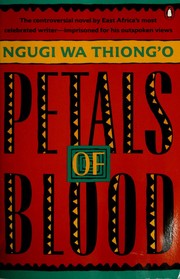 Ngũgĩ wa Thiong'o · 1977Petals of BloodLvl 6Medium pace
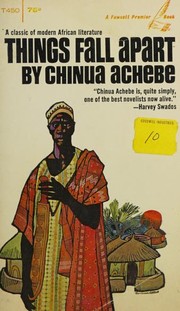 Chinua Achebe · 1958Things Fall ApartLvl 4Medium pace
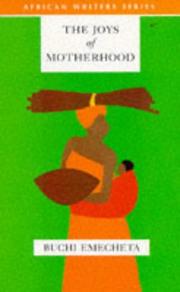 Buchi Emecheta · 1979The Joys of MotherhoodLvl 4Medium pace