
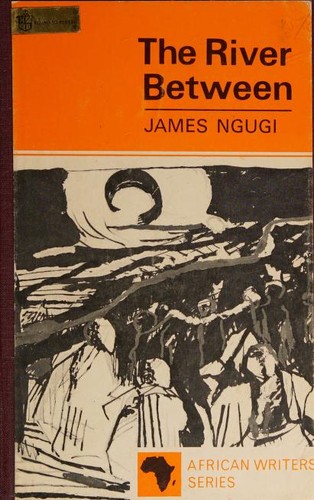
The River Between
Ngũgĩ wa Thiong'o · b. 1938 · Kenya
Why it matters
Two Gikuyu ridges, one keeping the old ways and one converted to Christianity, are divided by a river as a young idealist stakes everything on uniting them through education and a forbidden love. Ngũgĩ's earliest-written novel, tracing the circumcision controversy that split Kenya's missions from its traditions.
At a glance
Lyrical but straightforward narration; the difficulty is in its dense religious and cultural conflict.
Deep dive
Waiyaki is raised from boyhood to be the man who finally unites two rival ridges, and the closer he gets to doing it, the more both sides start to suspect he belongs to neither.
Written for readers who have finished the book. No plot recap, and nothing here is safe to read first.
Themes & symbolism
Kameno and Makuyu, the two ridges separated by the Honia river, have split for a generation over whether to accept Christian missionary teaching or hold to Gikuyu tradition, above all the practice of female circumcision that the mission insists converts renounce entirely. Waiyaki's father Chege raises him under the weight of a prophecy handed down from the seer Mugo wa Kibiro, that a future leader will rise to save the people from the destruction the white man's religion threatens to bring, and sends Waiyaki to be educated at the mission specifically so he can turn its own tools, literacy, argument, institutional authority, against the division it has helped cause.
Waiyaki answers that inheritance by building independent schools across both ridges, teaching Gikuyu children to read and write without requiring them to abandon circumcision or ancestral belief in exchange, a synthesis he believes can hold the tribe together where outright rejection of either tradition or Christianity cannot. His love for Nyambura, daughter of the zealously Christian convert Joshua who has forbidden circumcision in his own household, becomes the novel's most exposed test case for that synthesis: a relationship that should prove two worlds can be reconciled instead marks Waiyaki, in the eyes of the traditionalist secret council the Kiama, as a man who has quietly chosen the mission's side.
Kabonyi, a rival elder with his own claim on leadership and his own resentment of Waiyaki's inherited authority, works to turn the Kiama against him, framing Waiyaki's refusal to publicly renounce Joshua's Christian household, and his love for Nyambura specifically, as proof of divided loyalty rather than as the patient, both-and politics Waiyaki actually intends. Ngũgĩ keeps the novel's sympathies genuinely split rather than simply vindicating Waiyaki: the Kiama's suspicion is self-interested and cruel, but it is also responding to something real, a leader whose vision requires a kind of compromise the ridges, mid-crisis, may not have the patience left to survive.
The River as Argument, Not Just Setting
The Honia river running between the two ridges gives the novel its title and its clearest recurring image, water that both separates Kameno from Makuyu and, in its Gikuyu name meaning cure or healer, promises the two might still be rejoined. Ngũgĩ keeps returning characters to its banks at moments of crisis, using the river's literal, physical continuity between the two ridges as a standing rebuke to the idea that the divide between them is as natural or permanent as either side has convinced itself it is.
The last seal: what actually happens, and why it lands the way it does.
The ending, explained
With Kabonyi's faction ascendant and Waiyaki's marriage plans with Nyambura serving as the final proof his enemies need, the Kiama summons him to answer formally for what it frames as betrayal of the tribe. Ngũgĩ ends the novel before delivering a verdict: Waiyaki and Nyambura are led away together to face the council's judgment, and the narrative closes on that unresolved threshold rather than on either reconciliation or punishment. The refusal to resolve it is deliberate, leaving the prophecy that shaped Waiyaki's whole life unfulfilled on the page and putting the ridges' unification, if it ever comes, permanently outside the novel's own timeframe.
Where to go next
 Ngũgĩ wa Thiong'o · 1964Weep Not, ChildLvl 3Medium pace
 Ngũgĩ wa Thiong'o · 1967A Grain of WheatLvl 6Slow burn
 Ngũgĩ wa Thiong'o · 1977Petals of BloodLvl 6Medium pace
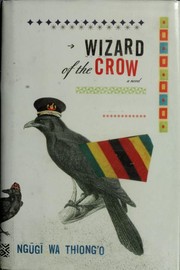 Ngũgĩ wa Thiong'o · 2006Wizard of the CrowLvl 7Medium pace
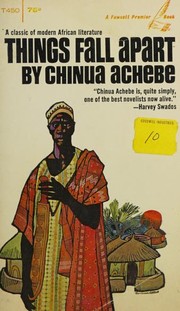 Chinua Achebe · 1958Things Fall ApartLvl 4Medium pace
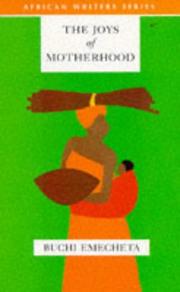 Buchi Emecheta · 1979The Joys of MotherhoodLvl 4Medium pace