
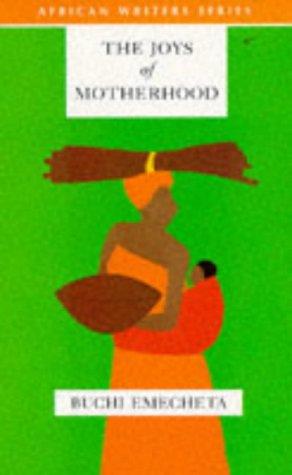
The Joys of Motherhood
Buchi Emecheta · 1944–2017 · Nigeria
Why it matters
A Nigerian woman sacrifices everything for her children, only to find a changing world has voided the old rewards. Emecheta aims the title's irony straight at a society's expectations of women.
At a glance
Linear, accessible storytelling; difficulty lies in its unsparing irony, not its syntax.
Deep dive
Nnu Ego spends her whole life certain that children are a woman's only real security, and Emecheta builds a colonial Lagos economy specifically designed to prove her wrong.
Written for readers who have finished the book. No plot recap, and nothing here is safe to read first.
Themes & symbolism
Nnu Ego's first marriage ends because her husband Amatokwu, when she fails to conceive quickly, sends her back to her father as damaged goods, and that early humiliation sets the terms for everything that follows: she arrives at her second marriage, to the gentle but chronically underemployed Nnaife, convinced that bearing children, especially sons, is the only currency that can ever make her a complete woman. Emecheta doesn't quarrel with that belief in the abstract, she lets it collide with an economy it was never designed for. In the Igbo village world Nnu Ego's mother Ona knew, many children meant labor, land claims, and old-age security; in colonial Lagos, where Nnaife earns wages doing a British family's laundry, every additional child is simply another mouth with no land behind it.
Nnaife's jobs track the family's entire relationship to colonial power: laundering a white couple's clothes, then conscripted to fight a war that has nothing to do with him, each position paying just enough to keep the household from starving and never enough to let Nnu Ego's investment in her children pay off the way village tradition promised it would. Her co-wife Adaku offers the novel's clearest alternative, walking away from the household entirely to build an independent life through trade and, eventually, sex work, a path Nnu Ego is constitutionally unable to choose because she has staked her entire identity on being exactly the kind of mother the old system rewarded and the new one cannot afford to.
A Shrine to a Woman Who Had Nothing
The novel's title is ironic from its first page, but Emecheta saves the sharpest turn of the knife for after Nnu Ego's story is technically over: her grown children, launched by her sacrifices into relative prosperity, build her a shrine so that other women can pray to her spirit for fertility. It is exactly the kind of honor Nnu Ego spent her life believing children would eventually deliver, arriving only in death and only as a service performed for strangers rather than for her. Emecheta lets the shrine stand without commentary, trusting the reader to register that a woman who never had a friend or a comfortable old age has been repurposed into a fertility goddess by the very ideology that used her up.
The last seal: what actually happens, and why it lands the way it does.
The ending, explained
Nnu Ego, aged and effectively abandoned once her sons have grown into successful men with lives of their own, wanders back toward Ibuza and lies down by the side of a road one night, believing herself nearly home. She dies there alone, with no child present to hold her hand and no friend nearby to notice. Her sons, informed afterward, respond by throwing her an expensive, well-attended funeral, the public display of filial devotion they never managed while she was alive to need it. Emecheta closes on that gap between the funeral's grandeur and Nnu Ego's actual last hours as the novel's final argument: the joys promised by motherhood were always going to be collected by everyone except the mother who paid for them.
Where to go next
 Buchi Emecheta · 1974Second-Class CitizenLvl 4Medium pace
 Buchi Emecheta · 1976The Bride PriceLvl 4Medium pace
 Chinua Achebe · 1958Things Fall ApartLvl 4Medium pace
 Tsitsi Dangarembga · 1988Nervous ConditionsLvl 4Medium pace
 Ngũgĩ wa Thiong'o · 1967A Grain of WheatLvl 6Slow burn
 Chimamanda Ngozi Adichie · 2006Half of a Yellow SunLvl 4Fast paced