

The Good Soldier
Ford Madox Ford · 1873–1939 · England
Why it matters
An American narrator circles and re-circles the wreckage of two marriages and a decade-long affair among genteel English and American expatriates, understanding less each time he explains. Ford's achronological 'impressionist' masterpiece taught the modern novel how an unreliable narrator actually works.
At a glance
Deliberately scrambled chronology and an unreliable, self-deceiving narrator require rereading to untangle.
Deep dive
Why a narrator who insists he understood almost nothing keeps circling back to retell the same four years of friendship — and what his professed cluelessness might be hiding, including from himself.
Written for readers who have finished the book. No plot recap, and nothing here is safe to read first.
Themes & symbolism
Ford's "impressionism" is the whole point, not a stylistic garnish: Dowell narrates exactly the way a bewildered witness actually reconstructs a shattering experience, out of order, revising his own claims, describing people intimately in one chapter and professing bafflement about them in the next. The opening line, "This is the saddest story I have ever heard," already tips his hand — heard, not lived, as though he still can't quite locate himself inside his own marriage. His obliviousness to the years-long affair between his wife Florence and his friend Edward Ashburnham, conducted in full view under cover of Florence's largely invented invalidism, isn't incidental to the novel's design, it is the novel's design: an anatomy of self-deception told from inside the deceived party's own head.
Edward himself is the novel's true puzzle — a serial, sentimental philanderer whose gallantry and destructiveness turn out to be the same trait wearing two names, a man who ruins women precisely because his tenderness toward each of them is entirely genuine in the moment. Leonora, coldly managing his affairs from the shadows to protect the family's Catholic-aristocratic fortune and reputation, supplies the book's other model of self-control, one that looks like strength until it's revealed as its own kind of quiet cruelty, steering Edward toward Dowell's young ward Nancy as calculatingly as she once steered him away from other women.
The Time-Shift Method
Ford's deliberate scrambling of chronology — doubling back, contradicting an earlier version of events, admitting mid-sentence that he'd gotten something wrong — was consciously built to mimic how memory actually delivers a trauma: not in order, but in layers that only cohere on repeated return. The technique became one of the modern novel's foundational tools for unreliable narration, imitated by everyone from Faulkner to Ishiguro, precisely because it makes the reader do the same interpretive labor Dowell is failing at in real time.
An American Abroad
Dowell's nationality is not incidental: Ford makes him an American of independent means adrift among the English and European gentry he's married into, an outsider whose money buys him proximity to a class whose codes he never quite learns to read. That gap between social access and social literacy is part of why he can watch an affair unfold under his own roof for nine years and still describe himself, without apparent irony, as having been the last to know.
The last seal: what actually happens, and why it lands the way it does.
The ending, explained
Edward, having fallen into a genuine and destructive infatuation with young Nancy — an entanglement Leonora's own maneuvering helped engineer — finds himself unable to act on it without violating both his own sense of honor and Leonora's now-total control over his life, and kills himself with a penknife after receiving a telegram. Nancy, learning the full truth of his feelings and the friendship's entire hidden history, suffers a complete mental collapse and is left permanently, catatonically insane. Dowell, still narrating, ends the novel as her lifelong caretaker, nursemaid to the wreckage the "good soldier" and his own wife left behind — and even in his final pages, still professing not to fully grasp what any of it meant, which is exactly Ford's point about him.
Where to go next
 Joseph Conrad · 1899Heart of DarknessLvl 7Slow burn
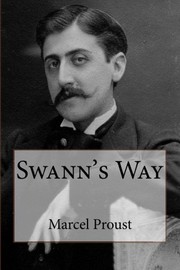 Marcel Proust · 1913Swann's WayLvl 8Slow burn
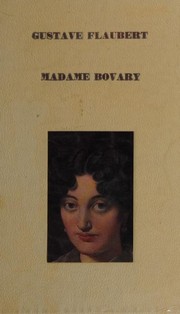 Gustave Flaubert · 1857Madame BovaryLvl 5Slow burn
 James Joyce · 1914DublinersLvl 3Slow burn
 Italo Svevo · 1923Zeno's ConscienceLvl 6Medium pace
 Joris-Karl Huysmans · 1884Against Nature (À rebours)Lvl 7Slow burn