
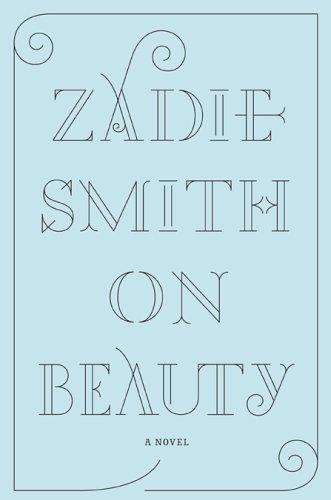
On Beauty
Zadie Smith · b. 1975 · England
Why it matters
Two feuding academic families (one liberal and Black, one conservative) collide across a New England campus and an ocean. Smith's homage to Forster transplants Howards End's class comedy into contemporary culture-war terrain.
At a glance
A large ensemble cast and dense campus-novel wit sustained over a long book.
Deep dive
Two feuding families, one Black and liberal, one conservative and devout, collide across a New England college and an ocean, and Smith is less interested in who wins the argument than in how badly everyone involved actually practices what they preach.
Written for readers who have finished the book. No plot recap, and nothing here is safe to read first.
Themes & symbolism
Howard Belsey, a white British art historian at the fictional Wellington College who has built a career arguing that Rembrandt's genius is a myth manufactured by market forces, and Monty Kipps, a conservative Trinidadian public intellectual who arrives as Wellington's new star hire, are set up as ideological opposites, but Smith's real interest is in how thoroughly both men's stated principles fail to govern their actual conduct: Howard preaches egalitarian feminism while carrying on affairs, Monty preaches family values while running a household as rigid and secretly unhappy as Howard's is chaotic.
The novel is an explicit homage to E. M. Forster's Howards End, transplanting that novel's class collision onto contemporary racial and culture-war terrain, right down to specific plot beats, a prized piece of property, a marriage strained by infidelity, a working-class figure both families use and discard. Smith's most pointed update is making the families' rivalry as much about aesthetics and taste as about ideology; Howard's contempt for Monty's conservatism is inseparable from his contempt for Monty's taste in music, art, and manners, snobbery dressed as principle.
Kiki Belsey, Howard's African American wife, and Carlene Kipps, Monty's ailing wife, form an unlikely friendship across the families' feud that Smith treats as the novel's genuine emotional center, two women who recognize in each other a shared exhaustion with the men whose public reputations they've spent decades quietly subsidizing. Their bond, formed almost entirely offstage from the men's public sparring, argues that the real intellectual honesty in the novel belongs to the wives, not the professors paid to have opinions.
Rap, Poetry, and Who Gets to Read Whom
Levi, Howard and Kiki's youngest son, adopts an invented Black urban identity at odds with his comfortable academic upbringing and eventually gravitates toward Haitian immigrant activism, a subplot Smith uses to needle the novel's more theory-minded characters: Levi's politics are unpolished and occasionally embarrassing, but his actual solidarity with Haitian street vendors does more concrete good than either father's decades of published argument. Zora, his sister, fights fiercely for a poetry class and a place in the university's intellectual hierarchy, only to discover how little the actual content of great poems interests her compared to the status of being seen to possess them.
The last seal: what actually happens, and why it lands the way it does.
The ending, explained
Howard's affair with Victoria, Monty and Carlene's daughter, detonates his marriage far more completely than his earlier, more easily forgiven infidelity with a Wellington colleague, and Kiki finally leaves him once the affair with a woman young enough to be their daughter makes his pattern impossible to keep excusing. Carlene Kipps dies during the novel's final stretch, and a dispute over whether she intended to leave a valuable painting to Kiki rather than to her own husband exposes just how little either family actually knew the woman they'd been orbiting. The closing image, Howard delivering a lecture on a Rembrandt painting he can no longer pretend to have theorized his way past, breaking down mid-sentence with Kiki watching from the audience, lets Smith's satire soften just enough to admit that beauty, and love, kept mattering to him the whole time he was arguing they didn't.
Where to go next
 Zadie Smith · 2000White TeethLvl 5Medium pace
 E. M. Forster · 1924A Passage to IndiaLvl 6Medium pace
 Salman Rushdie · 1981Midnight's ChildrenLvl 8Medium pace
 Paul Scott · 1977Staying OnLvl 4Slow burn
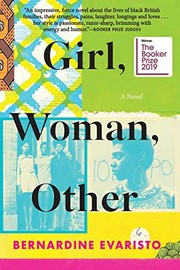 Bernardine Evaristo · 2019Girl, Woman, OtherLvl 4Fast paced
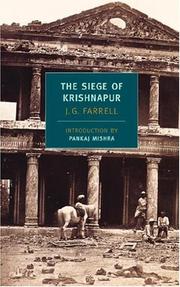 J. G. Farrell · 1973The Siege of KrishnapurLvl 5Medium pace