
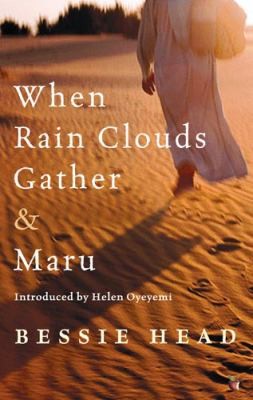
When Rain Clouds Gather
Bessie Head · 1937–1986 · South Africa / Botswana
Why it matters
A South African exile arrives in a poor Botswana village and finds unlikely common cause with a British agricultural expert and a defiant local farmer. Head's warmest novel, written from her own first bruising years of statelessness.
At a glance
A relatively linear pastoral narrative, gentler and more accessible than her later, more fractured work.
Deep dive
Makhaya crosses the border out of apartheid South Africa expecting nothing but survival, and finds himself pulled instead into a fight over who gets to decide how a Botswana village farms its own land.
Written for readers who have finished the book. No plot recap, and nothing here is safe to read first.
Themes & symbolism
Makhaya Maseko crosses illegally into Botswana from South Africa, fleeing a country whose racial laws he has already served prison time for defying, arriving in the village of Golema Mmidi with no plan beyond putting the border behind him. Head, who lived through her own version of that same exile, refuses to let Makhaya's escape read as arrival at safety; Botswana has its own hierarchies, its own chiefs, its own capacity for cruelty, and the novel is careful never to let its setting stand in simply as apartheid's opposite.
Gilbert Balfour, an English agricultural officer trying to introduce cooperative farming and new cash crops to a village still organized around subsistence and traditional chieftainship, recruits Makhaya into the project, and the coalition the two men build with local women like Paulina Sebeso becomes the novel's real center of gravity: development conceived from the ground up, through consent and shared labor, against the standing order of Chief Matenge, who governs the village in his absent brother's place and treats any change he did not personally authorize as a direct threat to his authority.
Head gives her women characters, especially Paulina, an authority and competence the village's traditional structures consistently underrate, and the agricultural cooperative's eventual success depends specifically on channeling that competence rather than routing every decision back through chiefly permission. The novel's optimism about development is real but conditional: cooperative farming works in Golema Mmidi not because foreign expertise arrives to fix a backward village, but because Gilbert's expertise and Makhaya's outsider clarity combine with knowledge and labor the villagers, especially the women, already had and had never been allowed to use.
A Tyrant Undone by His Own Bookkeeping
Matenge's downfall comes not from any confrontation with Makhaya or Gilbert's cooperative directly but from his own scheme to extort tax money from a poor, powerless widow, an abuse of chiefly authority so naked that it turns even his own loyal subjects against him. Head lets the village's collective disgust, rather than any outside intervention, do the work of removing him, making Matenge's fall a demonstration of the same self-governing capacity the cooperative has been proving all along.
The last seal: what actually happens, and why it lands the way it does.
The ending, explained
Exposed and isolated once his extortion of the widow becomes public knowledge and his usual base of support turns against him, Matenge hangs himself rather than face the village's judgment, and Golema Mmidi is left to reorganize itself without the chief who has spent the whole novel blocking its progress. The agricultural cooperative, freed of his interference, moves forward with the schemes Gilbert and the villagers have been building together, and Makhaya, who arrived as a stateless refugee with no plans past the next day, commits to staying, marrying Paulina and taking up a permanent place in a community he chose rather than one assigned to him at birth. Head closes on cautious optimism rather than triumph, a village's ordinary, unglamorous work outlasting the one man who tried hardest to stop it.
Where to go next
 Bessie Head · 1973A Question of PowerLvl 8Slow burn
 Tayeb Salih · 1966Season of Migration to the NorthLvl 7Slow burn
 Assia Djebar · 1985Fantasia: An Algerian CavalcadeLvl 8Slow burn
 Nadine Gordimer · 1981July's PeopleLvl 7Slow burn
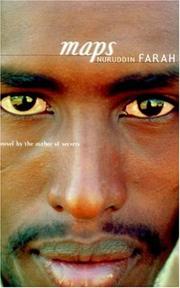 Nuruddin Farah · 1986MapsLvl 8Slow burn
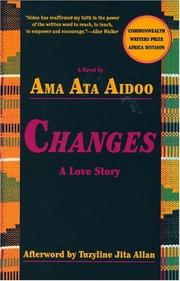 Ama Ata Aidoo · 1991ChangesLvl 3Medium pace