
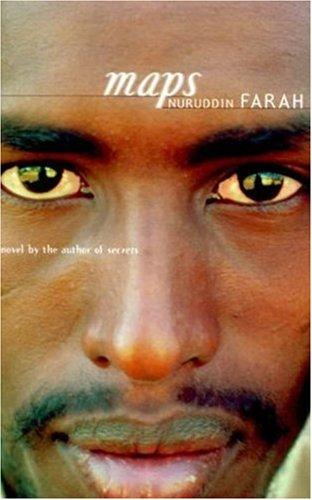
Maps
Nuruddin Farah · b. 1945 · Somalia
Why it matters
An orphan raised amid the Ogaden War's shifting borders finds his own identity as unstable as the contested territory around him. Somalia's most internationally celebrated novel of nationhood and selfhood entwined.
At a glance
Shifting second-, first-, and third-person address destabilizes narrative identity by design.
Deep dive
Askar's body seems to bleed in time with a war being fought over land he's never set foot on, and Farah tells his coming of age in a voice that keeps changing person as if identity itself can't settle on a pronoun.
Written for readers who have finished the book. No plot recap, and nothing here is safe to read first.
Themes & symbolism
Askar is born in the Ogaden, the Somali-inhabited region under Ethiopian administration whose contested status drives the war running underneath the entire novel, and he is raised not by a Somali mother but by Misra, an ethnic Oromo woman with her own uncertain claim on any side of the conflict. Farah builds the novel's central irony directly into this arrangement: the person who actually nurses, raises, and shapes Askar has no standing at all within the nationalist story of blood and territory that Askar is meanwhile being taught to believe defines him. Somali identity, in Askar's own family, turns out to run through a woman the nation would not claim as one of its own.
Farah narrates Askar's childhood by sliding between first, second, and third person, sometimes within the same chapter, a technique that reads at first like stylistic restlessness and settles, over the length of the novel, into an argument: a boy raised between competing claims on his body, his mother tongue, and his nationality cannot be adequately rendered by a single, stable narrating voice. That fracture escalates into the novel's most unsettling device, Askar's body registering the war directly, bleeding on days that later prove to coincide with real violence in the region, a magical-realist collapse of the boundary between one child's body and a territory being fought over by grown men with guns.
Misra herself becomes the target of the accusation the novel has been building toward: that during the fighting she passed information about Somali guerrillas to the occupying Ethiopian side, a charge Askar can neither confirm nor dismiss, since everything he knows about her loyalty comes filtered through his own childhood dependence on her. Farah complicates her further with a devastating revelation about her own past involvement with an Ethiopian officer, discovered only afterward to be her own half brother, layering incest directly onto the novel's obsession with blurred boundaries between one people and another, one family and another.
A Grammar for a Fractured Self
The novel's pronoun shifts aren't decoration; Farah uses 'I' for Askar's most intimate memories, 'you' for scenes charged with self-accusation, as if Askar can only address his own culpability at a slight remove, and 'he' for moments he needs to observe himself the way a stranger, or an interrogator, might. By the time the accusations against Misra close in, the shifting grammar has trained the reader to expect that no single version of Askar, and no single map of the region he was born into, was ever going to be reliable enough to settle on.
The last seal: what actually happens, and why it lands the way it does.
The ending, explained
As suspicion against Misra hardens into accusation, she disappears from the narrative's present and is later found dead, her body mutilated in a way that grotesquely echoes the mastectomy she underwent earlier in the novel. Askar is discovered around the same time in a state of physical collapse, bleeding without any clear wound, and the novel declines to resolve whether his body's violence is metaphor, coincidence, or something closer to confession. Taken into police custody, he gives his name in variant after variant while narrating and renarrating Misra's story to officers who want a simple answer, guilty or innocent, that neither Askar nor the novel is willing to supply.
Where to go next
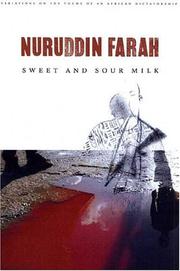 Nuruddin Farah · 1979Sweet and Sour MilkLvl 6Medium pace
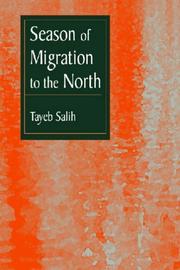 Tayeb Salih · 1966Season of Migration to the NorthLvl 7Slow burn
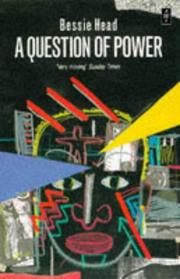 Bessie Head · 1973A Question of PowerLvl 8Slow burn
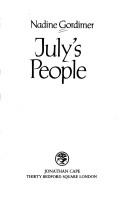 Nadine Gordimer · 1981July's PeopleLvl 7Slow burn
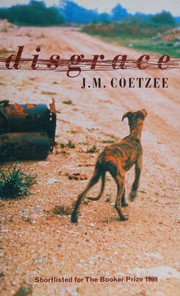 J. M. Coetzee · 1999DisgraceLvl 5Medium pace
 Penelope Lively · 1987Moon TigerLvl 6Medium pace