
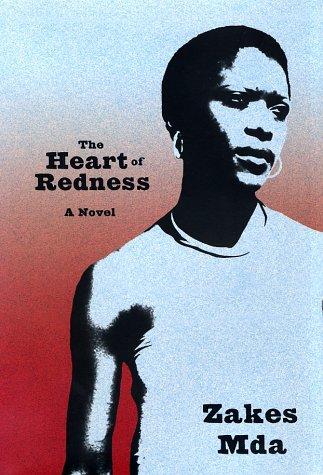
The Heart of Redness
Zakes Mda · b. 1948 · South Africa
Why it matters
A village divides between believers and skeptics over a nineteenth-century prophecy that doomed the Xhosa cattle-killing movement, its argument replaying in a modern fight over a casino development. Mda's best-known novel braids two centuries of the same unresolved question.
At a glance
Two interwoven timelines a century apart share character names and require careful tracking.
Deep dive
Camagu comes home to South Africa disillusioned with everything he studied abroad, and ends up in a village still arguing, a century and a half later, about whether the same prophecy that once nearly destroyed it deserved to be believed.
Written for readers who have finished the book. No plot recap, and nothing here is safe to read first.
Themes & symbolism
Mda splits the novel between two timelines a century and a half apart: in the 1850s, the teenage prophet Nongqawuse tells the Xhosa that their ancestors have promised to sweep the British into the sea if the people kill every last head of cattle and destroy their own grain stores, a real historical event that produced a catastrophic famine when the ancestors did not appear. Mda tracks the community's split into Believers, who carried out the killing on faith, and Unbelievers, who refused, as a wound that never actually closes, reappearing in the present-day village of Qolorha as rival descendants still arguing the same argument over a proposed casino and resort development.
Camagu, back from decades in the United States and deeply skeptical of the NGO and government development jargon he encounters in Johannesburg, initially reads the village's factionalism as backwardness, until his growing relationships with two women pull him in opposite directions: Xoliswa Ximiya, the Westernized headmistress who wants Qolorha modernized and homogenized along the casino developers' lines, and Qukezwa, descendant of the old Believers, whose deep, specific knowledge of the land, its plants, its birds, its ecological history, reframes tradition for Camagu as a form of expertise rather than superstition.
Mda, who trained as a development-studies scholar as well as a novelist, uses the casino subplot to stage an argument he clearly has a side in: economic development imposed from outside and answerable only to a distant company balance sheet against a slower, locally rooted alternative grounded in the very land and history Nongqawuse's story is bound up with. The nineteenth-century plot is never simply background to the twentieth-century one; both are about who gets to decide a community's relationship to the future, ancestors or accountants, and Mda declines to pretend that question was settled the first time it was asked.
Nongqawuse, Neither Villain Nor Saint
Historians still debate whether Nongqawuse was a manipulated child, a genuine visionary, or a symptom of a colonized society searching for any explanation for a lungsickness epidemic already killing its herds before she ever spoke; Mda refuses to resolve the question inside the fiction either. His two timelines let the cattle-killing function simultaneously as a documented catastrophe, one of the deadliest self-inflicted famines in South African history, and as an open, ongoing interpretive fight, since the novel's present-day characters are still descended from and defined by which side of that fight their ancestors landed on.
The last seal: what actually happens, and why it lands the way it does.
The ending, explained
Camagu chooses Qukezwa over Xoliswa, both romantically and in the underlying argument about the village's future, committing himself to the Believers' vision of development that works with Qolorha's land and history rather than erasing it for a casino complex. Xoliswa, whose contempt for the village she grew up in has only deepened across the novel, leaves for the city, unable to find in Qolorha anything she still wants to belong to. Mda ends the contemporary story on cautious, provisional hope rather than resolution, an alternative development plan with a chance rather than a guarantee, a deliberate rhyme with the nineteenth-century story's own hope, in Nongqawuse's prophecy, that also promised more certainty than history actually delivered.
Where to go next
 Zakes Mda · 1995Ways of DyingLvl 5Medium pace
 Ben Okri · 1991The Famished RoadLvl 8Slow burn
 Abdulrazak Gurnah · 1994ParadiseLvl 5Medium pace
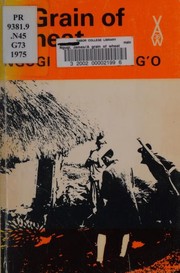 Ngũgĩ wa Thiong'o · 1967A Grain of WheatLvl 6Slow burn
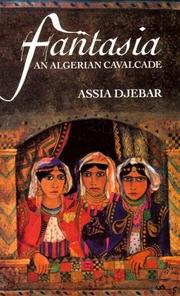 Assia Djebar · 1985Fantasia: An Algerian CavalcadeLvl 8Slow burn
 Ayi Kwei Armah · 1968The Beautyful Ones Are Not Yet BornLvl 6Slow burn