
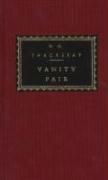
Vanity Fair
William Makepeace Thackeray · 1811–1863 · England
Why it matters
Ruthless, charming Becky Sharp claws her way up Regency society while her sweeter friend Amelia clings to a worthless husband. Thackeray's 'novel without a hero,' narrated by a puppeteer who refuses to let anyone off easy, remains satire's sharpest anatomy of social climbing.
At a glance
A vast social canvas and a knowing narrator, but no formal difficulty.
Deep dive
How a novel that refuses you a hero or a moral center still adds up to the sharpest verdict on social climbing ever written.
Written for readers who have finished the book. No plot recap, and nothing here is safe to read first.
Themes & symbolism
Thackeray's narrator calls himself the Manager of the Performance, working puppets, and that framing is the whole book's argument: everyone in Vanity Fair is on the make, differing only in skill and self-awareness. Becky Sharp is simply the character honest enough, to the reader if to no one else, about the game everyone else pretends isn't one. Her genius is reading a room's vanities and supplying exactly what each person needs to see in her; Amelia's is a different kind of vanity entirely, mistaking her own faithfulness for virtue when it's really just as much of a performance — a devotion to a dead husband's memory that costs her years of a far better man's patient love.
The novel earns its subtitle by declining every chance to let Becky be a straightforward villain or Amelia a straightforward heroine; the narrator interrupts constantly to remind you he's showing a novel without a hero, because heroism, in a world this transactional, is either naive or a performance too. That cynicism is the satire: Vanity Fair isn't a place Becky corrupts, it's the neutral medium she's unusually well adapted to, and the reader's discomfort at half-admiring her for it is the point.
Dobbin's quiet defeat
Dobbin's decades of devotion get their reward, and Thackeray makes sure it isn't a triumph. By the time Amelia finally sees George's unworthiness clearly enough to marry the man who's loved her all along, Dobbin is old enough, and clear-eyed enough, to recognize that the woman he idolized was never quite equal to the idolizing — that getting what you wanted for twenty years doesn't erase the twenty years. It's the novel's most understated cruelty: even its one deserving love story arrives too diminished to read as a happy ending. Thackeray published the novel in monthly serial installments through 1847 and 1848, illustrating it himself, and the slow release meant readers spent nearly two years living inside a story that kept refusing to reward anyone's patience on schedule — Dobbin's included.
The last seal: what actually happens, and why it lands the way it does.
The ending, explained
Amelia marries Dobbin only after Becky, in one of the book's more morally ambiguous late turns, produces evidence of George's wartime infidelity and forces Amelia to finally let go of a marriage she'd spent a decade sanctifying — Becky doing a good deed for reasons that are entirely her own. Becky herself is cast out of respectable society for good, drifting through the Continent on cons and false identities; the novel strongly implies, without confirming, that she poisons Jos Sedley for his insurance money, and she ends the book comfortable, notorious, and entirely unpunished by the standards of a conventional Victorian morality plot. Thackeray closes by literally putting his puppets back in their box, reminding the reader that the marketplace of vanities the title names closes for no one and continues exactly as before.
Where to go next
 Henry Fielding · 1749Tom JonesLvl 5Fast paced
 Anthony Trollope · 1857Barchester TowersLvl 4Medium pace
 Charles Dickens · 1861Great ExpectationsLvl 4Medium pace
 J. G. Farrell · 1973The Siege of KrishnapurLvl 5Medium pace
 Charlotte Brontë · 1847Jane EyreLvl 4Medium pace
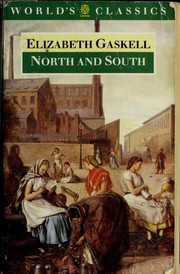 Elizabeth Gaskell · 1855North and SouthLvl 4Medium pace