
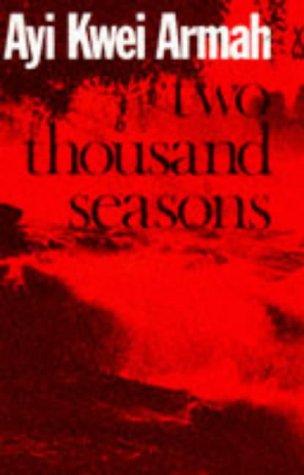
Two Thousand Seasons
Ayi Kwei Armah · 1939–2023 · Ghana
Why it matters
A collective 'we' narrates a thousand years of an African people's history (golden age, Arab and European predation, resistance) as pan-Africanist myth rather than realist chronicle. Armah's most ambitious, most polarizing book.
At a glance
A collective first-person-plural narrator spans centuries with almost no individual protagonist to follow.
Deep dive
Told by a single voice speaking for a whole people across a thousand years, the novel keeps asking the same question every generation of that people has to answer again: who counts as one of us, and who has already sold that answer for a price.
Written for readers who have finished the book. No plot recap, and nothing here is safe to read first.
Themes & symbolism
Armah narrates the novel in a collective first person plural, 'we', speaking across roughly a thousand years, two thousand seasons in the novel's own reckoning of six-month cycles, refusing any single protagonist the kind of individual ownership over the story the novel usually assumes. That 'we' names two successive threats to a way of life built on reciprocity and shared purpose: first the predators, Arab slave traders working with African collaborators along the trade routes, then the destroyers, European colonizers who arrive later and industrialize the same extraction the predators had merely begun.
The prophetess Anoa foresees the predators' coming generations before they arrive, and her warning, largely ignored or only partially heeded at the time it is given, becomes the novel's recurring proof that the people's real vulnerability was never simply foreign strength but a home-grown willingness, among kings and elders eager for wealth and status, to sell out the reciprocal way the moment predators or destroyers offer them a cut of the profits. Isanusi, a teacher and counselor who has seen through the corrupted leadership of his own people, trains a group of young initiates in the old ethic of reciprocity and in the practical skills of resistance, giving the novel's back half a guerrilla insurgency built explicitly on recovering, rather than inventing, older values.
Armah's prose runs long, incantatory, and repetitive by design, closer to oral epic or scripture than to realist narration, and that register is doing real argumentative work: a 'we' speaking in the cadence of communal memory across a thousand years makes betrayal by any single ruler read as a repeatable pattern rather than an isolated historical accident, and makes resistance read the same way, a recurring inheritance rather than a one-time uprising.
Naming the Enemy Before Colonial Language Could
By calling European colonizers destroyers and their Arab predecessors predators rather than using any of the neutral historical or national labels available to him, Armah refuses the vocabulary that later colonial and postcolonial historiography would use to describe the same centuries, insisting on judgment rather than description as the novel's basic unit of narration. The effect is polemical on purpose: Two Thousand Seasons reads less like a historical novel reconstructing the past than like a verdict on it, delivered by the people who lived through both waves of extraction rather than by any outside chronicler.
The last seal: what actually happens, and why it lands the way it does.
The ending, explained
Isanusi's trained initiates, women and men together, break from the compromised leadership collaborating with the destroyers and take up organized resistance, ambushing supply routes and freeing captives rather than waiting for a single decisive battle to settle the outcome. Armah declines to end the novel on victory or defeat; the insurgency continues past the book's final pages, framed explicitly as one more link in the unbroken chain of resistance the 'we' narrator has been tracing since Anoa's original prophecy. The seasons of the title keep counting past two thousand by implication, and the novel's last move is to hand that ongoing count directly to the reader as the next season still to be lived.
Where to go next
 Ayi Kwei Armah · 1968The Beautyful Ones Are Not Yet BornLvl 6Slow burn
 Wole Soyinka · 1975Death and the King's HorsemanLvl 6Medium pace
 Chinua Achebe · 1958Things Fall ApartLvl 4Medium pace
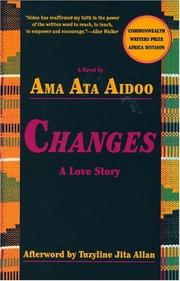 Ama Ata Aidoo · 1991ChangesLvl 3Medium pace
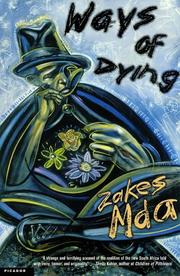 Zakes Mda · 1995Ways of DyingLvl 5Medium pace
 Ngũgĩ wa Thiong'o · 1967A Grain of WheatLvl 6Slow burn