
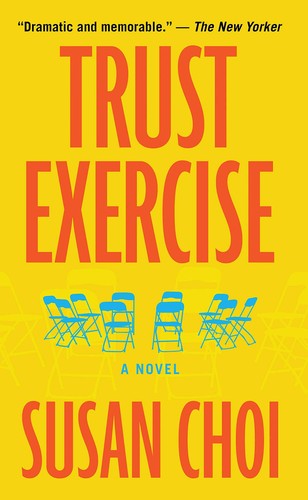
Trust Exercise
Susan Choi · b. 1969 · United States
Why it matters
A seemingly straightforward teenage affair at a competitive performing-arts high school detonates halfway through into another character's competing, unreliable memoir of the same events. Choi's National Book Award winner interrogates memory, power, and who gets to tell the story.
At a glance
A structural rupture midway forces readers to reassess everything the first half established.
Deep dive
Why the novel spends two hundred pages earning your trust in one version of events before showing you exactly what kind of story you agreed to believe.
Written for readers who have finished the book. No plot recap, and nothing here is safe to read first.
Themes & symbolism
The title names the actual pedagogy: Kingsley's acting-class exercises — falling backward into a classmate's arms, holding a stranger's gaze until it stops being comfortable, learning to discard your defenses "for the work" — are the same vocabulary a predator uses to normalize a teenager surrendering her boundaries. Choi writes the Sarah-and-David section in a lush, hyper-attentive free indirect style that reads, on a first pass, like an unusually good teen romance; the horror is retroactive, arriving once you realize the intimacy you were enjoying was staged and cultivated inside a classroom culture one adult built and fed on.
The second section doesn't just add information, it reassigns authorship: a classmate's account, written decades later, takes back a story that had been told about her without her consent, and in doing so makes the novel's real subject narrative custody rather than adolescence. Power in Trust Exercise isn't only what happens in the rehearsal room — it's who gets to write the official version afterward, whose memory outranks whose, and how a beautifully rendered scene can itself be an instrument of control.
The competitive performing-arts high school itself does structural work: an institution built to reward emotional exposure as a marker of serious talent gives Kingsley cover, since any student who balks at his methods risks being read as untalented or unserious rather than as someone whose boundaries are being crossed. That conflation of suffering with artistry is what makes the abuse so hard for the students themselves to name at the time, and it's why the novel needs the distance of adulthood, and a second narrator, before anyone can call it what it was.
A Novel That Runs Its Own Trust Exercise
Choi's structural rupture performs on the reader exactly what Kingsley performs on his students: it seduces you into trusting a familiar mode — the intimate, sensorially rich coming-of-age novel — before revealing that the trust was the point of vulnerability all along. Readers who complained the second section "ruined" the first are, whether they notice it or not, proving the book's argument: an appetite for a certain kind of teenage-romance story is exactly what let the original manipulation go unread as manipulation in the first place.
That formal ambush is also why Trust Exercise resists being filed as a straightforward #MeToo narrative. It isn't interested in delivering a clean villain and a clean verdict; it's interested in how a story about that villain gets constructed, contested, and revised by the people who lived it, which makes the reader's own certainty about what "really" happened exactly as unstable as the characters'.
The last seal: what actually happens, and why it lands the way it does.
The ending, explained
A later section reveals that the seemingly straightforward romance narrative readers were given first was itself a construction, authored years afterward by someone who lived through the same events from a different vantage point — and that authorship recasts what read as consensual teenage feeling as adult manipulation the earlier telling had smoothed over or excluded. The novel then complicates even that corrective account, withholding a stable, final version of what actually happened. Nothing is resolved so much as reopened: the book ends with competing memories still contesting each other, refusing to hand the reader a single trustworthy record to close the case with.
Where to go next
 Hernán Diaz · 2022TrustLvl 6Medium pace
 Justin Torres · 2023BlackoutsLvl 6Slow burn
 Jason Mott · 2021Hell of a BookLvl 5Medium pace
 Joan Didion · 1970Play It as It LaysLvl 6Fast paced
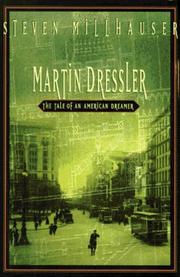 Steven Millhauser · 1996Martin Dressler: The Tale of an American DreamerLvl 5Medium pace
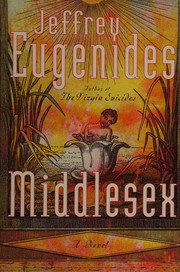 Jeffrey Eugenides · 2002MiddlesexLvl 6Medium pace