
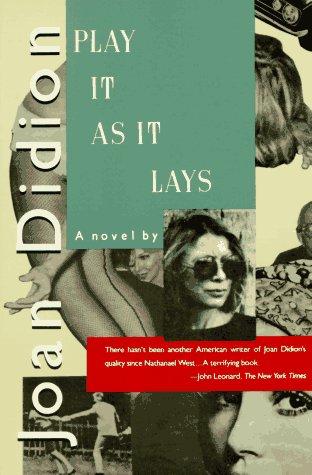
Play It as It Lays
Joan Didion · 1934–2021 · United States
Why it matters
A Hollywood actress drifts through freeways, abortion, and anomie in a novel built of white space and dread. Didion's coldest fiction: the 1960s dream seen from its wreckage.
At a glance
Fragmented, elliptical chapters built from white space demand active inference.
Deep dive
Didion builds the novel out of gaps — blank chapters, missing motives, a landscape of freeways going nowhere in particular — to ask what's left of a self once every reason for living has been driven out of it.
Written for readers who have finished the book. No plot recap, and nothing here is safe to read first.
Themes & symbolism
The freeway is the novel's governing image: Maria drives the Los Angeles interchanges for hours with no destination, reading the traffic reports like scripture, finding in the pure mechanics of merging and exiting a rare relief from thought — an emptiness that's both her illness and, perversely, the only thing that steadies her. Didion builds the prose to match: short numbered chapters, some a single paragraph, present-tense fragments and dropped transitions that mimic dissociation directly, so the novel's form performs the same hollowing-out its plot describes rather than merely reporting it. Hollywood functions as the moral vacuum the freeways run through — BZ and Helene's marriage is a beard arrangement built on mutual convenience, Maria's own career and marriage to the director Carter are equally transactional, and the industry's total indifference to consequence becomes the medium Maria is suffocating in long before anything catastrophic happens to her personally.
The abortion Maria undergoes partway through — clinical, coerced by Carter, rendered by Didion almost entirely through euphemism and white space rather than direct description — is the novel's central trauma and also a formal principle: the narrative withholds and elides exactly where it would be most natural to dwell, training the reader in the same numbness Maria is cultivating in herself. Her fixation on the question 'what makes Iago evil' — unmotivated, causeless malice — is her private attempt to locate some explanatory structure in a moral universe that keeps refusing to supply one; the rattlesnake she finds under the house in the desert, described with the same flat precision as everything else, works less as a symbol needing decoding than as one more fact of a world that offers danger without meaning. Her institutionalized daughter Kate is the one unbroken thread of attachment the novel allows Maria — proof that whatever nihilism she's arrived at hasn't fully swallowed her capacity to love someone regardless of what it costs her.
The Style That Made the Sentence Famous
Didion transplants the clipped, declarative rhythms of her journalism — the same voice behind Slouching Towards Bethlehem, written in the same period and diagnosing the same collapsed center in American culture — directly into fiction, stripping out the connective tissue a more conventional novel would supply and trusting white space to do the rest. She's cited Hemingway's iceberg theory as a model and Nathanael West's Day of the Locust as the template for a Hollywood novel built on moral vacancy rather than incident, but the voice that results is entirely her own: a controlled, almost frozen surface under which the dread is somehow more legible, not less, for never being named outright.
Early reviews, largely from male critics, sometimes read Maria's numbness as a failure of the novel rather than its subject, complaining that a heroine this passive couldn't sustain a story. That reading has been substantially reversed: Play It as It Lays is now taught as a landmark of both minimalist style and a specifically female account of 1960s disillusionment, its influence visible in the fragmented, affectless narrators of later writers like Jenny Offill and Mary Gaitskill, who inherited Didion's trust that what a novel leaves out can carry as much weight as what it says.
The last seal: what actually happens, and why it lands the way it does.
The ending, explained
BZ, exhausted by the same emptiness Maria has been narrating all along but without her residual attachment to Kate to hold him here, takes an overdose lying beside Maria in a hotel room and dies with her hand in his; she doesn't call for help, understanding his choice as the one lucid response either of them has found to a world that keeps refusing to supply reasons. Maria narrates the novel, we learn, from inside a psychiatric facility afterward, distinguishing herself from BZ in the only way she can: she has chosen to keep living without believing there is a why for it, telling us flatly that she knows what nothing means and means to keep playing anyway. It's survival stripped of redemption — not an answer to the dread the novel has spent its length documenting, but a refusal to let the dread be the last word, which for Didion's coldest, bleakest fiction counts as the closest thing to hope it's willing to offer.
Where to go next
 Joan Didion · 1977A Book of Common PrayerLvl 6Slow burn
 Richard Ford · 1995Independence DayLvl 6Slow burn
 Ernest Hemingway · 1926The Sun Also RisesLvl 4Fast paced
 Bảo Ninh · 1990The Sorrow of WarLvl 6Slow burn
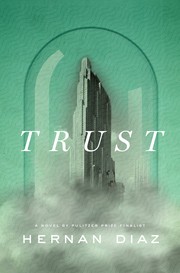 Hernán Diaz · 2022TrustLvl 6Medium pace
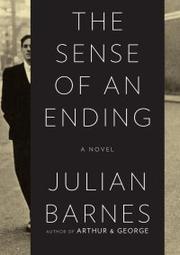 Julian Barnes · 2011The Sense of an EndingLvl 4Medium pace