
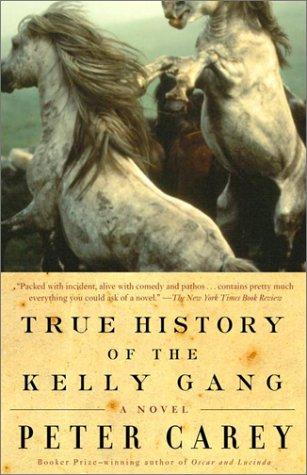
True History of the Kelly Gang
Peter Carey · b. 1943 · Australia / United States
Why it matters
Outlaw Ned Kelly narrates his own outlawing in a barely punctuated, semi-literate voice modeled on his real Jerilderie Letter. Carey's second Booker winner turns Australia's most mythologized bushranger into an unforgettable first-person witness to his own legend.
At a glance
Unpunctuated, phonetic vernacular voice takes a chapter or two to find its rhythm.
Deep dive
Peter Carey ventriloquizes Australia's most mythologized outlaw as a barely literate father determined to set the record straight before anyone else gets to write his story for him — and lets the prose's own ragged grammar make the case for who actually gets to narrate a nation's founding myth.
Written for readers who have finished the book. No plot recap, and nothing here is safe to read first.
Themes & symbolism
Carey writes the entire novel in Ned Kelly's own invented voice — unpunctuated run-on sentences, minimal full stops, a rough vernacular grammar modeled loosely on Kelly's real 1879 Jerilderie Letter — and the style is the novel's whole argument made formal: official Australian history has always been written in the polished prose of magistrates, journalists, and colonial administrators, and Carey's insistence on Kelly narrating himself, uncorrected and unmediated by anyone with better schooling, is a direct claim that the authentic version of this story was never going to sound like the ones that survived in the official record.
Kelly's repeated, explicit framing of his account as a document for his infant daughter — 'I lost my own father and know what it is to be raised on lies and silences' — turns the whole novel into an act of paternal correction: Kelly is writing against the mythologizing and demonizing accounts he knows will circulate about him after his death, trying to leave behind a version of events his daughter, and by extension the Australian public, can trust precisely because it doesn't flatter him, admitting cowardice, error, and cruelty alongside grievance and courage.
The novel roots Kelly's outlawry explicitly in Irish colonial dispossession transplanted to the Australian bush — his mother Ellen's poverty, the police's routine harassment and framing of poor Irish selectors, the class contempt of English and Anglo-Irish squatters and magistrates — so that bushranging reads less as individual criminal pathology than as the predictable result of a colonial order that criminalized poverty and Irishness together, a continuity Carey draws with enough force that the armor-clad final siege plays as much as class war as as manhunt.
The Jerilderie Letter, Reimagined
Carey's novel is built on the historical foundation of Kelly's real 1879 Jerilderie Letter, a 56-page handwritten manifesto Kelly dictated defending his actions and attacking the police, which survives as one of the few genuine first-person documents from any nineteenth-century Australian outlaw; Carey extends its unpunctuated, self-justifying, occasionally self-aware voice across an entire invented autobiography, and frames the whole novel as a series of numbered manuscript 'parcels,' complete with mock-archival provenance notes, that lend Kelly's fictional testimony the material weight of a genuine historical artifact even though the vast majority of the text is Carey's own invention rather than any real Kelly document.
The last seal: what actually happens, and why it lands the way it does.
The ending, explained
Kelly's own narration breaks off just before the last stand at Glenrowan in June 1880, where the four bushrangers, encased in their now-famous homemade iron armor, hole up in the Glenrowan Inn expecting to ambush a police train, only for a hostage to slip away and warn the approaching officers. In the siege, Dan Kelly, Steve Hart, and Joe Byrne are killed, and Ned, protected by armor from shots to the torso, is brought down by fire to his unarmored legs and captured alive. Carey hands the final pages to a fictional secondary narrator, 'S.C.,' who reports the trial, death sentence, and hanging in Melbourne Gaol — a shift that pointedly denies Kelly control over the ending his manuscript has been building toward, since he can testify to his life but not narrate his own death; the parcels simply stop, and someone else's flatter, official voice closes the book, replaying the novel's whole argument about whose version gets the last word.
Where to go next
 Peter Carey · 1988Oscar and LucindaLvl 6Medium pace
 Gabriel García Márquez · 1967One Hundred Years of SolitudeLvl 6Medium pace
 Toni Morrison · 1987BelovedLvl 8Slow burn
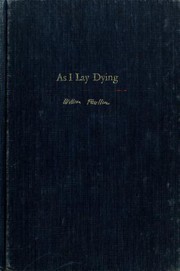 William Faulkner · 1930As I Lay DyingLvl 9Medium pace
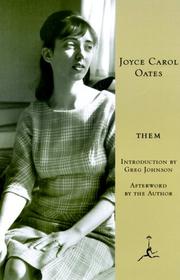 Joyce Carol Oates · 1969themLvl 6Medium pace
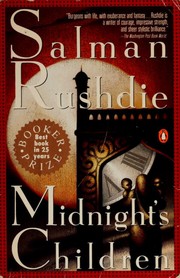 Salman Rushdie · 1981Midnight's ChildrenLvl 8Medium pace