
Tropic of Cancer
Henry Miller · 1891–1980 · United States
Why it matters
A broke American writer's sexual and spiritual odyssey through 1930s Paris, told with unprecedented candor. Banned as obscene for decades, it permanently expanded what fiction could say about the body.
At a glance
Free-associative, plotless prose that abandons conventional narrative structure.
Deep dive
What kind of book you get when a writer refuses plot, shame, and restraint all at once — and why the result reads as celebration rather than confession.
Written for readers who have finished the book. No plot recap, and nothing here is safe to read first.
Themes & symbolism
Miller builds the book out of refusal: no plot arc, no character development, no moral reckoning for anything the narrator does, because the entire point is to reject the machinery of the traditional novel along with the bourgeois respectability it usually serves. Hunger, sex, and poverty are the book's real subjects, and Miller treats all three not as degradation to be pitied but as raw material for a kind of ecstatic vitalism — he is broke, often starving, sponging off friends, and casually, sometimes brutally, sexual, and he narrates all of it with the same unbroken, incantatory joy, as though squalor were simply more evidence that he's alive and paying full attention. That's the book's real transgression, more than the explicit content that got it banned: it refuses to feel bad about any of it.
The city itself becomes a character in that argument — Paris as a place where an American expatriate can shed every Puritan reflex he arrived with, tested against a cast of fellow strivers and hangers-on (Carl, Van Norden, Fillmore) whose own hungers Miller observes with a mix of comradeship and contempt. Women in the book are mostly occasions rather than people, which is the fairest charge against it and also inseparable from what it's trying to do: Miller isn't interested in relationships as the novel usually renders them, only in sensation, and the book's famous notoriety and its real limitation are the same fact.
Banned for Twenty-Seven Years
Written and first published in Paris in 1934 by Obelisk Press, Tropic of Cancer was barred from the United States as obscene for twenty-seven years, smuggled in dog-eared copies by returning soldiers and expatriates until Grove Press finally published it domestically in 1961. The resulting prosecutions — over sixty separate obscenity cases in state and local courts — became a formative battleground for American free-speech law, culminating in a 1964 Supreme Court decision that effectively ended literary obscenity prosecutions in the U.S. Its underground reputation had already made it required contraband reading for the Beats — Kerouac and Ginsberg both cited it — who saw in Miller's confessional sprawl and refusal of shame a direct ancestor of their own project.
The last seal: what actually happens, and why it lands the way it does.
The ending, explained
There's no plot to resolve, which is deliberate — Tropic of Cancer ends the way it lives, in the present tense of a single extended moment rather than a payoff. The final pages find the narrator alone on the bank of the Seine at dusk, having spent the book broke, hungry, and adrift, and instead of a reckoning Miller gives something closer to a hymn: the river simply flowing, indifferent and continuous, and the narrator feeling, for once without irony, at peace inside his own dispossession. It's Whitmanesque in its affirmation — an assertion that being fully alive to one's own hunger and failure is itself a kind of grace — and it closes the book on exactly the note it opened on: not an ending so much as a permanent present tense the narrator has finally stopped fighting.
Where to go next
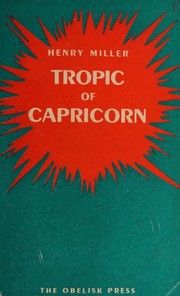 Henry Miller · 1939Tropic of CapricornLvl 7Slow burn
 Gertrude Stein · 1933The Autobiography of Alice B. ToklasLvl 5Medium pace
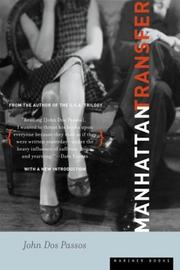 John Dos Passos · 1925Manhattan TransferLvl 6Medium pace
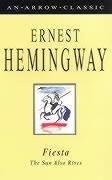 Ernest Hemingway · 1926The Sun Also RisesLvl 4Fast paced
 F. Scott Fitzgerald · 1925The Great GatsbyLvl 4Fast paced
 Djuna Barnes · 1936NightwoodLvl 9Slow burn