
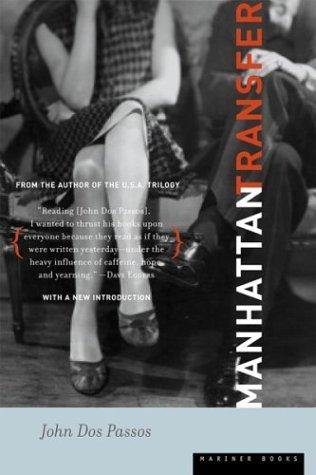
Manhattan Transfer
John Dos Passos · 1896–1970 · USA
Why it matters
Dozens of overlapping New York lives (financiers, chorus girls, immigrants, drifters) collage into a single kaleidoscopic city-portrait, its cut-up, cinematic technique borrowed straight from Joyce. The novel that taught American fiction how to write a whole metropolis at once.
At a glance
A large ensemble cast and fragmented, cinematic cross-cutting between plotlines demand close tracking.
Deep dive
A collage of dozens of overlapping New York lives, assembled from a technique borrowed straight from cinema and modernist collage — the interesting question isn't what happens to any one of them, but what the accumulation adds up to.
Written for readers who have finished the book. No plot recap, and nothing here is safe to read first.
Themes & symbolism
The city is the protagonist; every human plot is a subplot underneath it. Dos Passos tracks financiers, chorus girls, immigrants, union organizers, and drifters as they brush past each other on ferries, in restaurants, on the same streets, mostly without noticing that they're all cogs in one machine. The recurring images of harbors, ferries, and railway terminals work as thresholds that promise transformation — a new arrival stepping off a boat, a striver catching a train uptown — but the novel's running joke is that New York never actually remakes anyone. It just launders ambition into more efficient, more compromised versions of the same hunger. Ellen Thatcher, who starts the book wanting to act, ends it married to the ambitious lawyer-politician George Baldwin, having traded artistic risk for a comfortable, empty security — the closest thing the novel has to a moral, and it applies to nearly everyone in the book.
Jimmy Herf is the closest thing to a stable point of view, a journalist who watches the city's material logic devour everyone around him and slowly comes to understand it will devour him too if he stays. Interspersed through the character chapters are Dos Passos's 'Newsreel' collages — real headlines, ad copy, and popular song lyrics chopped and layered together — which flood the narrative with the same commercial noise that's saturating his characters' inner lives. The effect isn't atmosphere; it's argument. Money, advertising, and gossip are shown literally colonizing consciousness, so that by the time any character has a private thought, it's already been shaped by the city's public chatter.
The Collage Technique and Its Afterlife
Dos Passos borrowed his cut-up, cross-cutting method partly from Joyce's Ulysses and partly from cinema — specifically the montage theories of Soviet filmmakers like Eisenstein, whose juxtaposition of unrelated images to generate meaning Dos Passos essentially transposed onto prose. He extended it with his own inventions: the interpolated Newsreel clips, and later, in the USA trilogy, the stream-of-consciousness 'Camera Eye' sections and potted biographies of real public figures, all techniques Manhattan Transfer pioneers in embryonic form. The book made an entire metropolis narratable as a single organism rather than a backdrop for one protagonist's story.
Jean-Paul Sartre, reviewing Dos Passos in the 1930s, called him the greatest writer of the age and adapted similar simultaneity effects for his own Roads to Freedom trilogy. The lineage runs forward through USA's more radical formal experiments and out into later city-novels that try to hold an entire urban population in view at once, from Doctorow's Ragtime to the crowd-scene chapters of Invisible Man. Manhattan Transfer is the book that proved a novel could be structured like a city map instead of a plot.
The last seal: what actually happens, and why it lands the way it does.
The ending, explained
There's no single plot to resolve, because the novel was never building toward one — it closes instead on its most persistent thread. Jimmy Herf, now divorced from Ellen after her marriage to George Baldwin, walks out of his newspaper job and out of Manhattan on foot, crossing the bridge out of the city with nowhere particular to go. He hitches a ride with a truck driver heading out of town; asked how far he's going, Jimmy answers only 'pretty far.' It's a deliberately unresolved exit rather than a triumph or a defeat — Jimmy isn't punished by the city and doesn't conquer it, he simply refuses to keep feeding it, choosing an open, directionless road over Ellen's version of success. The novel ends mid-motion because motion, not arrival, is the only truthful way to leave a book about a city that never stops rearranging itself.
Where to go next
 John Dos Passos · 1930The 42nd ParallelLvl 7Medium pace
 James Joyce · 1914DublinersLvl 3Slow burn
 Eyvind Johnson · 1946Return to IthacaLvl 6Medium pace
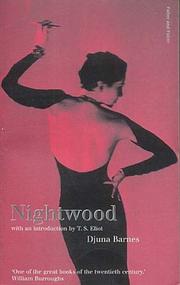 Djuna Barnes · 1936NightwoodLvl 9Slow burn
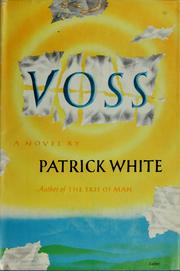 Patrick White · 1957VossLvl 8Slow burn
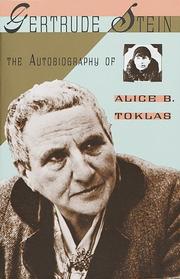 Gertrude Stein · 1933The Autobiography of Alice B. ToklasLvl 5Medium pace