

Tree of Smoke
Denis Johnson · 1949–2017 · United States
Why it matters
A CIA psy-ops family operates through the fog and moral rot of the Vietnam War. Johnson's National Book Award-winning epic of American intelligence work as a form of collective delusion.
At a glance
Sprawling, tonally shifting Vietnam-era narrative with a huge cast.
Deep dive
An intelligence operation built on a lie so elaborate it eventually serves no one — and a war fought less against a visible enemy than inside a hall of mirrors of the Americans' own making.
Written for readers who have finished the book. No plot recap, and nothing here is safe to read first.
Themes & symbolism
Colonel Francis Sands's scheme to resurrect a dead double agent as a psychological weapon — the literal 'Tree of Smoke' program — is Johnson's central image for the entire American intelligence apparatus in Vietnam: an operation so layered in deception that it eventually generates no usable truth at all, only more fog, mistaking activity for purpose and rumor for information. Skip Sands, the Colonel's idealistic nephew, serves these schemes without ever resolving whether his uncle is a visionary reading the war more clearly than anyone or simply coming unmoored, and the novel refuses to adjudicate the question for him — that irresolution is the point.
The title phrase comes from the Book of Joel's 'blood, and fire, and pillars of smoke,' which the Colonel also uses, with heavy irony, as an actual code name, collapsing scripture and spycraft into the same overheated register. Set against the Sands family's abstracted games, the Houston brothers fight a much more physically brutal, much less mediated war, and their presence keeps the novel honest about what all the intelligence theater is actually in service of — bodies, not information.
An Ensemble Without a Center
Johnson refuses the novel a single protagonist commanding the reader's certainty, cutting between the Sands family's psy-ops fantasies, the Houston brothers' ground-level combat, and Vietnamese characters caught underneath both — a structural sprawl that mimics the war's own lack of a coherent through-line. No character gets to explain what the war meant, because the novel's whole method is that nobody involved, at any level, actually knew. Johnson, better known for the compressed, hallucinatory short stories of Jesus' Son, stretches that same disoriented sensibility across six hundred pages and a decade, trading intensity of image for the sheer accumulated weight of an operation too large for any single consciousness to hold.
The last seal: what actually happens, and why it lands the way it does.
The ending, explained
The novel jumps forward to 1970 for the Colonel's death, killed or disappeared under circumstances the book pointedly never clarifies — an appropriate end for a man who built his career on unknowability. A coda set in 1983 reveals that Skip Sands, essentially abandoned by the agency and country he served, was captured after the war's end and executed in Vietnam. The book's final pages belong not to either Sands but to Kathy Jones, the missionary who loved Skip, now doing quiet charitable work in the Philippines years later — a deliberately muted, unresolved close that declines to say whether any of it, the operation, the war, the intelligence built on lies, accomplished anything at all.
Where to go next
 Denis Johnson · 1992Jesus' SonLvl 6Fast paced
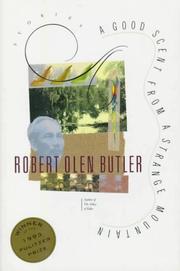 Robert Olen Butler · 1992A Good Scent from a Strange MountainLvl 4Medium pace
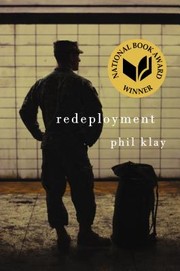 Phil Klay · 2014RedeploymentLvl 4Fast paced
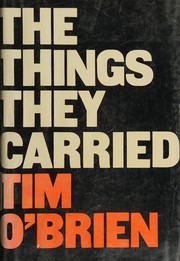 Tim O'Brien · 1990The Things They CarriedLvl 4Medium pace
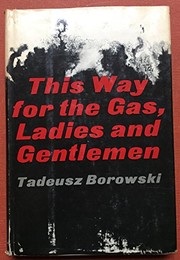 Tadeusz Borowski · 1948This Way for the Gas, Ladies and GentlemenLvl 5Medium pace
 Varlam Shalamov · 1966Kolyma TalesLvl 5Medium pace