

Jesus' Son
Denis Johnson · 1949–2017 · United States
Why it matters
A nameless addict drifts through overdoses, crime, and small unearned miracles in linked, hallucinatory stories. Ruin narrated with a clarity and grace that shouldn't belong together, and somehow do.
At a glance
Hallucinatory, non-linear vignettes narrated by an unreliable addict.
Deep dive
How eleven hallucinatory stories narrated by the same nameless addict add up to one man's unlikely drift from overdose and small-time crime toward a strange, undeserved calm.
Written for readers who have finished the book. No plot recap, and nothing here is safe to read first.
Themes & symbolism
Every story here is narrated by the same man, called Fuckhead by other characters and never named for the reader, and read in sequence they trace one continuous, chronologically scrambled life rather than a set of unrelated case studies: the overdoses and car wrecks of "Car Crash While Hitchhiking" and "Two Men" belong to the same voice that later cleans up, works an ambulance shift, and finally takes a job at a facility for the disabled and elderly in the book's closing story. Johnson's sentences carry that continuity even when the chronology doesn't, a junkie's associative logic that treats a dead rabbit, a bar fight, and a religious vision as equally worth reporting in the same flat, astonished tone.
The title, lifted from a Velvet Underground lyric about heroin, announces the book's real interest: grace arriving, unearned and unexplained, inside total wreckage. "Emergency" finds the narrator and his friend Georgie, an orderly who pulls a knife out of a man's eye earlier that shift, driving stoned through a snowstorm and stumbling onto a field of rabbits and, later, a drive-in movie screen glowing white in the dark like an apparition, and Johnson refuses to decide whether any of it is a hallucination or a genuine mercy.
By "Beverly Home," the narrator has been sober long enough to hold a steady job, and Johnson lets that calm feel just as strange and unresolved as the earlier chaos, watching over severely disabled residents and falling into a doomed crush on a Mennonite neighbor doesn't redeem the man's past, it simply sits alongside it, the same voice that reported overdoses now reporting small kindnesses with identical wonder.
A Nameless Narrator's Continuity of Voice
Johnson never gives the narrator a real name and keeps the timeline genuinely scrambled, "Beverly Home" happens years after "Car Crash While Hitchhiking" though it doesn't read that way on first pass, but the sentence-level voice never wavers: short, plain declaratives interrupted by sudden lyrical leaps, a style that reads as damaged and lucid at once. That consistency is what turns eleven separate incidents into a single life rather than an anthology of addiction anecdotes.
Rabbits, Knives, and Uninterpreted Miracles
Images recur across the book without ever resolving into stable symbols, a knife lodged in a man's eye that somehow doesn't kill him, a field suddenly full of rabbits, a ghost the narrator seems to actually see in a hospital hallway, and Johnson's flat delivery refuses to tell the reader whether these are drug-addled misperceptions or something closer to genuine visitation. That refusal is the book's real style choice: miracle and hallucination get exactly the same sentence.
The last seal: what actually happens, and why it lands the way it does.
The ending, explained
"Beverly Home" finds the narrator sober, employed at a facility for severely disabled residents, and quietly, hopelessly drawn to a Mennonite family living nearby, whom he spies on from outside their house without their knowledge. He never speaks to them, and the story, and the book, end with him simply watching their lit window from the dark, admitting he doesn't know what he's doing there but staying anyway. It's a deliberately anticlimactic close for a book this violent: no cure, no redemption scene, just a man capable, for once, of prolonged stillness instead of another overdose. Read against the string of chaos that opens the book, that stillness is the whole arc Johnson has been building toward, calm as its own kind of miracle.
Where to go next
 Denis Johnson · 2007Tree of SmokeLvl 8Slow burn
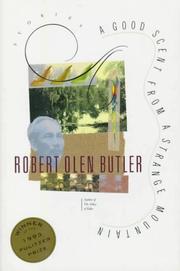 Robert Olen Butler · 1992A Good Scent from a Strange MountainLvl 4Medium pace
 Phil Klay · 2014RedeploymentLvl 4Fast paced
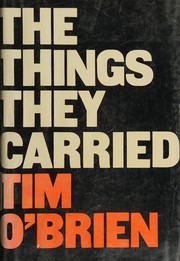 Tim O'Brien · 1990The Things They CarriedLvl 4Medium pace
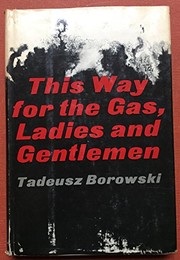 Tadeusz Borowski · 1948This Way for the Gas, Ladies and GentlemenLvl 5Medium pace
 Varlam Shalamov · 1966Kolyma TalesLvl 5Medium pace