
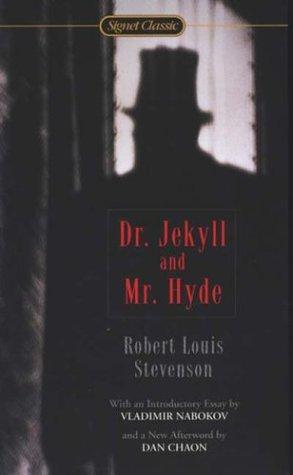
Strange Case of Dr Jekyll and Mr Hyde
Robert Louis Stevenson · 1850–1894 · Scotland
Why it matters
A respectable London doctor's potion unleashes the violent self he keeps locked inside. Written in a fevered three-day burst, it gave the language a permanent metaphor for the divided self and the double life.
At a glance
Short and controlled, but its fragmented documents require piecing together.
Deep dive
A respectable London doctor formulates a chemical solution to a problem he insists everyone secretly shares, and Stevenson builds an entire mystery structure just to delay the reader's arrival at exactly how literally he means that.
Written for readers who have finished the book. No plot recap, and nothing here is safe to read first.
Themes & symbolism
Stevenson structures the novella as a detective story with the wrong person doing the investigating: Gabriel Utterson, Jekyll's stolid, unimaginative lawyer, pursues the mystery of Jekyll's connection to the brutish Edward Hyde through legal documents, secondhand testimony, and locked doors, a method built for a world of comprehensible motives and civil procedure, and one entirely unequipped for the actual answer waiting at the end. That mismatch between investigative method and the truth being investigated is the book's real subject: Victorian respectability, embodied in Utterson's discretion and reluctance to think the worst of a friend, has no vocabulary for a colleague who has chemically split himself in two.
Jekyll's own account, withheld until the novella's final chapter, reframes everything that came before: Hyde was never a separate villain preying on Jekyll but a genuine, if concentrated, portion of Jekyll's own nature, the appetites and cruelties a respectable Victorian gentleman spends his whole social existence suppressing, given a body and a name of its own. Stevenson's insistence, through Jekyll's confession, that 'man is not truly one, but truly two' generalizes the case far past one doctor's experiment; Jekyll frames himself as simply the first person scientifically thorough enough to isolate what everyone else carries unexamined.
Hyde's physical smallness and the persistent, unplaceable sense other characters have that he is somehow deformed without any specific deformity anyone can name works as Stevenson's most efficient piece of symbolism: evil, in this novella, doesn't look monstrous in any conventional sense, it simply registers as wrong, an instinctive recoil the respectable Victorian eye can sense but not articulate, because the culture that produced Hyde has no honest language for naming the appetites he represents.
A Fever-Dream First Draft Burned on Principle
Stevenson reportedly wrote an entire first draft of the novella in three days during a bout of illness, dreaming much of the transformation scene, only to burn the manuscript after his wife Fanny objected that he had written a sensational shocker rather than the allegory the material deserved, and rewrote the whole thing from scratch in a similarly furious burst. The finished 1886 novella arrived amid, and helped fuel, wider Victorian anxieties about respectability's fragility, published only two years before the Jack the Ripper murders made the idea of a genteel Londoner concealing monstrous violence feel less like fiction than prophecy, which is part of why 'Jekyll and Hyde' entered the language almost immediately as shorthand for exactly that split.
The last seal: what actually happens, and why it lands the way it does.
The ending, explained
Jekyll's written confession, discovered by Utterson and the physician Lanyon after Jekyll's laboratory door is finally broken down, reveals that the transformations, initially controllable and even pleasurable as an escape from the burden of constant propriety, have begun happening involuntarily, with Hyde asserting himself even without the drug, and that the original chemical formula can no longer be reliably reproduced because an impure batch of salts, never identified, turns out to have been essential to the reaction. Facing the certainty of permanently becoming Hyde, and with it exposure, arrest, and hanging for the murder of Sir Danvers Carew committed earlier in the novella, Jekyll takes poison in Hyde's body just before Utterson breaks in, meaning the person the household finds dead on the floor is technically Hyde, wearing Jekyll's oversized clothes, with Jekyll's full confession as the only remaining trace of the man who created him. Stevenson lets the confession itself be the novella's actual climax rather than the death, that final, honest first-person voice Utterson's whole methodical investigation could never have produced on its own.
Where to go next
 Robert Louis Stevenson · 1883Treasure IslandLvl 3Fast paced
 Alexandre Dumas · 1844The Count of Monte CristoLvl 4Fast paced
 Bram Stoker · 1897DraculaLvl 4Fast paced
 Charlotte Brontë · 1847Jane EyreLvl 4Medium pace
 E. T. A. Hoffmann · 1816The SandmanLvl 6Medium pace
 Joris-Karl Huysmans · 1884Against Nature (À rebours)Lvl 7Slow burn