
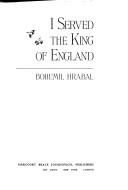
I Served the King of England
Bohumil Hrabal · 1914–1997 · Czechia
Originally Obsluhoval Jsem Anglického Krále (Czech) · translated by Paul Wilson
Why it matters
A tiny waiter's picaresque rise through hotels, the occupation, and the new regime: ambition babbling through catastrophe. Hrabal's comic masterpiece, banned at home and circulated in samizdat.
At a glance
A garrulous, episodic first-person ramble that reads easily despite its historical sweep.
Deep dive
A small, ambitious hotel waiter spends decades chasing wealth and status through occupation, war, and a new regime, and Hrabal lets his hero's own moral blindness be the funniest and most damning thing about him.
Written for readers who have finished the book. No plot recap, and nothing here is safe to read first.
Themes & symbolism
Jan Dítě measures his own worth entirely in centimeters of height and stacks of banknotes, working his way up from provincial hotels to Prague's grandest establishments on pure, guileless ambition, learning his trade's supreme skill, anticipating exactly what a guest wants before they say it, from a retired headwaiter's legendary boast of once having served the King of England himself. Hrabal keeps Dítě's narration so relentlessly focused on his own petty triumphs and humiliations that the reader has to do the moral accounting Dítě himself never performs, most damningly when he marries Líza, a German woman, during the occupation specifically to be classified as ethnically German, and uses money from a stolen, confiscated stamp collection to open his own luxury hotel while Europe burns around him.
The novel's picaresque comedy never lets up even as its stakes rise, Dítě's hotel of mirrors built to make his single millionaire's dream literal, guests reflected back at themselves a thousand times over, right up until the postwar Communist state arrests him not for his wartime complicity but simply for having been rich, a bureaucratic irony Hrabal delivers completely deadpan. Dítě's total absorption in his own advancement, oblivious to the atrocity subsidizing it, makes him one of Central European fiction's most damning unreliable narrators precisely because he never once seems to notice he's being damning. Hrabal frames the whole book as Dítě's own dictated memoir, written from the road-mender's cottage he ends up in, so the reader is always hearing the story of his rise filtered through the perspective of a man who has already lost everything it bought him.
A Manuscript Written in Eighteen Days, Circulated in Samizdat
Hrabal drafted the novel at extraordinary speed in 1971, working almost without revision, and its comic momentum owes something to that method: the prose reads like it was talked rather than composed. The book was unpublishable in Czechoslovakia's post-1968 political climate and circulated for years only in samizdat and foreign editions before finally appearing officially at home in 1989, the year the regime it quietly indicts finally fell. Hrabal himself lived through the same decades of shifting fortune the novel compresses into Dítě's life, and the road-mender's ending carries the particular authority of a writer who had, by then, made his own peace with quiet, unglamorous survival.
The last seal: what actually happens, and why it lands the way it does.
The ending, explained
Released from prison years after the Communist takeover with his fortune and hotel long since confiscated, Dítě takes a solitary job maintaining a remote mountain road, tending a small menagerie of animals and slowly, for the first time in the book, learning to value something other than accumulation. The road work is presented with the same deadpan warmth as everything before it, but the register has genuinely shifted: a man who spent decades measuring himself against millionaires and kings ends the novel finding a kind of dignity in being, at last, entirely unremarkable. Hrabal refuses to frame the ending as punishment; solitude and manual labor read, after everything Dítě's ambition cost other people, as the closest thing to grace the book is willing to grant him.
Where to go next
 Bohumil Hrabal · 1976Too Loud a SolitudeLvl 6Slow burn
 Milan Kundera · 1984The Unbearable Lightness of BeingLvl 5Slow burn
 Franz Kafka · 1915The MetamorphosisLvl 4Medium pace
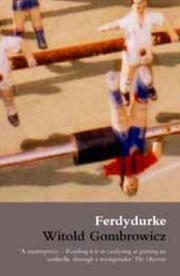 Witold Gombrowicz · 1937FerdydurkeLvl 7Fast paced
 Jaroslav Hašek · 1923The Good Soldier ŠvejkLvl 3Fast paced
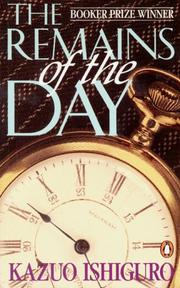 Kazuo Ishiguro · 1989The Remains of the DayLvl 5Slow burn