

The World According to Garp
John Irving · b. 1942 · United States
Why it matters
A novelist son of a radical feminist icon survives an unconventional childhood, marriage, fatherhood, and a series of arbitrary violent tragedies without ever losing his sense of comic absurdity. Irving's National Book Award winner (paperback, 1980) is tragicomic sprawl at its most influential.
At a glance
Long but propulsive, digressive plotting is carried by clear, addictive prose.
Deep dive
Why 'the Under Toad' — a toddler's mishearing of 'undertow' — becomes the exact right name for a novel convinced that violence arrives as weather, not consequence.
Written for readers who have finished the book. No plot recap, and nothing here is safe to read first.
Themes & symbolism
"The Under Toad" — Walt's toddler mishearing of "undertow" — becomes the family's private name for the free-floating dread that violence and loss could arrive from any direction at any time, and Irving structures the whole novel to make that dread literal: a plane crashes into the Percy house, a car in the driveway kills a child, a rape victim's tongue is cut out before the book even properly begins. None of it arrives as consequence; it arrives as weather. Garp's own fiction-within-the-fiction — his stories and novels, excerpted throughout — keep restaging his mother Jenny's radical independence and his own anxieties about fatherhood and violence, so that the 'real' plot and Garp's invented ones start to rhyme uncomfortably, each anticipating the other, as though Garp is drafting his family's catastrophes before life gets around to supplying them.
Jenny Fields, who conceives Garp without wanting a husband and becomes an accidental feminist icon after writing her memoir, gives the novel its most pointed satire: the Ellen Jamesians, women who cut out their own tongues in solidarity with a child rape victim named Ellen James, literalize a certain strain of performative activism that claims to speak for victims while actually silencing them further — Ellen James herself despises the group built in her name and eventually reclaims her own voice by learning to speak again. Garp, sympathetic to feminism but constitutionally allergic to its more theatrical wings, becomes an object of the movement's rage less for what he believes than for being visibly, embarrassingly male in rooms that have decided maleness is the whole problem.
The Under Toad as Structural Principle
Every calm domestic scene in the novel is haunted by the reader's trained expectation that catastrophe is imminent and arbitrary, which is Irving's method for making comedy and horror share a sentence without either canceling the other out. The joke and the tragedy are never sequential in this book — they're the same event, viewed from slightly different angles, which is exactly what "the Under Toad" is: not a monster that attacks, but the low, constant hum of knowing one eventually will.
Jenny Fields and the Movement She Never Asked to Lead
Jenny wants only to be a nurse and a mother on her own terms, without a husband's claim on either role, but her memoir turns her into a feminist celebrity practically against her will, and her hospital and halfway house become a magnet for the wounded women who eventually form the Ellen Jamesians in her orbit. Irving uses her to separate genuine, lived autonomy from the ideological factionalism that grows up around it — Jenny's own feminism stays plain and practical even as the movement she inadvertently founded curdles into something more punitive than the freedom she actually modeled.
The last seal: what actually happens, and why it lands the way it does.
The ending, explained
Garp is shot and killed at a wrestling match by Pooh Percy, a radicalized Ellen Jamesian who blames him for perceived crimes against the movement — a death as random and disproportionate as every other violence the novel has tracked, only now it finally claims its own protagonist rather than someone adjacent to him. In classic Irving fashion, a closing chapter steps back to catalog, briskly and almost administratively, the eventual deaths of nearly every major character years or decades later, flattening a lifetime of grief, love, and absurdity into the same matter-of-fact register the novel has used throughout — proof to the last page that the Under Toad comes for everyone, on no schedule anyone can predict, hero and bystander alike.
Where to go next
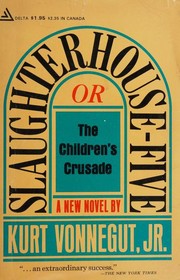 Kurt Vonnegut · 1969Slaughterhouse-FiveLvl 5Fast paced
 Charles Dickens · 1861Great ExpectationsLvl 4Medium pace
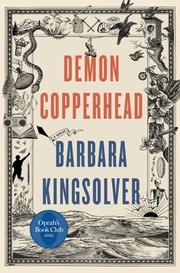 Barbara Kingsolver · 2022Demon CopperheadLvl 4Fast paced
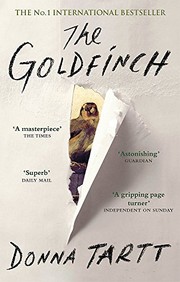 Donna Tartt · 2013The GoldfinchLvl 5Fast paced
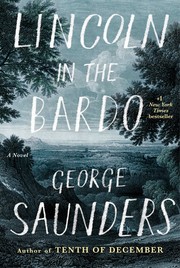 George Saunders · 2017Lincoln in the BardoLvl 7Medium pace
 Richard Yates · 1961Revolutionary RoadLvl 4Medium pace