
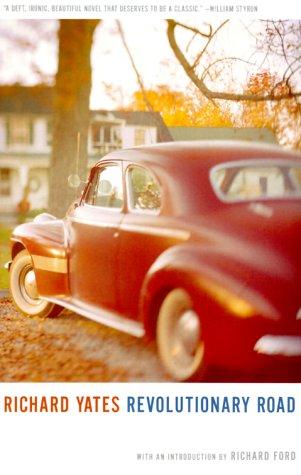
Revolutionary Road
Richard Yates · 1926–1992 · USA
Why it matters
Frank and April Wheeler, convinced they're too exceptional for their own Connecticut suburb, destroy their marriage trying to prove it. The founding text of suburban disillusionment fiction, praised on publication by Vonnegut and Williams alike, and still the genre's harshest, most exact diagnosis.
At a glance
Clear, controlled realist prose, though its psychological precision is unsparing.
Deep dive
The Wheelers are certain they're too exceptional for their own Connecticut suburb — the novel's real subject is how completely that conviction corrodes everything it touches, long before the plot forces the question of who, if anyone, was right.
Written for readers who have finished the book. No plot recap, and nothing here is safe to read first.
Themes & symbolism
Yates opens on an amateur theatrical disaster and never really leaves the stage: Frank and April Wheeler are, before anything else, performers, cast by themselves as the one sensitive, intelligent couple trapped among the mediocrities of Revolutionary Hill Estates. Their shared myth — that a move to Paris will let them finally become the people they secretly already are — requires constant maintenance, and the novel tracks with surgical patience how much cruelty that maintenance demands: every argument is really an argument about which of them is failing to live up to the fantasy. The suburb itself is barely characterized as monstrous; it's the Wheelers' contempt for it, curdled into self-congratulation, that does the damage.
John Givings, the neighbors' institutionalized son let out for occasional visits, functions as the novel's designated truth-teller, the only character licensed by his diagnosis to say the unsayable — that the Paris plan is a fantasy, that Frank doesn't really want to go, that April is the only one who meant it. His bluntness is unbearable precisely because he's right, and the fact that only a man certified insane can say so is Yates's bleakest joke about suburban civility: everyone else has agreed to be too polite, or too invested in their own performance, to tell each other the truth.
Reception and Rediscovery
On publication in 1961, Revolutionary Road was a National Book Award finalist — losing that year to Walker Percy's The Moviegoer, in a shortlist that also included Catch-22 — and drew immediate admiration from Kurt Vonnegut and Tennessee Williams, both of whom recognized in Yates's flat, exact prose a kind of American tragedy usually reserved for grander subjects. Despite that, Yates spent much of his career as a writer's writer: deeply admired by other novelists, chronically under-read by everyone else, and largely out of print by the time he died in 1992.
The book's afterlife has more than made up for it. Richard Ford has championed Yates as the least sentimental chronicler of postwar American domestic life; Kate Winslet and Leonardo DiCaprio's 2008 film adaptation — a pointed, ironic reunion of the Titanic leads inside a story about a marriage that can't survive its own illusions — introduced Revolutionary Road to a much wider readership and cemented its reputation as the founding text of suburban-disillusionment fiction, the book Cheever, Ford, and Franzen are all in some sense answering.
The last seal: what actually happens, and why it lands the way it does.
The ending, explained
The Paris escape collapses under the weight of Frank's own ambivalence — he takes a promotion he'd claimed to despise — and April's unplanned pregnancy, which Frank treats as a convenient excuse to stay and April experiences as the plan's actual death sentence. Unable to countenance carrying a third child into the life she'd already decided to leave, April attempts a self-induced abortion alone at home and dies from the resulting hemorrhage. Frank, gutted, eventually sells the house and moves away, remarries, and recedes from the narrative. The final pages pull back to the Wheelers' elderly neighbors, the Givingses, watching the aftermath from next door: Mrs. Givings chatters on about the tragedy to fill the silence, while her husband quietly reaches over and switches off his hearing aid, tuning her out entirely. It's the book's last and cruelest irony — an entire neighborhood's capacity for willful deafness to the real catastrophe that just happened on its own street, rendered as a literal, physical act.
Where to go next
 F. Scott Fitzgerald · 1925The Great GatsbyLvl 4Fast paced
 Anton Chekhov · 1899Selected StoriesLvl 4Medium pace
 Peter Taylor · 1986A Summons to MemphisLvl 5Slow burn
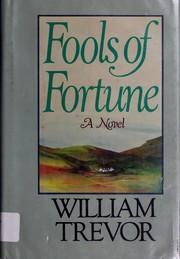 William Trevor · 1983Fools of FortuneLvl 5Medium pace
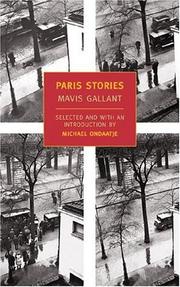 Mavis Gallant · 2002Paris StoriesLvl 5Medium pace
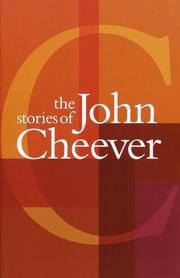 John Cheever · 1978The Stories of John CheeverLvl 4Medium pace