
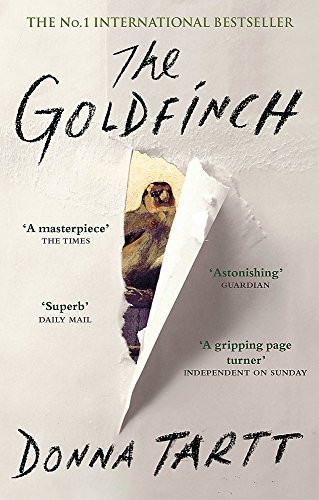
The Goldfinch
Donna Tartt · b. 1963 · USA
Why it matters
A boy survives the terrorist bombing that kills his mother by walking out of the museum with a small Dutch masterpiece hidden in his coat, and carries both the painting and the guilt through a decade of drift. Tartt's Pulitzer winner is maximalist, Dickensian storytelling for the twenty-first century.
At a glance
Long and digressive but propulsively plotted, with clear, immersive prose throughout.
Deep dive
Why a chained bird in a 1654 painting becomes Theo's whole surviving conscience, and what it means that the man who saves it is a forger.
Written for readers who have finished the book. No plot recap, and nothing here is safe to read first.
Themes & symbolism
Fabritius's goldfinch is already, before Theo ever touches it, a painting about captivity that survived a catastrophe — the artist died in the Delft gunpowder explosion of the same year, so the canvas Theo steals from the rubble of one bombing carries another bombing folded inside its own history. The thin chain tethering the bird to its perch is the whole book's argument in miniature: something small, bright, and alive, held fast by a leash it can't see past. Theo becomes the bird — chained to the one unmediated fragment of his mother's love left in the world, and increasingly, as the years and the drugs pass, to the crime of having kept it, hauling the wrapped canvas from apartment to storage unit like a relic he can neither venerate properly nor surrender.
Hobie's workshop, where Theo apprentices in restoring antique furniture, quietly rehearses the novel's real subject: the line between restoration and forgery is thinner than anyone wants to admit, and Theo eventually erases it outright, selling doctored pieces to collectors who want provenance more than truth. Boris is his necessary opposite — where Theo hoards and hides, Boris steals, swaps, and confesses with a shrug, treating the painting's theft as one more chaotic transaction rather than a wound to be nursed. It's Boris's amorality, not Theo's guilt, that eventually gets the painting back into the world; Tartt seems less interested in punishing that irony than in sitting inside it, letting Theo's own closing meditation on fate argue that some rescues only come dressed as crimes.
Fakes, Forgeries, and What Counts as Real
Hobie's furniture business survives, after his partner Welty's death, on pieces that are part genuine antique and part expert fabrication — a business model Theo inherits and corrupts further, selling reconstructed 'period' furniture to buyers who never ask hard questions because the surface convinces them. The novel keeps circling back to the idea that authenticity is mostly a story people agree not to interrogate too closely, which is exactly the arrangement that let a traumatized teenager keep a national treasure wrapped in newspaper for over a decade without anyone checking.
Boris as Shadow Self
Boris's chaotic, half-feral childhood — bounced between countries, raised more by vodka and Cartoon Network than any parent — makes him Theo's mirror in deprivation but his opposite in temperament, treating loss as something to metabolize instantly rather than something to enshrine. Their bond survives betrayal, years of silence, and a genuinely criminal reunion because Boris never asks Theo to be better, only to keep him company in being alive; it's a friendship built entirely on complicity, which is precisely why Boris, not any lawful authority, is the one equipped to fix what Theo broke.
The last seal: what actually happens, and why it lands the way it does.
The ending, explained
Grown up and running Hobie's shop while secretly fencing forged antiques, Theo follows the painting's trail to Amsterdam once his fraud starts to unravel, and the trip collapses into violence, drug binges, and a period where he seriously considers suicide in a hotel room. Boris, it turns out, swapped the Fabritius years earlier for a fake without telling him — and now uses his own criminal contacts to track the real painting down and orchestrate its recovery, collecting a reward that Theo, wracked with guilt over a death along the way, has anonymously returned. Theo survives into an ambiguous, unresolved adulthood, and the novel closes not on plot but on essayistic meditation — his conviction that beauty and meaning can be smuggled out of catastrophe the same way he smuggled the painting out of the museum.
Where to go next
 Fyodor Dostoevsky · 1866Crime and PunishmentLvl 6Fast paced
 Patricia Highsmith · 1955The Talented Mr. RipleyLvl 4Fast paced
 Charles Dickens · 1861Great ExpectationsLvl 4Medium pace
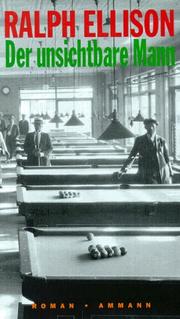 Ralph Ellison · 1952Invisible ManLvl 7Medium pace
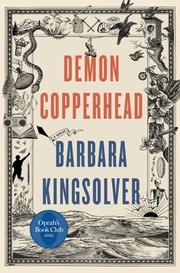 Barbara Kingsolver · 2022Demon CopperheadLvl 4Fast paced
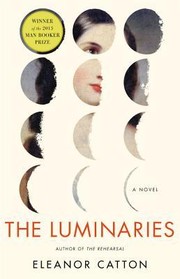 Eleanor Catton · 2013The LuminariesLvl 7Medium pace