
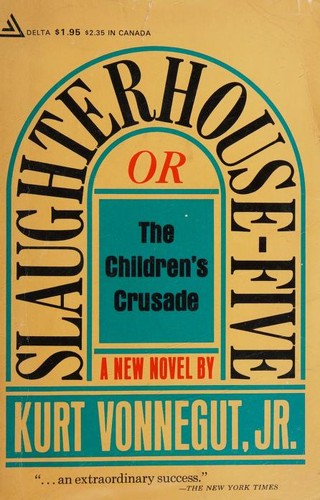
Slaughterhouse-Five
Kurt Vonnegut · 1922–2007 · USA
Why it matters
Billy Pilgrim, unstuck in time, shuttles between the Dresden firestorm and an alien zoo. Vonnegut waited twenty-three years to write his war, then met it with a shrug that isn't one: 'so it goes.'
At a glance
Nonlinear time-jumps require tracking, though the prose itself stays plain and short.
Deep dive
How three words repeated after every death, and a fantasy of running the war backward, became Vonnegut's only usable weapon against what he saw in Dresden.
Written for readers who have finished the book. No plot recap, and nothing here is safe to read first.
Themes & symbolism
"So it goes" appears after every death in the book — Billy's, a stranger's, a bottle of flat champagne's — and the phrase does two contradictory things at once. It flattens catastrophe into the same register as trivia, refusing readers the emotional payoff of tragedy; and by repeating identically over every death, human and otherwise, it makes each individual death impossible to ignore, since the reader starts counting them. That flattening is also Billy's whole philosophy, borrowed from the Tralfamadorians, who perceive all moments of time as existing permanently and simultaneously: nobody really dies, because the dead are still alive in all the other moments they ever occupied. It's a real comfort to a man who watched a city and its people burn to nothing in a night, and it's also a moral evasion — a fatalism so total it removes any obligation to prevent what can still be prevented. Vonnegut never resolves which reading is correct; Billy's serenity is presented as both earned peace and a kind of brain damage.
The novel's scrambled chronology isn't a gimmick draped over a conventional war story; it's the shape trauma actually takes. Billy becomes "unstuck in time" because linear memory cannot hold Dresden, so the book doesn't either — his capture, his marriage, his death, and the alien zoo arrive in whatever order his mind can survive presenting them in. Vonnegut compounds this by stepping into his own novel as a minor character glimpsed in the latrine and the boxcar, reminding the reader that this is a survivor's book about a survivor's inability to write it in order. The novel's famous refusal to be an "anti-war book" in any conventional sense — wars are as easy to stop as glaciers, so a book against one is just as futile — is the same argument in miniature: rather than build outrage toward some cathartic condemnation, Vonnegut answers atrocity with deadpan, repetition, and dark comedy, because direct confrontation could never be adequate to what actually happened in that cellar.
The War Movie Run Backward
Amid all the fatalism, one passage lets itself imagine undoing the catastrophe outright: Billy, half-asleep in front of a television, watches a WWII bombing documentary run in reverse, and lets his mind carry the reversal past what's on screen — American planes sucking fire and shrapnel back up into their fuselages, bombs lifting off the rubble and returning to the bomb bay, the minerals of them un-mined and buried back in the earth where they can never hurt anyone. It is the one moment in the novel where "so it goes" has an opposite: not acceptance of what happened but a wish, however briefly indulged, that it could be made to un-happen. That the fantasy can only exist running backward, on a screen, underlines the real theme — time only moves one direction for anyone but the Tralfamadorians, and Dresden cannot actually be uncreated, only returned to and reordered on the page.
Vonnegut in the Frame
The novel opens in Vonnegut's own voice, describing his twenty-three-year struggle to write his war book and a phone call to a wartime friend whose wife feared the finished book would glorify war and make it look glamorous for future boys — a fear the finished novel pointedly answers by making its hero passive, ridiculous, and undignified throughout. Vonnegut then slips himself bodily into the narrative at Dresden, a minor figure Billy notices in the camp, collapsing the distance between author and material entirely: this did happen, to him, and the alien abduction, the time travel, and the deadpan jokes are the only apparatus he could build sturdy enough to carry it.
The last seal: what actually happens, and why it lands the way it does.
The ending, explained
Billy's death is narrated well before the book's final pages — shot by Paul Lazzaro, an assassination promised decades earlier in the POW camp — because chronology has nothing left to build toward; the Tralfamadorians would say Billy is simply always alive in every earlier moment regardless. The novel's actual closing chapter returns instead to Dresden's immediate aftermath: POWs emerging from the meat locker into a moonscape of ash, put to work finding usable wood, and the book ends on birdsong — one bird asking the POWs, in Vonnegut's rendering, "Poo-tee-weet?" There's no lesson delivered, no summation of what the atrocity meant, because Vonnegut's argument is that nothing coherent can follow it. A nonsense syllable is the only honest sentence left.
Where to go next
 Kurt Vonnegut · 1959The Sirens of TitanLvl 4Fast paced
 Kurt Vonnegut · 1961Mother NightLvl 4Fast paced
 Kurt Vonnegut · 1963Cat's CradleLvl 4Fast paced
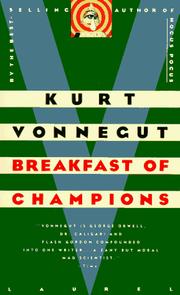 Kurt Vonnegut · 1973Breakfast of ChampionsLvl 4Fast paced
 Charles Yu · 2020Interior ChinatownLvl 5Fast paced
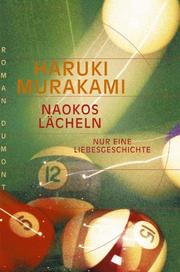 Haruki Murakami · 1987Norwegian WoodLvl 3Fast paced