

The Wind-Up Bird Chronicle
Haruki Murakami · b. 1949 · Japan
Originally Nejimaki-dori Kuronikuru (Japanese) · translated by Jay Rubin
Why it matters
A missing cat, a missing wife, a dry well, and the buried atrocities of Manchuria surfacing through suburban Tokyo. Murakami's biggest canvas: where his dream-logic meets history and becomes an epic.
At a glance
Sprawling, dreamlike structure with nested narratives and unresolved metaphysics.
Deep dive
How a missing cat leads, by way of a dry well and a Manchurian battlefield, to the least literal marriage-rescue plot in modern fiction — and why Murakami never confirms what actually happens in that hotel room.
Written for readers who have finished the book. No plot recap, and nothing here is safe to read first.
Themes & symbolism
The dry well beneath the neighbor's abandoned house is the novel's central image and its method: descending into cramped absolute darkness is how Murakami stages access to unconscious material that ordinary waking life keeps sealed off, and the deeper Toru goes into the well, the further back Japan's suppressed history reaches to meet him. Lieutenant Mamiya's account of the Nomonhan Incident — the flaying of a fellow soldier, his own abandonment at the bottom of a Manchurian well — isn't a digression from Toru's marriage plot; it's the novel's claim that the violence Japan committed and absorbed during the war didn't end with the war, it just went underground, waiting in structures (wells, basements, the unconscious itself) for someone to fall into it.
Noboru Wataya, Kumiko's brother, gives that buried violence a face suited to peacetime — telegenic, competent, upwardly mobile, entirely persuasive on television, and, the novel insists without ever fully spelling out the mechanism, quietly monstrous in private, implicated in a violation of Kumiko's late sister and in a psychic hold over Kumiko herself that Toru can only fight on the well's dream-plane rather than in any courtroom or conversation. The marriage plot's real subject is how little Toru actually knows about his own wife — not from any failure of intimacy but because some rooms in another person, Murakami suggests, are never available to daylight, ordinary-life inquiry at all; you can only reach them, if you reach them, by going somewhere as strange as the bottom of a well. Even the recurring cry of the wind-up bird itself, heard by different characters at different moments of crisis and never once explained, works the same way — Murakami withholds the mechanism on purpose, because the novel's argument is that some warnings arrive in a register beneath language, and translating them into plain cause and effect would falsify them.
The Novel's Loose, Accreting Form
Wind-Up Bird is Murakami's biggest, loosest construction, and its digressions — May Kasahara's asides on baldness and death from her factory job, Malta and Creta Kano's psychic interventions, entire chapters of Mamiya's letters — never quite subordinate themselves to the missing-wife plot the way a conventional novel's subplots would. That looseness is deliberate: the accumulation of strange, only tangentially connected testimony is closer to how trauma actually surfaces, in fragments and displaced stories, than a tightly plotted mystery would allow. The novel earns its epic scale not by tying Manchuria and Toru's marriage into a single explained mechanism but by insisting, through sheer accretion, that they belong to the same buried history.
The last seal: what actually happens, and why it lands the way it does.
The ending, explained
At the climax, Toru's confrontation with Noboru Wataya takes place almost entirely on the well's dream-plane, in a hotel room that exists somewhere between metaphor and reality, and Murakami declines to specify which; in the ordinary world, Noboru collapses into a stroke or coma at what seems to be the same moment. Kumiko, it emerges, has killed her brother, or borne fatal responsibility for family violence involving her dead sister, and rather than return straightforwardly to married life she asks Toru, through a final message, to let her face the legal and human consequences alone, trusting their bond survives the separation. The novel refuses the reunion a conventional ending would supply: Toru has done the metaphysical work of freeing Kumiko from Noboru's hold, but whether they'll ever live together again is left open, because Murakami is more interested in whether an interior rescue is possible than in whether a marriage gets restored.
Where to go next
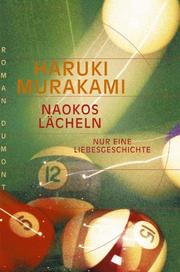 Haruki Murakami · 1987Norwegian WoodLvl 3Fast paced
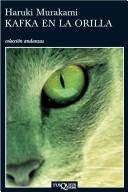 Haruki Murakami · 2002Kafka on the ShoreLvl 6Fast paced
 Banana Yoshimoto · 1988KitchenLvl 2Medium pace
 Kōbō Abe · 1962The Woman in the DunesLvl 5Medium pace
 Han Kang · 2007The VegetarianLvl 6Fast paced
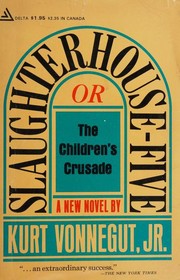 Kurt Vonnegut · 1969Slaughterhouse-FiveLvl 5Fast paced