
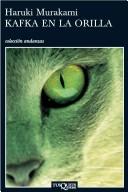
Kafka on the Shore
Haruki Murakami · b. 1949 · Japan
Originally Umibe no Kafuka (Japanese) · translated by Philip Gabriel
Why it matters
A runaway boy named Kafka and an old man who talks to cats, on converging roads through a metaphysical Japan. The global Murakami phenomenon at full tilt: riddles left deliberately, pleasurably unsolved.
At a glance
Dual alternating storylines and surreal symbolism left deliberately unresolved.
Deep dive
A boy running from a curse his father spoke over him, and an old man who can talk to cats, on a collision course that neither of them experiences as anything so simple as cause and effect.
Written for readers who have finished the book. No plot recap, and nothing here is safe to read first.
Themes & symbolism
Kafka Tamura runs away from Tokyo at fifteen to escape a prophecy his sculptor father has pronounced over him, that he will kill his father and sleep with his mother and the sister who both abandoned him as a small child. Murakami never lets the prophecy resolve into ordinary plot mechanics; Kafka's own memory, his blackouts, and the novel's persistent slippage between dream and event make it genuinely unanswerable whether he fulfills the curse literally or only in some adjacent, half-real register the book refuses to name. What interests Murakami isn't whether the prophecy comes true so much as how completely it organizes a life regardless of whether any of it is factually so.
Nakata, an elderly man left unable to read or hold a job after a mysterious wartime incident that struck down a whole class of schoolchildren, runs a parallel plot built on the opposite premise, a man emptied rather than overfull, able to talk to cats precisely because he has so little ordinary human self left to get in the way. His conversations with lost cats and his eventual, mostly wordless partnership with a young truck driver named Hoshino carry a tenderness Kafka's chapters, tangled up in rage at his father and desire for women who might be his mother or sister, rarely allow themselves.
The novel keeps American consumer icons circulating through its most metaphysical machinery, a spirit calling itself Johnnie Walker who tortures cats, a pimp-like guide who takes the shape of Colonel Sanders, fish and leeches falling from a clear sky. Murakami's point in dressing myth up in advertising mascots isn't cheap irony; it's that the uncanny in this world doesn't arrive dressed appropriately; it shows up wearing whatever packaging happened to be closest.
The Boy Named Crow
Kafka's internal voice, which he calls the boy named Crow after the meaning of his own chosen name in Czech, addresses him in blunt second-person imperatives throughout the novel, telling him to become the toughest fifteen-year-old alive and pushing him past moments he'd otherwise flinch from. Crow reads less like a hallucination than like the part of Kafka capable of taking action while the rest of him is still deciding whether to be afraid, and Murakami is careful never to fully separate the voice from Kafka's own will.
Nakata and the Rice Bowl Hill Incident
The wartime episode that hollowed Nakata out, an entire class of children losing consciousness simultaneously on a hillside during a teacher-led outing, is presented through conflicting official reports and a surviving teacher's account decades later, and Murakami deliberately withholds any single explanation, gas, trauma, something closer to the supernatural. The unresolved mystery matters more than any theory about its cause would: it establishes early that this is a world where an institution's official record and the truth of an event are never guaranteed to be the same document.
The last seal: what actually happens, and why it lands the way it does.
The ending, explained
Kafka spends several nights with Miss Saeki at the mountain library where he's been staying, in encounters the novel deliberately keeps ambiguous as to whether she is, in some sense, his mother, before she completes whatever private task has kept her tethered to the building and disappears from it. Nakata, guided by Hoshino, locates and properly closes the entrance stone that has been destabilizing the boundary between worlds, and dies peacefully immediately after, passing something of his strange gift briefly on to Hoshino. Kafka, told by Crow that he has become exactly the tough fifteen-year-old he set out to be, chooses to return to Tokyo and his ordinary name rather than remain inside the forest's suspended refuge. Murakami declines to confirm which parts of the prophecy actually occurred; what the ending confirms instead is that Kafka has stopped needing the question answered.
Where to go next
 Haruki Murakami · 1987Norwegian WoodLvl 3Fast paced
 Haruki Murakami · 1994The Wind-Up Bird ChronicleLvl 7Slow burn
 Banana Yoshimoto · 1988KitchenLvl 2Medium pace
 Kōbō Abe · 1962The Woman in the DunesLvl 5Medium pace
 Han Kang · 2007The VegetarianLvl 6Fast paced
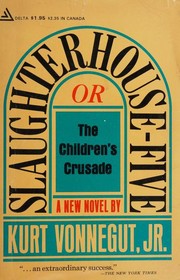 Kurt Vonnegut · 1969Slaughterhouse-FiveLvl 5Fast paced