
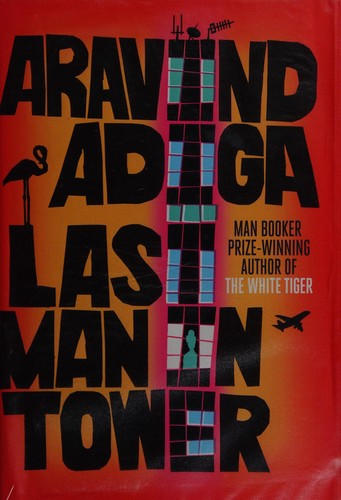
Last Man in Tower
Aravind Adiga · b. 1974 · India
Why it matters
A Mumbai housing society votes to sell itself to a developer for a fortune, all but one elderly retired teacher who refuses to budge. Adiga turns a single holdout into a portrait of how money curdles a whole community's decency.
At a glance
A large ensemble cast and shifting points of view track a slow-building moral unraveling.
Deep dive
A retired schoolteacher is the only resident of his Mumbai housing society who won't sell out to a developer's fortune, and Adiga spends the novel watching how patient, reasonable people can turn on the one holdout among them.
Written for readers who have finished the book. No plot recap, and nothing here is safe to read first.
Themes & symbolism
Masterji's refusal to accept Dharmen Shah's buyout offer for Vishram Society reads, at first, as simple principle, a retired teacher unwilling to trade a home full of memories of his late wife for a payout, but Adiga is careful never to make the refusal purely noble: Masterji's stubbornness has real costs for his neighbors, and nobody in the building, least of all Masterji, gets to come out of the standoff with an uncomplicated claim to being right.
Adiga tracks the residents' vote-by-vote erosion from unanimous refusal to near-unanimous acceptance with the patience of a case study, the broker Ajwani's calculations, the Pintos' fear, Mrs. Rego's principled holdout collapsing under her son's medical bills, so that Masterji's isolation isn't a single dramatic betrayal but the accumulated residue of dozens of small, individually reasonable decisions.
Money in the novel functions less as reward than as solvent, dissolving decades of shared festivals, favors, and genuine affection among neighbors within a single redevelopment cycle, and Adiga's real subject, continuous with The White Tiger's interest in what ambition does to people, is how quickly a community's stated values evaporate once each member starts calculating what everyone else is likely to do.
Dharmen Shah as Adiga's Other India
Shah, the builder whose offer sets the plot moving, gets nearly as much interior life as Masterji does, a self-made man from Mumbai's outer edges who genuinely believes he's offering the residents of Vishram Society a fortune, and the novel's refusal to make him a simple villain, an asthmatic hypochondriac tortured by his own ambition, does more to indict the city's development economy than a straightforward antagonist could.
A Building Society as a Study in Group Psychology
Adiga renders the residents' meetings, votes, and private calculations in granular detail, so that the reader watches consensus manufacture itself in real time, ordinary neighborly courtesies steadily repurposed into pressure, until the language of community becomes the exact vocabulary used to justify turning on the one member of it who takes the community's stated values seriously.
The last seal: what actually happens, and why it lands the way it does.
The ending, explained
With the Pintos, the last holdouts besides Masterji, finally accepting Shah's buyout after Mr. Pinto breaks his foot, Masterji is left alone in Vishram Society, still refusing to sign, still insisting on principle over money as his neighbors' patience curdles into something closer to hatred. The men who once shared his stairwell and his tea, led by the broker Ajwani, attack him, knock him unconscious, and throw his body from the roof, then stage the death to read as a fall. It's ruled a suicide. Shah's deadline has technically already passed by the time it happens, so Masterji's refusal, in its own bleak way, momentarily works, but Adiga denies the outcome any of the dignity that would imply: the settlement goes through anyway, and when the novel checks back in two months later, the same neighbors who killed him are already resettled into new flats, comfortable and entirely undisturbed by what they did to get there.
Where to go next
 Aravind Adiga · 2008The White TigerLvl 4Fast paced
 Aravind Adiga · 2016Selection DayLvl 4Medium pace
 Rohinton Mistry · 1995A Fine BalanceLvl 4Medium pace
 Mohsin Hamid · 2007The Reluctant FundamentalistLvl 5Fast paced
 Vikram Seth · 1993A Suitable BoyLvl 3Medium pace
 Kiran Desai · 2006The Inheritance of LossLvl 6Slow burn