
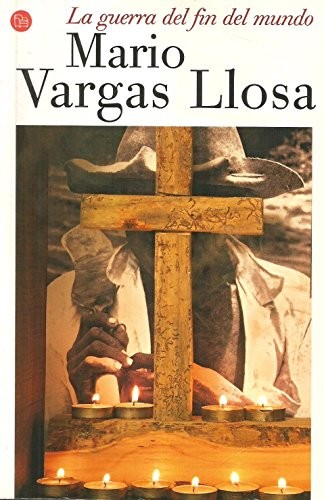
The War of the End of the World
Mario Vargas Llosa · 1936–2025 · Peru
Originally La guerra del fin del mundo (Spanish) · translated by Helen R. Lane
Why it matters
A ragged army of outcasts follows a barefoot prophet into Brazil's backlands to build a New Jerusalem, and the fledgling Republic sends four escalating expeditions to annihilate them. Vargas Llosa's epic of the real Canudos War: fanaticism and state violence feeding each other to the last body.
At a glance
A vast cast and several military campaigns spread across a doorstop epic, though the prose stays lucid throughout.
Deep dive
A backlands prophet gathers the poor of Bahia into a community that the new Brazilian Republic decides must be a monarchist conspiracy, and Vargas Llosa follows every side of the resulting war without letting a single one of them turn out to have understood what they were actually fighting.
Written for readers who have finished the book. No plot recap, and nothing here is safe to read first.
Themes & symbolism
Vargas Llosa rebuilds the real 1896 to 1897 siege of Canudos, the settlement founded in Brazil's arid sertão by the itinerant preacher Antônio Conselheiro, from Euclides da Cunha's landmark history Os Sertões into a sprawling novel of competing convictions, none of which survive contact with the actual war intact. Conselheiro's followers, drawn from the region's poorest and most abandoned, read the young Republic's secular reforms, civil marriage, the metric system, a national census, as the literal work of the Antichrist, and build Canudos as a refuge from that apocalypse. The Republic's officers, in turn, read Canudos as proof of a monarchist restoration plot backed by foreign powers, a reading with almost no evidence behind it that becomes true anyway simply because enough powerful people insist on repeating it.
Galileo Gall, a Scottish anarchist and self-taught phrenologist who travels to Canudos hoping to find a genuine peasant revolution he can attach his own ideology to, gives the novel its clearest case of a foreign abstraction failing to survive contact with the people it claims to speak for: Gall's revolutionary theory has almost nothing to do with what Conselheiro's followers actually believe or want, and his presence changes nothing about their war except adding one more outsider's fatal misreading to the pile. Vargas Llosa distributes that same failure across nearly every major character, the Baron de Canabrava watching his old feudal authority evaporate, a nearsighted journalist recording atrocities he can barely see, and the gap that keeps widening across all of them, between any ideology, religious or secular, and the specific, ungovernable people it claims to explain, is what the novel actually turns out to be about.
Rewriting a National Chronicle from the Inside
Da Cunha's Os Sertões remains the canonical Brazilian account of Canudos, but it was written by an engineer embedded with the Republic's army, watching the war from one side of the trench. Vargas Llosa's novel restores what that vantage necessarily missed, giving extended interior life to Conselheiro's followers, the bandit Pajeú, the freed slave and former circus performer known as the Dwarf, so that Canudos's residents stop being the alien mass da Cunha's chronicle sometimes reduces them to and become as fully reasoned, in their own terms, as the officers sent to destroy them. The choice to write across a full century and a language barrier to reclaim a Brazilian national trauma marks the novel as one of the Boom generation's most ambitious acts of historical excavation, a Peruvian novelist restoring interiority to a Brazilian catastrophe that had mostly been narrated from outside it.
The last seal: what actually happens, and why it lands the way it does.
The ending, explained
After four escalating military expeditions, the last involving thousands of federal troops and modern artillery, Canudos falls in October 1897 with nearly its entire population dead, killed in the fighting or executed once resistance ended, government forces reportedly decapitating Conselheiro's already-buried corpse to prove definitively that the prophet was mortal. Only a tiny handful of defenders survive, among them an old woman, a child, and a crippled man, a remnant so reduced that the war's final image is less victory than erasure. Vargas Llosa refuses to let either side claim the moral high ground in the aftermath: the Republic gets its military triumph and its monarchist conspiracy theory collapses for lack of any evidence it ever existed, while Canudos's destruction confirms nothing except that a government willing to commit that much force against its own poorest citizens will eventually find a pretext to use it.
Where to go next
 Mario Vargas Llosa · 1963The Time of the HeroLvl 6Medium pace
 Mario Vargas Llosa · 1966The Green HouseLvl 8Slow burn
 Mario Vargas Llosa · 1969Conversation in The CathedralLvl 9Slow burn
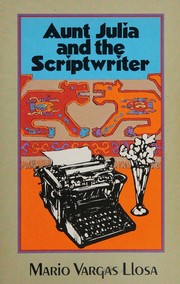 Mario Vargas Llosa · 1977Aunt Julia and the ScriptwriterLvl 4Fast paced
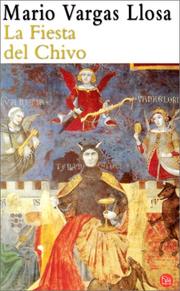 Mario Vargas Llosa · 2000The Feast of the GoatLvl 6Fast paced
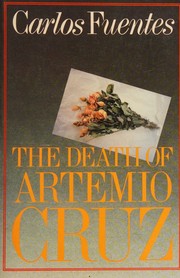 Carlos Fuentes · 1962The Death of Artemio CruzLvl 8Slow burn