
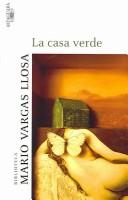
The Green House
Mario Vargas Llosa · 1936–2025 · Peru
Originally La Casa Verde (Spanish) · translated by Gregory Rabassa
Why it matters
A brothel on the edge of the Amazon jungle and a garrison town two hundred miles away turn out to share the same outlaws, missionaries, and consequences, five interwoven stories spliced together across decades without warning. Vargas Llosa's most structurally daring early novel: jungle exploitation and city vice as one machine.
At a glance
Five interwoven storylines and decades of chronology are spliced together with unmarked cuts between scenes.
Deep dive
Five interlocking lives spanning a Piuran brothel, an Amazon rubber outpost, and a convent built to civilize native girls, told out of order and never quite where you expect them, until the connections between them stop being optional to notice.
Written for readers who have finished the book. No plot recap, and nothing here is safe to read first.
Themes & symbolism
Vargas Llosa splits The Green House across five ostensibly separate storylines: Anselmo, the outsider who builds the brothel that gives the novel its title on the edge of Piura; Bonifacia, a native girl removed from her community into a convent meant to civilize her before she ends up, after a chain of dispossessions, working in that same brothel; Fushía, a fugitive rubber trader exploiting indigenous labor deep in the Amazon; Jum, an indigenous leader resisting that exploitation; and Lituma, a native Piuran soldier moving between the desert and jungle settings. He refuses to tell any of them in straightforward chronological order, instead interweaving decades and locations within single chapters without clear signposting. The technique isn't difficulty for its own sake. It enacts the novel's actual argument, that Peru's coast and its Amazon interior, its Spanish-descended elite and its indigenous population, are not separate stories that happen to share a country but one continuous system of exploitation viewed from different, initially disorienting angles.
Bonifacia's trajectory, kidnapped from her community, civilized in a convent that treats indigenous girls as raw material to be converted rather than people with an existing culture, married briefly to a sergeant, then assaulted by his associates once he's imprisoned, and finally absorbed into prostitution at the Green House, traces nearly every institution the novel indicts, church, military, brothel, operating on the same underlying logic of extraction dressed in different justifications. Vargas Llosa doesn't soften any stage of that trajectory into redemption. Each institution that claims to be helping Bonifacia leaves her with fewer options than the one before it.
Fushía and the Rubber Economy's Afterlife
Fushía's decades-long career exploiting Aguaruna and Huambisa labor in the illegal rubber and skin trade, told largely in retrospect as he lies dying of leprosy on a riverboat, extends into the mid-twentieth century a system of Amazonian extraction whose most infamous atrocities, the Putumayo rubber boom's documented mass killings of indigenous workers a generation earlier, had already been internationally condemned by the time the novel's action takes place. Vargas Llosa's point in keeping Fushía's operation running decades after that reckoning is precise: the machinery of extraction didn't end when its worst excesses became a scandal, it just kept operating at a smaller, less spectacular scale, indifferent to the fact that the world had already agreed it was a crime.
The last seal: what actually happens, and why it lands the way it does.
The ending, explained
The five storylines converge less through plot resolution than through accumulated recognition. Lituma, La Chunga (Anselmo's daughter, who inherits the Green House), and the surviving cast end the novel still bound to the same coastal-jungle system that has structured every character's life across four decades, with Fushía dying unmourned and largely forgotten by the world he spent his life extracting from, and Bonifacia settled into a life at the brothel the novel offers no exit from. Vargas Llosa closes without granting any character a clean escape or a clarifying revelation. The interwoven structure that made the novel disorienting to read turns out to have been demonstrating, the whole time, that no one inside this system gets to opt out of it, only shift which corner of it they occupy.
Where to go next
 Mario Vargas Llosa · 1963The Time of the HeroLvl 6Medium pace
 Mario Vargas Llosa · 1969Conversation in The CathedralLvl 9Slow burn
 Mario Vargas Llosa · 1977Aunt Julia and the ScriptwriterLvl 4Fast paced
 Mario Vargas Llosa · 1981The War of the End of the WorldLvl 7Medium pace
 Mario Vargas Llosa · 2000The Feast of the GoatLvl 6Fast paced
 Carlos Fuentes · 1962The Death of Artemio CruzLvl 8Slow burn