
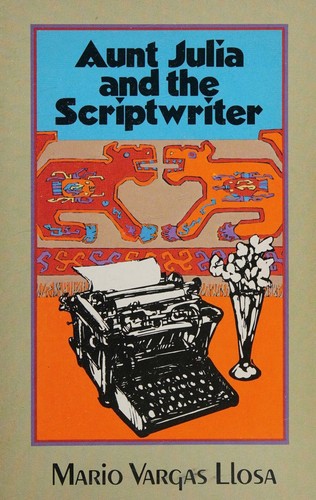
Aunt Julia and the Scriptwriter
Mario Vargas Llosa · 1936–2025 · Peru
Originally La tía Julia y el escribidor (Spanish) · translated by Helen R. Lane
Why it matters
Eighteen-year-old Marito falls for his divorced aunt by marriage while moonlighting at a radio station whose star scriptwriter is slowly losing his mind mid-serial, plots and character names bleeding across his own soap operas. Vargas Llosa's funniest book, and his most openly autobiographical.
At a glance
A breezy comic voice, though alternating chapters of memoir and pastiche radio scripts track two registers at once.
Deep dive
Two competing love stories run through Lima at once: an eighteen-year-old law student's scandalous romance with his aunt by marriage, and a radio scriptwriter's soap operas, which start out professionally separate and end up impossible to tell apart.
Written for readers who have finished the book. No plot recap, and nothing here is safe to read first.
Themes & symbolism
Vargas Llosa alternates odd chapters following Marito, an eighteen-year-old aspiring writer working at Radio Panamericana, as he falls for Julia, his uncle's Bolivian sister-in-law, fourteen years his senior and freshly divorced, with even chapters given over entirely to the radio serials of Pedro Camacho, a Bolivian scriptwriter so prolific he's writing several soap operas simultaneously from a closet-sized office, chain-smoking and acting out every character's voice as he types. The structure asks readers to notice what Marito himself is too infatuated to notice on the page: that his own courtship, kept secret from his large, disapproving Lima family and eventually driving him to a string of small towns bribing mayors into marrying an underage groom, is its own kind of melodrama, running on exactly the plot logic Camacho is cranking out downstairs for a mass audience.
Camacho's scripts start as tidy, self-contained installments and gradually come apart at the seams: characters from one serial wander into another's plot, names get recycled and confused, and entire casts start dying in identical catastrophes, fires, earthquakes, trolley accidents, because Camacho has lost track of which story he's supposedly telling. Vargas Llosa uses that unraveling as a joke about narrative itself, since a writer producing that much fiction on that tight a schedule inevitably starts cannibalizing his own invented world, and by extension a joke about the appetite of an audience that keeps listening anyway, hungry for incident over coherence.
Pulp as a Mirror for the Literary Novel
Camacho's radionovelas are deliberately vulgar, overwrought, and structurally lazy by any literary standard, yet Vargas Llosa gives them nearly half the book's real estate and writes them with total commitment, matching their register rather than mocking it from a safe distance. That choice is the novel's real argument about form: the boundary between serious literature and disposable popular fiction is far less stable than either side wants to admit, since both genres are ultimately in the business of making readers care what happens next to people who don't exist. Marito's own literary ambitions, sneered at by his family as impractical next to law or business, are quietly measured against Camacho's manic productivity throughout, a comparison the novel never resolves cleanly in favor of either kind of writer.
The last seal: what actually happens, and why it lands the way it does.
The ending, explained
Marito and Julia marry after evading Peru's marriage-age laws town by town, over the furious objections of his family, and the novel's present-tense chapters end on that scandalous elopement succeeding. But Vargas Llosa appends a coda jumping years ahead: the marriage quietly ends in divorce, Marito goes on to marry a cousin instead, and Camacho, discharged from the asylum where his breakdown landed him, resurfaces working an ordinary, diminished job, still narrating his own life in the florid style of his ruined broadcasts but with none of the old audience left to hear it. The fairy-tale outcome the earlier chapters seemed to be building toward gets quietly retracted, which is Vargas Llosa's own last joke on the reader's appetite for tidy romantic endings.
Where to go next
 Mario Vargas Llosa · 1963The Time of the HeroLvl 6Medium pace
 Mario Vargas Llosa · 1966The Green HouseLvl 8Slow burn
 Mario Vargas Llosa · 1969Conversation in The CathedralLvl 9Slow burn
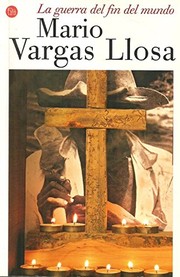 Mario Vargas Llosa · 1981The War of the End of the WorldLvl 7Medium pace
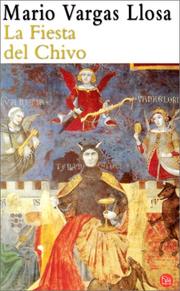 Mario Vargas Llosa · 2000The Feast of the GoatLvl 6Fast paced
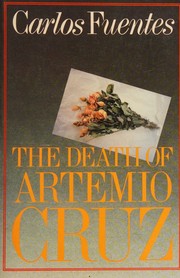 Carlos Fuentes · 1962The Death of Artemio CruzLvl 8Slow burn