
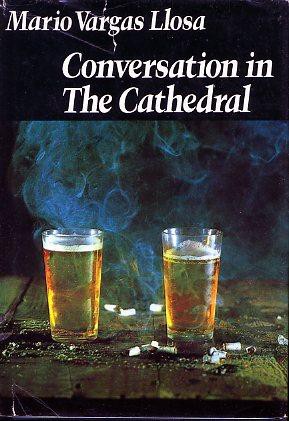
Conversation in The Cathedral
Mario Vargas Llosa · 1936–2025 · Peru
Originally Conversación en La Catedral (Spanish) · translated by Gregory Rabassa
Why it matters
'At what precise moment had Peru screwed itself up?' Four hours in a bar unspool a dictatorship's whole anatomy through spliced conversations. The Boom's most demanding architecture, and its political summit.
At a glance
Famously spliced dialogues from different times and speakers interleave without warning.
Deep dive
A dive-bar conversation that refuses to name a single villain — because the novel's real subject is how an entire country gets implicated one compromise at a time.
Written for readers who have finished the book. No plot recap, and nothing here is safe to read first.
Themes & symbolism
The novel's opening question — pinpointing the exact moment Peru went wrong — is a trap the book sets for itself and its reader on purpose, because its whole structure argues that no such moment exists. Vargas Llosa's spliced dialogue, where sentences begun in one year and one room finish in another decades later, isn't a puzzle for its own sake; it's the formal argument that corruption under Odría's dictatorship isn't a chain of discrete decisions by discrete bad actors but a single continuous fabric that runs through boardrooms, bedrooms, newsrooms, and police cells simultaneously. Santiago's disillusionment and Ambrosio's poverty, decades apart in origin, end up sharing a bar stool because the same rot produced both of them.
Race and class run underneath the political plot as its own quieter case study: Ambrosio, once Don Fermín's chauffeur, is now a dog-catcher, while Santiago, born to wealth, has downwardly mobilized himself into an unglamorous newspaper job out of something between guilt and disgust — and the two men's conversation only becomes possible because history has flattened them, however unequally, into a shared marginality. The buried entanglement between Ambrosio and Don Fermín, surfacing gradually through the fragmented telling, folds a suppressed sexual and violent history into the novel's account of political complicity, so that intimacy, class servitude, and state corruption all turn out to be versions of the same transaction: power used on people who have no way to refuse it.
Cayo Bermúdez is the novel's clearest embodiment of how the regime actually functions day to day: he rises not through ideology or even ambition in any grand sense but through the patient accumulation of other people's secrets, using blackmail and a growing network of informants to convert private shame into political leverage. He's rarely monstrous in any theatrical way — the novel's chilling insight is that he doesn't need to be, because the machinery of complicity does the ugly work for him, recruiting the compromised and the frightened one relationship at a time until an entire apparatus of control exists without anyone having designed it outright.
The demanding form is the argument
Vargas Llosa's technique here — dialogues sliced and interleaved without typographic warning, forcing the reader to reconstruct who is speaking, when, and to whom — is often cited as the Boom's most difficult formal experiment, and it's worth being precise about why that difficulty is functional rather than showy. A conventional linear telling would let the reader locate corruption in a sequence: first this happened, then that, then the dictatorship followed. The splicing denies that comfort. Cayo Bermúdez's rise through blackmail and intimidation, Don Fermín's business compromises, and Santiago's adolescent disillusionment all arrive interwoven, which means the reader experiences complicity the way the characters actually lived it — not as a chain of cause and effect but as an atmosphere that was already present before anyone noticed they'd been breathing it.
The last seal: what actually happens, and why it lands the way it does.
The ending, explained
The bar conversation simply runs down rather than resolving. Santiago leaves knowing more about his father's corruption and his own family's proximity to violence, but nothing in that knowledge is actionable — he cannot undo his father's compromises or repair his own disillusioned drift, and Ambrosio returns to the same marginal existence he arrived with. There's no confession scene, no reckoning, no punishment meted out. That flatness is the novel's answer to its own opening question: Peru didn't go wrong at one identifiable moment because it's still, in this bar, going wrong in the same diffuse, unpunished way it always has.
Where to go next
 Mario Vargas Llosa · 1963The Time of the HeroLvl 6Medium pace
 Mario Vargas Llosa · 1966The Green HouseLvl 8Slow burn
 Mario Vargas Llosa · 1977Aunt Julia and the ScriptwriterLvl 4Fast paced
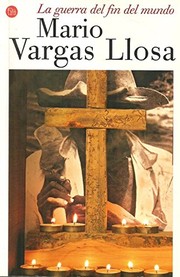 Mario Vargas Llosa · 1981The War of the End of the WorldLvl 7Medium pace
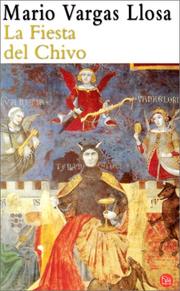 Mario Vargas Llosa · 2000The Feast of the GoatLvl 6Fast paced
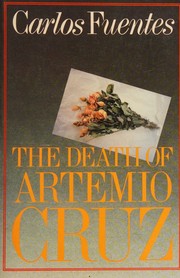 Carlos Fuentes · 1962The Death of Artemio CruzLvl 8Slow burn