
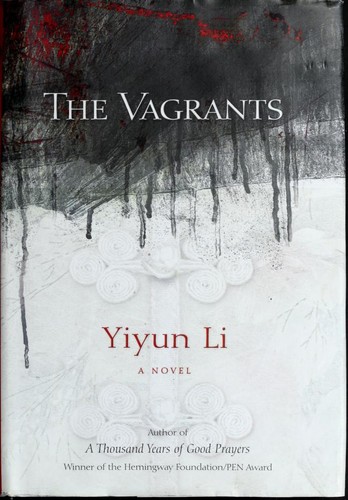
The Vagrants
Yiyun Li · b. 1972 · China / United States
Why it matters
An entire provincial Chinese town is exposed through the days surrounding a young dissident's public execution, neighbors and officials alike implicated in small acts of complicity or rare decency. Li's first novel renders 1970s China's machinery of denunciation with unsparing, clear-eyed precision.
At a glance
A large ensemble cast across one town demands tracking many intersecting, morally compromised lives.
Deep dive
In the days around a young woman's public execution in a fictional Chinese town in 1979, Yiyun Li tracks how many small, survivable acts of complicity it actually takes to keep a system like this running.
Written for readers who have finished the book. No plot recap, and nothing here is safe to read first.
Themes & symbolism
Gu Shan, denounced a decade earlier during the Cultural Revolution and imprisoned ever since, is scheduled for execution in the provincial town of Muddy River just as China's political winds are nominally shifting away from Mao-era zealotry, even as local authorities stage her death as a hard-line response to handwritten protest posters appearing overnight near the town square. Li builds the novel across a rotating cast, Gu Shan's grieving parents, a beautiful radio announcer named Kai, a crippled girl named Nini, an unstable outcast named Bashi, a young boy named Tong, so that the town's complicity in what's about to happen reads as distributed across dozens of small, individually excusable choices rather than concentrated in any single villain.
Kai, married to a rising local official and growing quietly sympathetic to the posters and the ideas behind them, carries the novel's clearest arc toward moral awakening, and Li refuses to reward that awakening with anything like safety: sympathy for the condemned, in Muddy River, costs exactly as much as the system requires it to, regardless of how privately or carefully it's felt.
Bashi's Fixation and the Marketplace in Bodies
Bashi, the town's rejected, friendless outcast, first obsesses over Gu Shan and then transfers that obsession to Nini, the crippled teenager he begins grooming with promised marriage and small bribes, and Li uses his fixation to show how thoroughly the men around these women, from Bashi's petty scheming to the officials handling Gu Shan's case, treat a woman's body, living or executed, as a thing available for use, examination, or gossip rather than a person with any claim of her own.
The Loudspeaker as an Instrument of the State
Kai's job as the town's radio announcer puts the apparatus of propaganda directly inside every household's morning routine, her own trained, cheerful voice delivering denunciations and official announcements alike, and Li uses that intimacy, state messaging arriving in the same register as a neighbor's greeting, to show how thoroughly authoritarian control depends on channels that never feel like control at all until the day they're turned against the person delivering them.
The last seal: what actually happens, and why it lands the way it does.
The ending, explained
After the execution, Gu Shan's body is used, without her family's consent, to supply a kidney for a Party official's transplant, a detail Li grounds in a documented practice of the period and lets stand without commentary as the town's final, literal extraction from a woman it had already taken everything else from. Kai's sympathies for the protest movement are discovered, and she is arrested as the crackdown that killed Gu Shan closes back around the one person in Muddy River who tried to mourn her honestly, her husband choosing his own career and safety over any defense of her. Li ends not on catharsis but on continuation: the protest posters are papered over, the town's daily business resumes, and the vagrants of the title, the executed, the arrested, the outcasts, are absorbed back into a place that never intended to reckon with any of them.
Where to go next
 William Trevor · 1983Fools of FortuneLvl 5Medium pace
 Anton Chekhov · 1899Selected StoriesLvl 4Medium pace
 Ludmila Ulitskaya · 2010The Big Green TentLvl 5Medium pace
 Richard Yates · 1961Revolutionary RoadLvl 4Medium pace
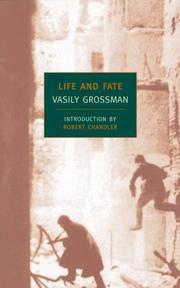 Vasily Grossman · 1980Life and FateLvl 7Medium pace
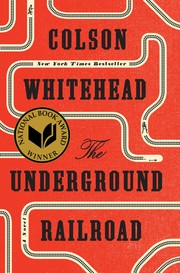 Colson Whitehead · 2016The Underground RailroadLvl 5Fast paced