
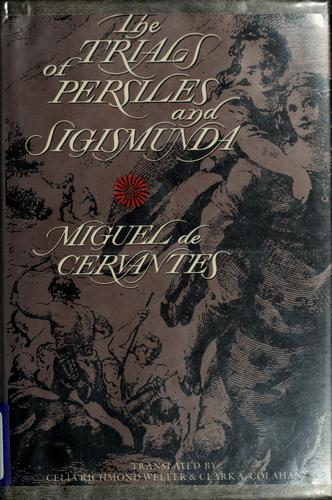
The Trials of Persiles and Sigismunda
Miguel de Cervantes · 1547–1616 · Spain
Originally Los trabajos de Persiles y Sigismunda (Spanish)
Why it matters
Finished days before his death and published posthumously: two disguised royals survive shipwrecks, pirates, and false accusations across a fantastical northern Europe. Cervantes's late bid at the high Byzantine romance he'd spent Don Quixote gently mocking.
At a glance
Sprawling, digressive adventure plot in the ornate register of Byzantine romance.
Deep dive
Two royals travel under false names and a fake sibling relationship across shipwrecks, captivities, and near-seductions on their way to Rome, and Cervantes, dying as he wrote it, wagers his whole late reputation on taking the adventure completely seriously.
Written for readers who have finished the book. No plot recap, and nothing here is safe to read first.
Themes & symbolism
Persiles and Sigismunda travel disguised as the brother and sister Periandro and Auristela, a fiction that lets them move through the novel's parade of pirates, shipwrecks, and rival suitors without exposing the royal identities, and the political complication driving them, Persiles's own older brother's designs on Sigismunda, that makes their flight necessary in the first place. Cervantes builds the whole journey as a pilgrimage from the fictionalized northern islands of Thule and Frisia down to Rome, and the geography matters: this is northern Europe as imagined by a Spanish writer who never saw it, a landscape stitched together from travel literature and pure invention, deliberately more fantastical than the Mediterranean world of his other fiction.
Where Don Quixote spends its length mocking the excesses of chivalric romance, Persiles works the opposite way, taking up the high Byzantine romance tradition of Heliodorus's Aethiopica and playing its trials, disguises, and improbable coincidences with total sincerity rather than parody. That's not a contradiction so much as the other half of an argument Cervantes had been making his whole career: that fiction's value doesn't depend on realism alone, and that a writer capable of dismantling one kind of romance from the inside could still, near the very end, choose to build another kind with total commitment rather than irony.
Secondary travelers accumulate around the two disguised royals at nearly every stop, castaways, jealous rivals, a poet convinced his verse alone will win him fame, each carrying a shorter version of the same trial-by-wandering structure that organizes Persiles's and Sigismunda's own journey. Cervantes uses that accumulation less as padding than as proof of method: a world this thick with parallel stories of endurance and disguise makes the central couple's own improbable constancy look less like a fairy tale exception and more like the general rule of a genre built entirely on trial answered by patience.
A Deathbed Dedication and a Foot Already in the Stirrup
Cervantes finished the manuscript days before his death in 1616 and dedicated it to the Count of Lemos in a preface written from his sickbed, famous for its image of a dying man with one foot already in the stirrup, composing final farewells rather than final revisions. He had spoken of Persiles for years as either the worst or the best book written in Spanish, a claim that reads, in hindsight, less like false modesty than like real uncertainty about whether the ambitious, sincere romance he was attempting could actually work on its own terms, published posthumously in 1617 without him ever finding out how it would be received.
The last seal: what actually happens, and why it lands the way it does.
The ending, explained
Maximino, Persiles's older brother and the source of the danger that set the whole journey in motion, arrives in Rome dying and, in his final act, joins Periandro's and Auristela's hands himself, formally clearing the last obstacle to their marriage with his own consent rather than leaving it contested. Auristela, now finally identified in the text by her true name Sigismunda, completes the pilgrimage's actual religious purpose by kissing the Pope's feet at the Vatican, the vow that drove the entire northern-to-southern journey fulfilled at last. Cervantes closes not on adventure but on arrival, the couple's true identities restored and their union blessed by exactly the authority, dynastic and religious, that had once made their disguise necessary in the first place.
Where to go next
 Miguel de Cervantes · 1585La GalateaLvl 6Slow burn
 Miguel de Cervantes · 1605Don QuixoteLvl 6Medium pace
 Miguel de Cervantes · 1613The Exemplary NovelsLvl 5Medium pace
 Laurence Sterne · 1759The Life and Opinions of Tristram Shandy, GentlemanLvl 9Slow burn
 Jonathan Swift · 1726Gulliver's TravelsLvl 5Medium pace
 Henry Fielding · 1749Tom JonesLvl 5Fast paced