
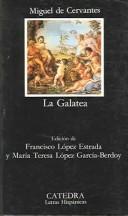
La Galatea
Miguel de Cervantes · 1547–1616 · Spain
Originally La Galatea (Spanish)
Why it matters
Cervantes's first published book: shepherds and shepherdesses trading verse and heartbreak in the pastoral mode then fashionable across Europe. A young writer working strictly inside convention, years before he'd learn to explode it.
At a glance
Ornate pastoral convention and interpolated verse slow the loosely threaded plot.
Deep dive
Cervantes's first book plays a fashionable European genre almost entirely straight, years before he'd take the same material and turn it inside out, and the gap between the two tells you what he had to unlearn first.
Written for readers who have finished the book. No plot recap, and nothing here is safe to read first.
Themes & symbolism
La Galatea sets shepherds and shepherdesses along the banks of the Tagus trading verse, jealousy, and heartbreak in the pastoral idiom Jorge de Montemayor's Diana had made fashionable across Spain, and Cervantes, twenty years before Don Quixote, is working almost entirely inside that convention rather than against it: Elicio and Erastro, the cultured suitor and the rustic one, both love Galatea, who remains as indifferent to both as pastoral heroines are required to be, while a crowd of secondary shepherds carry their own tangled, interwoven love stories through the same idealized countryside. Nothing here mocks the mode the way Don Quixote will mock chivalric romance; Cervantes plays the pastoral straight, which makes the book valuable less as entertainment than as evidence of the writer he was before he found the ironic distance that would define him.
The idealization isn't total. Interwoven among the courtship plots is a darker episode of real violence, a betrayal and a killing among the shepherds that the pastoral mode's stylized language can't quite absorb without friction, a crack in the genre's promise that this countryside is a place where passion, however intense, stays contained within song and complaint. That friction is worth noticing precisely because it anticipates, faintly, the writer who would later build an entire career out of letting reality intrude on borrowed literary forms, even if here the intrusion is still an exception rather than the whole design.
A Promise Cervantes Spent His Life Not Keeping
Cervantes ends La Galatea mid-narrative, several suitors' fates still unresolved, with an explicit promise of a second part to come, and he kept renewing that promise for the rest of his life, mentioning the sequel in later prologues and even, according to tradition, on his deathbed decades afterward. It never arrived. Reading the book today means reading a young writer's genuine, unfinished affection for a genre he would spend his mature career treating with much more skepticism, and the unkept promise is its own quiet record of how differently Cervantes's ambitions and his output actually lined up across a working life.
Where to go next
 Miguel de Cervantes · 1605Don QuixoteLvl 6Medium pace
 Miguel de Cervantes · 1613The Exemplary NovelsLvl 5Medium pace
 Miguel de Cervantes · 1617The Trials of Persiles and SigismundaLvl 6Fast paced
 Laurence Sterne · 1759The Life and Opinions of Tristram Shandy, GentlemanLvl 9Slow burn
 Jonathan Swift · 1726Gulliver's TravelsLvl 5Medium pace
 Henry Fielding · 1749Tom JonesLvl 5Fast paced