
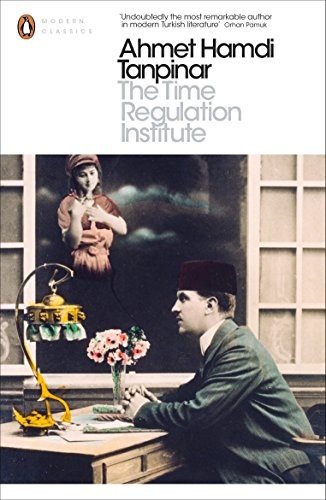
The Time Regulation Institute
Ahmet Hamdi Tanpınar · 1901–1962 · Turkey
Originally Saatleri Ayarlama Enstitüsü (Turkish) · translated by Maureen Freely and Alexander Dawe
Why it matters
A bumbling narrator helps found a state bureaucracy dedicated solely to synchronizing every clock in Turkey to Western time, its absurd growth satirizing Atatürk-era reform from the inside. Melancholy hides under every joke: Pamuk's acknowledged master at his sharpest.
At a glance
Digressive, ironic narration and dense allusions to Ottoman-to-republican Turkish history reward slow reading.
Deep dive
Hayri Irdal writes his own memoir to defend the reputation of the man who plucked him from failure and put him in charge of synchronizing every clock in Turkey to Western time, and the memoir keeps proving, one absurd institutional detail at a time, exactly the opposite of what it sets out to argue.
Written for readers who have finished the book. No plot recap, and nothing here is safe to read first.
Themes & symbolism
Hayri Irdal, an amateur clock repairer who has spent most of his life failing quietly at everything he tries, is rescued from poverty and a stint in a psychiatric ward by Halit Ayarci, a charismatic operator who recognizes in Irdal's obscure hobby the seed of an entire bureaucracy: the Time Regulation Institute, founded to bring every clock in the country into agreement with a single official standard. Tanpınar builds the Institute's absurdity out of scrupulously bureaucratic detail, fines for incorrect clocks, elaborate hiring committees, endless internal memoranda, rather than out of caricature, so that the satire lands as an indictment of a specific style of modernization rather than of modernity in general.
Irdal's memoir, written to honor Ayarci's own memory, keeps undercutting its own tribute: every anecdote meant to demonstrate Ayarci's genius instead reveals an institution that produces reports, salaries, and prestige while regulating essentially nothing, since Turkey's clocks were never seriously out of alignment to begin with. Tanpınar uses that gap between the Institute's stated purpose and its actual function as his clearest image for Kemalist Turkey's rush toward Western-style modernization: a state apparatus built with real energy and total sincerity around a problem invented to justify the apparatus, rather than the other way around. Irdal's own earlier stint in a psychiatric clinic, treated by the novel less as illness than as a kind of unlicensed honesty about how little sense the surrounding world actually made, hangs over every page of his memoir as the alternative diagnosis the Institute's success has conveniently displaced.
Seyit Lutfullah and the Ottoman Past the Institute Can't Use
Among the eccentrics who orbit Irdal is Seyit Lutfullah, a self-declared alchemist and mystic who represents everything the Time Regulation Institute has been built to leave behind, an older, more superstitious, more Ottoman relationship to knowledge that Ayarci's bureaucracy treats as an embarrassment to be modernized out of existence rather than a tradition worth reckoning with honestly. Tanpınar keeps Lutfullah funny rather than tragic, but the comedy carries real regret about how much gets discarded, unexamined, in the name of catching up to the West on the West's own schedule.
The last seal: what actually happens, and why it lands the way it does.
The ending, explained
The Institute, having never regulated anything of substance, is eventually threatened by the same appetite for reform that created it, since a newer generation of bureaucrats decides Ayarci's project is itself the outdated relic now needing replacement, and Irdal is left contemplating starting the whole cycle over with a proposed new institute nobody yet needs. Ayarci dies suddenly, and Irdal's memoir, ostensibly written to secure his friend's legacy, ends up documenting instead how completely disposable that legacy already is, one committee report away from being forgotten by the same system that once celebrated it. Tanpınar's final joke is structural: the book that was supposed to fix Ayarci's place in history is itself the demonstration of how briskly that kind of history gets overwritten.
Where to go next
 Marcel Proust · 1913Swann's WayLvl 8Slow burn
 Orhan Pamuk · 1998My Name Is RedLvl 7Medium pace
 Emile Habibi · 1974The Secret Life of Saeed the PessoptimistLvl 6Fast paced
 Eyvind Johnson · 1946Return to IthacaLvl 6Medium pace
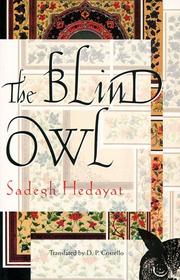 Sadegh Hedayat · 1937The Blind OwlLvl 8Slow burn
 Virginia Woolf · 1925Mrs DallowayLvl 7Slow burn