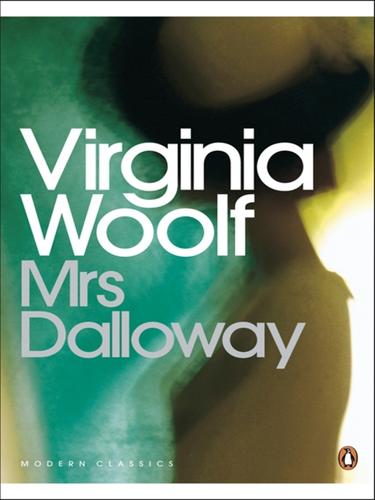
Mrs Dalloway
Virginia Woolf · 1882–1941 · England
Why it matters
One June day in London: a society hostess buying flowers, a shell-shocked veteran falling out of the world, consciousness streaming between them. Woolf's answer to Ulysses, and the most welcoming door into high modernism.
At a glance
Continuous stream-of-consciousness shifting between minds without typographic warning.
Deep dive
Why Clarissa and Septimus never once meet — and what her private, unwitnessed reaction to news from his side of London is actually doing inside her own party.
Written for readers who have finished the book. No plot recap, and nothing here is safe to read first.
Themes & symbolism
Clarissa and Septimus never meet, and that's the point: Woolf builds the whole novel as a study in doubling without contact, two acutely sensitive people moving through the same June day under the same chiming Big Ben, one performing social poise over a private history of thwarted feeling (Peter Walsh, Sally Seton, the marriage to steady, unremarkable Richard), the other unable to perform anything at all anymore. Septimus's trauma isn't just "shell shock" as period detail; it's the novel's indictment of a society, embodied in the bullying, falsely benevolent Dr. Bradshaw, that demands "proportion" and conformity and has no language for what war actually did to him. Clarissa's party, gathering the same evening, becomes the site where these two lives collide after all — not in person, but when news of Septimus's death arrives as party gossip, and Clarissa alone recognizes it for what it is.
Flowers, the party, Clarissa's beautiful dress and her exquisite social tact are not offered ironically — Woolf takes surface pleasure and hostessing seriously as a form of creation, Clarissa's version of an art she'll never call art. But the novel keeps that surface permeable: memory (Bourton, Sally's kiss, the choice of Richard over Peter) floods the present constantly, so that the hours Big Ben tolls off are never just clock time but a thin shell around decades of unresolved feeling.
Woolf's Tunneling Process
Woolf described writing the book by digging "caves" behind her characters that connect underground — the technique is visible everywhere in how one person's passing thought slides into a stranger's on the street, a car backfiring or a plane skywriting pulling a dozen different consciousnesses toward the same object for a paragraph before scattering again. It's a formal argument disguised as style: minds are not sealed units, London's crowd is one continuous fabric of perception, and Septimus's isolation (his sense that he alone has been singled out, that he alone can no longer feel) is precisely what that porous method makes tragic — he's cut off from a connectedness the narration proves is really there.
The last seal: what actually happens, and why it lands the way it does.
The ending, explained
Facing forced institutionalization under Bradshaw, Septimus jumps from a window rather than submit — a death Woolf frames not as pathology but as the one assertion of self left to him, a refusal of a world that wants to flatten and manage him. Bradshaw brings the news to Clarissa's party that evening, almost as an aside, and Clarissa's first reaction is indignation that death should intrude on her festivities. But she withdraws to a small room alone and feels, instead, a startling kinship: his suicide reads to her as defiance, privacy, an embrace of something she recognizes from her own life. She doesn't envy his death so much as borrow its clarity, and returns to the party changed but intact — the novel ending not on despair but on Clarissa choosing, once more, to go back in and be alive.